The problem: red nose, red cheeks – and it stays
After a walk your cheeks glow, in the warm office your face turns hot and blotchy, and your nose is red even though you do not have a cold. For many people this fades within an hour. With rosacea, a background redness remains in the centre of the face and keeps intensifying in response to triggers (DermNet, Rosacea). Visible small blood vessels, bumps and pustules may follow, and the skin can become drier, burn, itch and become more easily irritated. In some people the eyes are affected too (IQWiG).
Rosacea (spelled “Rosazea” in German) usually begins after the age of 30. In Germany, about 2 to 5 percent of adults are affected, more often people with fair skin (IQWiG). A thickened, bulbous nose, called rhinophyma, develops mainly in men (IQWiG), (DermNet). According to the international expert recommendations, persistent redness in the centre of the face or thickening of the skin, for example on the nose, on their own point to rosacea; other features are sudden flushing, bumps and pustules, small visible vessels and red eyelid margins (Schaller et al. 2020).
Not every red cheek is rosacea. The overview is based on medical sources; it does not replace a diagnosis, only a medical examination can give you certainty.
| What you see | What may be behind it | |
|---|---|---|
| Cheeks and nose turn red in the cold and while warming up, everything is back to normal after minutes to hours | normal reaction of the blood vessels to cold | Red hands and cheeks in the cold |
| Redness in the centre of the face stays and gets stronger with warmth, cold, alcohol or sun; small visible vessels, bumps or pustules | rosacea (IQWiG), (Schaller et al. 2020) | this page, dermatologist |
| Small red bumps around the mouth, nose or eyes, with a clear strip along the edge of the lips | perioral dermatitis (DermNet) | Dry skin around the mouth |
| Red skin with yellowish, greasy scales on the eyebrows, the folds beside the nose and the hairline | seborrhoeic dermatitis (DermNet) | Dry skin on the forehead and eyebrows |
| Redness and pustules after a cortisone cream was used on the face or stopped | rosacea-like skin changes caused by cortisone (IQWiG) | dermatologist |
| Redness, burning and tightness after a day in the snow or in the wind | sunburn or windburn | Windburn on the face |
Less often, other conditions cause redness on the face, such as lupus erythematosus or a reaction to medication (DermNet). That is another reason why persistent redness should be looked at by a doctor.
Why rosacea often gets worse in winter
The skin reacts more strongly. In rosacea, the skin barrier is impaired, the blood vessels react differently, and the skin's innate immune system overreacts to stimuli (DermNet). Besides redness, many people know burning and stinging; a review describes how these invisible symptoms clearly affect quality of life and are often underestimated (Schaller et al. 2021).
Temperature changes. Known triggers include sunlight, strong heat or cold, extreme temperatures and stress (IQWiG); DermNet lists temperature changes, hot baths, exercise, spicy food, alcohol, air pollution and smoking (DermNet). Winter brings many of these together: frost outside, then the warm hallway, the radiator, the sauna, the hot bath to warm up. Heated air also dries out skin that is already reactive.
Hot drinks. Tea, coffee and hot chocolate are part of winter. In a classic experiment, coffee at 22 degrees Celsius did not trigger flushing, but coffee, and equally water, at 60 degrees did. The trigger was the heat, not the caffeine (Wilkin 1981).
Alcohol and mulled wine. Alcohol is considered a typical trigger (IQWiG). In a cohort study of more than 82,000 women, the risk of developing rosacea rose with the amount of alcohol; the link was clearest for white wine and spirits (Li et al. 2017). Mulled wine combines alcohol and heat. The reverse does not hold, though: a red nose does not mean that someone drinks a lot. This assumption is widespread and a burden for those affected (IQWiG).
Sun on snow. UV radiation is considered the most important environmental trigger, and skin affected by rosacea is more sensitive to sun (DermNet). In snow and in the mountains, radiation is high even on cold days; more in Sun protection in the mountains and in snow.
The solution step by step
| When | What you do | Why |
|---|---|---|
| Starting today | For a few weeks, note when your skin flares: weather, drinks, food, exercise, sauna, new products. | A rosacea diary helps you find your own triggers; they differ from person to person (IQWiG), (DermNet). |
| Morning and evening | Wash your face with lukewarm to cool water, use a soap-free cleanser with a low pH sparingly, pat dry with a towel. | Water that is too hot or too cold can trigger or increase redness (IQWiG); traditional soaps are more likely to irritate than mild synthetic cleansers (DermNet). |
| Every day | Use only a few products. Check the ingredient list: no alcohol, camphor, menthol, mint, eucalyptus, no fragrance, fruit acids or scrubs. | IQWiG lists these as possible irritants (IQWiG). How to spot fragrances in the list is shown in Fragrance allergens: the list. |
| With dry, tight skin | Apply a thin layer of a moisturising cream without the irritants listed above; introduce new products one at a time and test them on a small area first. | Regular moisturising is part of the basics (DermNet); many people with rosacea react to creams with burning and stinging (DermNet, Emollients). How to test: Testing new skin care on a small area. |
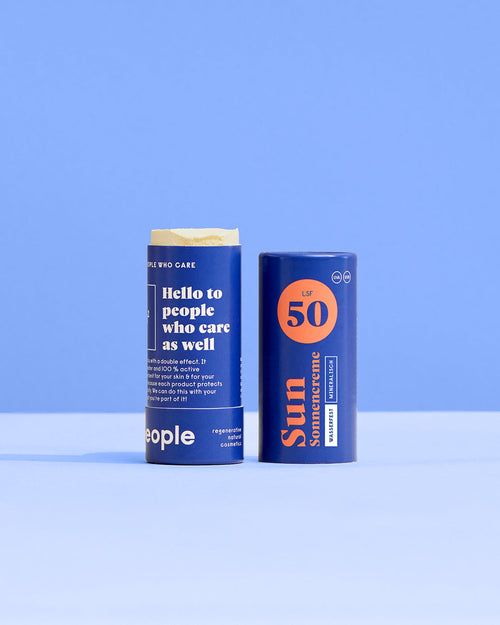
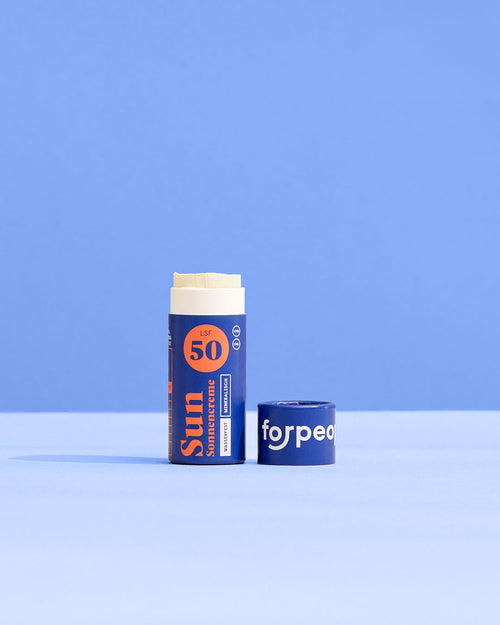
| Before going out | Apply a mineral sunscreen with at least SPF 30 every day, for example the Solid Sunscreen SPF50; reapply in the snow. In frost, wear a scarf and hat loosely over your cheeks and nose. | For rosacea, DermNet recommends sunscreen with zinc oxide or titanium dioxide and at least SPF 30 (DermNet); cold is a known trigger (IQWiG). |
| Indoors | Let hot drinks cool a little, do not sit right in front of the radiator or fireplace, avoid hot baths and the sauna if they make your skin flare. | Heat triggers the flush, not caffeine (Wilkin 1981). |
| If needed | Cover redness with make-up that has a greenish undertone; choose products that wash off easily. | Green visually balances red; waterproof and very oily products are harder to remove, and removing them irritates the skin further (IQWiG). |
| In the medium term | Make an appointment with a dermatologist and do not stop a prescribed treatment on your own. | The guideline recommends avoiding triggers and treating rosacea, depending on its form, with active ingredients prescribed by a doctor (Clanner-Engelshofen et al. 2022). |
If your face feels tight in winter without rosacea, Facial skin feels tight in winter is the better page. If every cream burns, see Face cream burns.
What helps – and what rather does not
| Habit or home remedy | Assessment |
|---|---|
| Cortisone cream from the medicine cabinet | no: cortisone can make rosacea worse (DermNet) and with long-term use cause rosacea-like symptoms (IQWiG) |
| Scrubs, fruit acid toners, brushes | no: scrubs are among the irritants (IQWiG), (DermNet) |
| Toner with alcohol | rather not (DermNet) |
| Essential oils such as tea tree, mint or eucalyptus | rather not: IQWiG explicitly names menthol, mint and eucalyptus as possible irritants (IQWiG) |
| Ice cubes or ice-cold water against the redness | rather not: water that is too cold can also increase redness (IQWiG) |
| Avoiding coffee | usually unnecessary: in the experiment, the temperature mattered, not the caffeine (Wilkin 1981) |
| Mulled wine, punch, spicy food | a trigger for many people; check in your diary (IQWiG) |
| Mineral sunscreen every day | helps: UV is the most important environmental trigger (DermNet) |
| Green-tinted make-up | helps to conceal redness (IQWiG) |
Typical mistakes
The most common mistake is to take rosacea for acne and tackle it with drying acne products, scrubs or alcohol. Rosacea is not acne, though; with rosacea the skin does not produce more sebum (IQWiG). The second mistake is to put cortisone cream from the cabinet on a red, burning patch; cortisone can make rosacea worse (DermNet). Third: constantly trying new products because one of them burns. That way no trigger can be identified any more. Fourth: skipping sun protection in winter, although snow and clear days bring plenty of UV. Fifth: stopping a prescribed treatment as soon as the skin is quieter. Rosacea is chronic and often needs longer-term treatment (DermNet).
When to seek medical advice
Redness that fades quickly after cold or washing is usually harmless. Have your skin examined by a dermatologist if any of these apply:
- The redness in the centre of your face lasts for weeks, you flush quickly and often, or small visible vessels appear.
- Bumps and pustules appear, or the skin burns and feels tight all the time.
- The skin on your nose becomes thicker, more bulbous or more large-pored (IQWiG).
- Your eyes are dry, red, itchy, watery or feel as if something is in them, or your eyelid margins are red. According to DermNet, the eyes are involved in more than half of people with rosacea (DermNet); an eye examination is then advisable (IQWiG).
- Redness and pustules began after using a cortisone cream or flared up after stopping it.
- Along with the redness, you have joint pain, fever, great tiredness or redness spreading like a butterfly over the cheeks and bridge of the nose; other conditions should then be ruled out (DermNet).
Seek medical help immediately if an eye hurts, your vision suddenly gets worse or the eye becomes very sensitive to light. Inflammation of the cornea is rare in rosacea, but it is an emergency (IQWiG).
Frequently asked questions
Why is my nose red when I do not have a cold?
Often because of cold and warming up afterwards; that fades. If the nose stays red, small vessels or bumps appear, or the skin gets thicker, rosacea may be behind it. A dermatologist can clarify this.
Is a red nose a sign of drinking?
No, not necessarily. Alcohol can trigger flare-ups in rosacea and is linked to a higher risk in studies, but many people with rosacea drink little or nothing.
Why do men more often get a bulbous nose?
Thickening of the skin on the nose, rhinophyma, develops mainly in men. It can be treated by a doctor, with medication or surgery.
Is rosacea contagious?
No. Rosacea is an inflammation of the skin, not an infection, and it does not spread to others.
What helps against red cheeks in winter?
Protect your cheeks from cold and wind with a scarf and hat outdoors, do not sit right in front of the radiator indoors, wash with lukewarm water and apply sunscreen. If your cheeks stay red in the warm as well, have them looked at.
Which sunscreen suits rosacea?
Medical sources recommend mineral filters such as zinc oxide or titanium dioxide with at least SPF 30, without fragrance and without alcohol. Only a test on a small area shows how your skin reacts to a product.
Does rosacea go away?
Rosacea is chronic and comes in flare-ups. Stronger phases alternate with quieter ones in which the inflammation subsides. It can usually be treated well by a doctor, and avoiding triggers helps prevent flare-ups.
At forpeople
We do not offer skin care specifically for rosacea, and which moisturiser suits your skin is something to discuss with your dermatologist. What we can offer for winter is mineral sun protection:
- Solid Sunscreen SPF50, 40 g, €17.90: for face and body; with zinc oxide and titanium dioxide, non-nano according to the product information, in a base of shea butter, a plant-based fatty acid blend and beeswax; according to the ingredient list without fragrance, without essential oils and without alcohol.
- Solid Sunscreen SPF50 Mini, 20 g, €9.90: the same formula for your jacket pocket.
We cannot promise how your skin will react to it. Test it on a small area first, do not apply it to irritated or broken skin as stated in the safety information, and keep it away from the eye area. What “without fragrance” means exactly in an ingredient list is explained in Fragrance-free sunscreen: how to recognise it.
Sources
- Institute for Quality and Efficiency in Health Care (IQWiG), gesundheitsinformation.de: Rosazea (rosacea). Updated 6 September 2023, accessed 29 October 2026. gesundheitsinformation.de/rosazea.html
- DermNet: Rosacea. Kuo O (March 2022), minor update September 2024. Accessed 29 October 2026. dermnetnz.org/topics/rosacea
- Clanner-Engelshofen BM, Bernhard D, Dargatz S, Flaig MJ, Gieler U, Kinberger M et al. (2022): S2k guideline: Rosacea. Journal der Deutschen Dermatologischen Gesellschaft 20(8): 1147–1165 (AWMF register 013-065). https://doi.org/10.1111/ddg.14849
- Schaller M, Almeida LMC, Bewley A, Cribier B, Del Rosso J, Dlova NC et al. (2020): Recommendations for rosacea diagnosis, classification and management: update from the global ROSacea COnsensus 2019 panel. British Journal of Dermatology 182(5): 1269–1276. https://doi.org/10.1111/bjd.18420
- Li S, Cho E, Drucker AM, Qureshi AA, Li WQ (2017): Alcohol intake and risk of rosacea in US women. Journal of the American Academy of Dermatology 76(6): 1061–1067.e2. https://doi.org/10.1016/j.jaad.2017.02.040
- Wilkin JK (1981): Oral thermal-induced flushing in erythematotelangiectatic rosacea. Journal of Investigative Dermatology 76(1): 15–18. https://doi.org/10.1111/1523-1747.ep12524458
- Schaller M, Dirschka T, Lonne-Rahm SB, Micali G, Stein Gold LF, Tan J, Del Rosso J (2021): The importance of assessing burning and stinging when managing rosacea: a review. Acta Dermato-Venereologica 101(10): adv00584. https://doi.org/10.2340/actadv.v101.356
- DermNet: Emollients and moisturisers. Whittaker L (2022), Oakley A (2016). Accessed 29 October 2026. dermnetnz.org/topics/emollients-and-moisturisers