







The problem: suddenly every cream burns
This is typical in winter: the moisturiser you have used for months suddenly stings when you apply it, it burns under your eyes and around your nostrils, and after washing even water feels unpleasant. Experts speak of sensitive skin when stinging, burning, pain, itching or tingling occur in response to stimuli that should not normally cause such sensations, without a skin disease to explain them. The skin can look normal or red, and the face is affected most often (Misery et al. 2017). This is common: in an analysis of surveys, 64 percent of people said their facial skin was at least somewhat sensitive, and 34 percent described it as moderately or very sensitive. The authors consider questionnaire figures likely to be on the high side, however (Chen et al. 2020).
Burning is not always just sensitive skin, though. The overview helps you narrow things down; it does not replace a diagnosis, only a medical examination can give you certainty.
| What you feel and see | What may be behind it | What to do now |
|---|---|---|
| Brief stinging or burning when applying, gone after seconds to a few minutes, little or no redness | stressed, sensitive skin (DermNet, Sensitive skin) | steps below |
| Burning, redness, sometimes swelling exactly where the product was; burning and pain stronger than itching | irritation of the skin by a substance (DermNet, Irritant contact dermatitis) | stop the product; if it persists, see a doctor |
| Itchy, red skin with blisters or flaking that starts hours to days after contact, even with a product you have used for a long time | contact dermatitis, possibly an allergy (NHS, Contact dermatitis) | stop the product, see a dermatologist |
| Burning, peeling and redness in the weeks after starting retinol, an acid peel or a vitamin C serum | irritation from the active ingredient | Dry skin after retinol or peels |
| Cream burns on patches of atopic eczema or on scratched, cracked skin | impaired barrier in eczema (DermNet, Emollients) | Dry skin or atopic eczema? |
| Burning together with persistent redness in the centre of the face, flushing, small visible vessels or bumps | possibly rosacea (DermNet, Emollients) | Rosacea in winter |
If a cream burns on cracked hands instead, Why does hand cream burn on cracked hands? explains the mechanism and the classic sting tests. This page is about the face.
Why this happens in autumn and winter
The barrier becomes more permeable. Sensitive skin is closely linked to an impaired skin barrier and overreactive nerve endings. In people affected, the outer layer of skin is often thinner or dehydrated and contains fewer lipids, and receptors on the nerve endings that respond to heat and pain are more easily activated (DermNet, Sensitive skin). In a sting test with lactic acid on the fold between nose and corner of the mouth, stinging was strongest in people whose skin already lost more water and held less moisture beforehand (Wu et al. 2003).
Winter supplies the triggers. An analysis of 13 studies on what people with sensitive skin report as triggers found cosmetics to be the strongest trigger; temperature changes, cold, heat, wind, sun, dry and humid air, air conditioning and water were also named (Brenaut et al. 2020). In winter many of these come together: frost and wind outside, dry heated air inside, hot showers. How facial skin reacts to this is described in Facial skin feels tight in winter. If you then reach for more cream, a new serum or a scrub, you add the next stimulus to skin that is already stressed.
These substances are most likely to sting.
- Urea and acids: urea and acidic preparations such as lactic or glycolic acid often sting when applied to scratched or cracked skin (DermNet, Emollients). On intact skin, urea is a common humectant; what it is good for is covered in Urea or water-free cream?
- Alcohol: “Alcohol” or “Alcohol denat.” in the ingredient list can burn on weakened skin; fatty alcohols such as cetearyl alcohol are something else, see Alcohol in cosmetics.
- Fragrances and preservatives: they are among the common irritants for sensitive skin (DermNet, Sensitive skin). Which fragrances have to be declared individually is shown in Fragrance allergens: the list.
- Propylene glycol: a widely used auxiliary ingredient in creams that can irritate the skin and in some cases cause an allergy (McGowan et al. 2018).
- Sodium lauryl sulfate: a foaming surfactant that can cause burning, stinging, itching and redness (NHS, Emollients).
- Retinoids: retinol and related substances are particularly irritating in the first weeks.
With serums containing hyaluronic acid or urea, it is therefore worth looking at the whole ingredient list, not just the name on the front.
The solution step by step
| When | What you do | Why |
|---|---|---|
| Right away | Rinse the cream off with lukewarm water, pat dry with a soft cloth, do not apply anything new. | The shorter the contact, the less the substance can irritate. What you can do after a reaction: Reacted to a cosmetic product: what now? |
| The next few days | Pause retinol, acids, vitamin C serum, scrubs and brushes; do not stop prescribed treatments on your own, ask your doctor instead. | Without additional stimuli, the outer layer of skin can recover. Sensitive skin should avoid chemical and mechanical exfoliants anyway (DermNet, Sensitive skin). |
| Morning and evening | Wash with lukewarm water, use a soap-free cleanser only sparingly, no long hot showers. | This is DermNet's advice for sensitive skin (DermNet, Sensitive skin). |
| As long as it burns | Apply as little as possible; only what does not make itself felt again after rinsing. | Every additional product is another possible stimulus. |
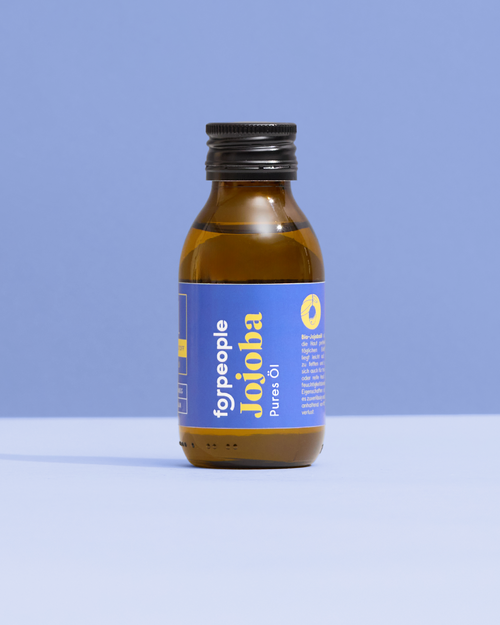
| Once the burning has subsided | Apply a simple, fragrance-free product to slightly damp skin, for example a few drops of Jojoba Oil - pure, which consists of jojoba oil only. | For sensitive skin, DermNet recommends regular non-irritating, fragrance-free care (DermNet, Sensitive skin). According to their safety information, our products do not belong on irritated skin. |
| When starting again | Reintroduce new or paused products one at a time, a few days apart, and test each on a small area first. | One product at a time, first on a small area: that is DermNet's advice (DermNet, Sensitive skin). How to test: Testing new skin care on a small area. |
| Outdoors | In frost, a scarf over cheeks and chin; sun protection in the snow. | Cold, wind and sun are among the triggers (Brenaut et al. 2020). |
If your skin is red and burning after a day in the snow or wind, read Windburn on the face after skiing.
What helps – and what rather does not
| Assumption or habit | Assessment |
|---|---|
| “If it burns, the cream is working.” | no: burning only shows that a substance is reaching the nerve endings, not that it is doing any good |
| Keep going, the skin will get used to it | only with brief, mild stinging: if it passes quickly, a product can usually still be used; stop if redness, blisters or flaking appear (DermNet, Emollients) |
| If the burning is still there after days | burning that does not settle after a few days is usually due to a particular ingredient; ask a pharmacist or doctor (NHS, Emollients) |
| Ice cubes, cold compresses | a cool, damp cloth for a few minutes feels good to many people; ice directly on the skin, rather not |
| Cortisone cream from the medicine cabinet on the face | not on your own; on the face only as instructed by a doctor |
| Quark, honey, lemon, apple cider vinegar | rather not: food and acids are a further stimulus on irritated skin |
| A product labelled “sensitive” | says little; what matters is the ingredient list |
Typical mistakes
The most common mistake is to put another product on burning skin straight away, and then another. In the end the skin reacts to everything, and nobody knows what to. The second: carrying on with retinol, acid toner or scrubs because they are supposed to “work”. Third: washing your face with hot water and rubbing it dry hard because it itches. Fourth: using a high-concentration urea cream meant for heels on your face. Fifth: when it burns under your eyes, spreading the same cream right up to the lash line; the skin there is particularly thin, see Dry skin around the eyes.
When to seek medical advice
Brief stinging that goes away after rinsing and does not come back after a few days' break is usually harmless. Have your skin examined by a GP or dermatologist if:
- the skin swells, blisters, weeps or forms crusts,
- burning or redness has not clearly improved a few days after stopping the product (NHS, Emollients),
- every product and even water burns without you being able to find a cause,
- an itchy redness starts hours to days after a product and spreads; whether an allergy is behind it can be clarified with an allergy test at a dermatologist's (NHS, Contact dermatitis),
- redness in the centre of your face persists or bumps and pustules appear,
- you have atopic eczema and the care that used to suit you suddenly burns strongly.
If something gets into your eye, rinse it out immediately with plenty of water. If pain, redness or blurred vision persist, see an ophthalmologist. If your lips, tongue or throat swell or you have trouble breathing, call the emergency number 112.
Frequently asked questions
Why does every cream suddenly burn on my face?
Usually the skin barrier is weakened, for example by cold, heated air, hot water, a lot of cleansing or actives. Then even otherwise unremarkable substances reach the nerve endings. Pause everything except lukewarm water and one simple product, and reintroduce products one at a time.
Why does urea cream burn on my face?
Urea and acids often sting on cracked or irritated skin. On the face, especially around the eyes and nose, the skin is thinner than on the hands or feet. Creams with a high urea content are usually meant for hard skin, not for the face.
Why does my hyaluronic acid cream burn?
Whether hyaluronic acid itself burns has hardly been studied. More often other ingredients are behind it, such as alcohol, fragrance, acids or propylene glycol, or the skin is irritated at the moment. A look at the ingredient list helps.
Cream burns under the eyes – what should I do?
The skin there is thin and reacts faster. Leave out the eye area for a few days and only use products there that the manufacturer intends for the eye area. If the eye itself burns, rinse it thoroughly with water.
Is it normal for cream to burn on atopic eczema?
Stinging is common on eczema patches and scratched skin. If it passes quickly, the product can often still be used; if it persists or the skin gets redder, discuss your skin care with your dermatologist.
How long may a cream burn?
Stinging that passes after seconds to a few minutes is usually harmless. If it lasts longer, the skin turns red or it happens every time, rinse the cream off and stop using it.
What can I put on burning skin?
At first, ideally nothing but lukewarm water until the burning eases. After that, one simple, fragrance-free product, applied thinly and tested on a small area.
At forpeople
As long as the skin burns, none of our products belongs on it according to their safety information. For the time afterwards, when the skin is only dry, these oils fit; their product pages name the face, and each consists of a single ingredient:
- Jojoba Oil - pure, 100 ml, €16.90: pure jojoba oil without fragrance; a few drops on slightly damp skin.
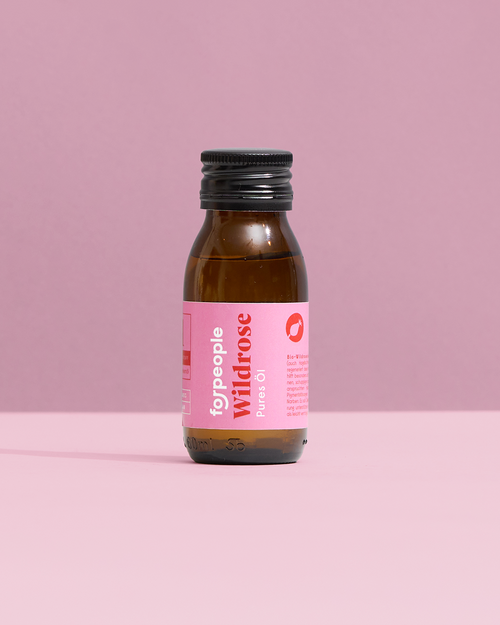
- Wild Rose Seed Oil - pure, 50 ml, €19.90: pure rosehip seed oil without additives; a few drops in the evening.
We cannot promise how your skin will react to a product; test it on a small area first.
Sources
- Misery L, Ständer S, Szepietowski JC, Reich A, Wallengren J, Evers AW et al. (2017): Definition of sensitive skin: an expert position paper from the Special Interest Group on Sensitive Skin of the International Forum for the Study of Itch. Acta Dermato-Venereologica 97(1): 4–6. https://doi.org/10.2340/00015555-2397
- DermNet: Sensitive skin. McLean G (2026), reviewed by Coulson I, last reviewed September 2026. Accessed 29 October 2026. dermnetnz.org/topics/sensitive-skin
- Brenaut E, Barnetche T, Le Gall-Ianotto C, Roudot AC, Misery L, Ficheux AS (2020): Triggering factors in sensitive skin from the worldwide patients' point of view: a systematic literature review and meta-analysis. Journal of the European Academy of Dermatology and Venereology 34(2): 230–238. https://doi.org/10.1111/jdv.15985
- Chen W, Dai R, Li L (2020): The prevalence of self-declared sensitive skin: a systematic review and meta-analysis. Journal of the European Academy of Dermatology and Venereology 34(8): 1779–1788. https://doi.org/10.1111/jdv.16166
- DermNet: Emollients and moisturisers. Whittaker L (2022), Oakley A (2016). Accessed 29 October 2026. dermnetnz.org/topics/emollients-and-moisturisers
- NHS: Emollients. Last reviewed 24 October 2023, accessed 29 October 2026. nhs.uk/conditions/emollients
- McGowan MA, Scheman A, Jacob SE (2018): Propylene glycol in contact dermatitis: a systematic review. Dermatitis 29(1): 6–12. https://doi.org/10.1097/DER.0000000000000307
- Wu Y, Wang X, Zhou Y, Tan Y, Chen D, Chen Y, Ye M (2003): Correlation between stinging, TEWL and capacitance. Skin Research and Technology 9(2): 90–93. https://doi.org/10.1034/j.1600-0846.2003.00026.x
- DermNet: Irritant contact dermatitis. Ngan V (2003), updated by Patel K, Nixon R. Accessed 29 October 2026. dermnetnz.org/topics/irritant-contact-dermatitis
- NHS: Contact dermatitis. Last reviewed 3 May 2023, accessed 29 October 2026. nhs.uk/conditions/contact-dermatitis