The problem: red, rough cheeks in winter
After a walk in an east wind the cheeks glow, after a few cold days they feel rough, fine flakes form on the chin, and during teething the face is damp all the time anyway. Many parents then reach for a cold-protection cream and wonder how thickly to apply it, whether petroleum jelly or almond oil will do, and from what temperature the baby is better off staying indoors.
Not every redness has the same cause. The overview helps you sort it out. It is based on specialist sources and does not replace a diagnosis: only an examination at the paediatrician's brings clarity.
| What you see | What may be behind it | What fits now |
|---|---|---|
| Cheeks red and warm after a walk, pale again within minutes to a few hours in the warm | normal reaction of the blood vessels to cold and rewarming, see Red hands and cheeks in the cold | nothing more; keep the wind off next time |
| Cheeks rough and finely flaky, not weeping, the baby seems unbothered | dry skin from cold, wind and heated indoor air | simple care as described below |
| Red, rough skin around the mouth and chin, exactly where saliva runs, often during teething or with a dummy | irritation from saliva and food residue (DermNet, Atopic dermatitis) | dab away saliva, thin layer of fat as a barrier; for toddlers see Lip-licking dermatitis in children |
| Red, itchy, partly weeping or crusted patches on the cheeks; the baby rubs its face against the pillow or your shoulder; often scaling on the scalp beforehand | possible sign of atopic eczema, which in infants often affects the face and especially the cheeks (DermNet), (BIÖG 2026) | paediatrician; more under Dry skin or atopic eczema? |
| White or greyish-white, hard, numb patches on the cheeks, nose or ears | frostbite (Stiftung Kindergesundheit 2016) | get into the warm at once, do not rub, get medical help |
Why this happens in winter
Baby skin is still developing. Its outer horny layer is thinner than in adults and handles water differently during the first year of life; the measurements are described under Dry children's hands in winter. In winter, the face is the least protected part of the body.
Cold and wind dry the skin out. Cold draws moisture from the skin, and wind dries it out further (Stiftung Kindergesundheit 2016). Indoors, heated air continues the process; what room air does is explained under Humidity and skin.
Children cool down faster. They lose body heat faster than adults, especially through their relatively large head. In the pram, a warm blanket alone is not enough; what the baby lies on must be warm enough too (Stiftung Kindergesundheit 2016). A baby lying in the pram hardly moves and cannot say that it is cold; the face is the only part left uncovered.
Saliva adds to it. In a meta-analysis of 16 studies with 3,506 children up to three years old, gum irritation (87 per cent), irritability (68 per cent) and increased drooling (56 per cent) were the most common signs during teething (Massignan et al. 2016). Saliva runs over the chin and cheeks, softens the skin and dries again in the cold air. In toddlers, saliva and food residue are a typical cause of skin irritation around the mouth and chin (DermNet). A dummy keeps the skin around the mouth damp as well.
Cream can be deceptive. A water-containing cream cools the skin after application while its water evaporates, and a layer of fat does not warm. The measurements are covered in detail under Cold cream: water-free, but no protection against frost.
The solution step by step
| When | What you do | Why |
|---|---|---|
| Before going out | A hat that covers forehead and ears and fits snugly when it is below freezing; clothing in several thin layers instead of one thick one. | A lot of heat is lost through the head; children dressed too warmly sweat and then cool down (Stiftung Kindergesundheit 2016). |
| In the pram | Footmuff or fleece bag, an insulating layer under the mattress, hood and wind shield facing the wind. Mouth and nose stay free. | What the baby lies on counts as much as the blanket; wind cools the face most. |
| Before a walk, only if the cheeks are dry | A small amount of water-free care without fragrance or essential oils that is specifically labelled for babies, thinly on cheeks and chin. | Creams do not protect against cold, but they slow down drying out; water-free wind and weather creams made specifically for babies and toddlers are recommended (Stiftung Kindergesundheit 2016). |
| Outdoors | Short outings in frost and wind; in between, look at cheeks, nose and ears and feel the back of the neck: warm, but not sweaty. | White, hard patches are a warning sign; a sweaty neck shows that the baby is dressed too warmly. |
| After coming home | Let the baby warm up slowly indoors, do not rub; dab saliva and the nose with a soft cloth instead of wiping. | Rubbing and snow harm cold skin (Stiftung Kindergesundheit 2016); wiping irritates the softened skin around the mouth. |
| During teething | Change the bib as soon as it is wet; dab chin and cheeks dry more often; before going out and before sleep, a thin layer of fat on the skin around the mouth. | Saliva softens the skin; a film of fat keeps some of it off. |
| In the evening | A short, lukewarm bath with little cleanser; then apply a lipid-replenishing care to visibly dry skin. | Visibly dry baby skin should be moisturised regularly, after bathing with a lipid-replenishing ointment (BIÖG 2026); long, hot baths dry it out further. |
| Sun on snow | Babies in their first year in the shade, with clothing and a hat, without sunscreen; older children get SPF 50 sun protection on uncovered areas. | Snow reflects UV radiation; sunscreen should not be used in the first year of life (BfS 2026). |
How sun protection works in the mountains and on snow for children and adults is explained under Sun protection in the mountains and on snow; what to look for in sunscreen for children under Mineral sunscreen for children.
What helps – and what rather doesn't
| Measure or home remedy | Assessment |
|---|---|
| A thick layer of cold cream as frost protection | rather not: in a controlled analysis of 913 cold injuries of the head, the use of protective ointments was associated with a higher risk of frostbite on the nose, ears and the rest of the face; the ointments seem to give a false sense of safety (Lehmuskallio 2000). In a survey, 21 per cent of Finnish conscripts had used such ointments, mostly at school age or earlier; in one family in four other members did so, mostly women and children (Lehmuskallio 1999). |
| Thin water-free care on dry cheeks | useful against drying out, not against cold (Stiftung Kindergesundheit 2016) |
| Water-containing cream right before going out | rather not: evaporating water cools the skin further |
| Petroleum jelly | forms a film against drying out; in cold experiments it felt warming without measurably warming the skin (Lehmuskallio 2000). |
| Olive oil or sunflower oil from the kitchen | rather not: a systematic review of skin care for healthy babies found indications that these oils may adversely affect the barrier function of dry baby skin (Cooke et al. 2018) |
| Almond oil | not without asking first: a case report describes a five-month-old child with atopic eczema who developed an allergy to almond after two months of almond oil on the cheeks and bottom, without ever having eaten almonds (Guillet & Guillet 2000). A single case, but a reason for caution with atopic eczema or allergies in the family. |
| Care with perfume or essential oils | rather not on a baby's face; how to spot them in the ingredient list is explained under Without fragrance and essential oils |
| Rubbing cold cheeks with snow or holding them to the radiator | no: rubbing with snow can make cold injuries worse (Stiftung Kindergesundheit 2016), and cold skin senses heat poorly |
| Scarf over mouth and nose | rather not for babies: the fabric gets damp and cold from breathing; a hood and wind shield that leave the face free are better |
Common mistakes
The most common mistake is relying on the cream: the face is thickly creamed, so you stay out longer or leave the hat off. The Finnish researchers consider exactly this sense of safety to be the real risk. The second is the opposite: wrapping the baby up so warmly that it sweats and cools down in damp clothes. Third: treating redness on the cheeks for weeks with more and more cream, although the baby rubs its face and the patches weep or spread. Fourth: care with fragrance, essential oils or kitchen oil. And fifth: putting the baby in the winter sun during its first year and trying to protect the skin with sunscreen; here shade and clothing come first.
When to see a doctor
Emergency number 112: if your baby feels cold to the touch on the body, is limp, unusually quiet and sleepy or does not want to feed, it may be hypothermic. Call the emergency number. Until help arrives: get indoors, take off wet clothing, wrap the baby in a dry blanket and keep the head covered; no hot bath, no hot-water bottle, do not rub arms and legs (NHS, Hypothermia).
Medical help straight away: if cheeks, nose or ears are white or greyish-white, hard and numb, or if blisters form after rewarming. Do not rub, do not open blisters (Stiftung Kindergesundheit 2016).
See the paediatrician soon:
- The cheeks are red and weep, crust or itch; the baby rubs its face against the pillow, mattress or your shoulder.
- Scaling from the scalp spreads to the face or arms; this can be a first sign of atopic eczema (BIÖG 2026).
- Yellowish crusts, blisters or pustules form, or your baby has a fever.
- The skin does not get better after one to two weeks despite simple care and protection from wind.
- Something about your child's skin seems striking, new and unexplained to you. In that case the BIÖG recommends seeing the practice and advises against using ointments or creams as long as cause and effect are unclear (BIÖG 2026).
Frequently asked questions
Does my baby need a cold-protection cream?
Not necessarily. A hat, clothing, a wind shield and short times outdoors protect against cold. If the cheeks are dry, a thin layer of water-free, fragrance-free care labelled for babies before the walk is enough.
Almond oil or petroleum jelly as cold protection for a baby?
Neither contains water, so neither cools through evaporation, but neither protects against frostbite. With almond oil, caution is advisable because of a reported case of allergy, especially with atopic eczema or allergies in the family; ask your paediatrician.
Why does my baby have red cheeks in winter?
Usually it is the normal reaction of the blood vessels when warming up, plus dry skin from wind and heated air. If the redness stays, itches or weeps, atopic eczema may be behind it; your paediatrician can clarify that.
Red cheeks while teething: is there a connection?
What has been studied above all is gum irritation, irritability and more saliva. The saliva can irritate the skin on the chin and cheeks. Body temperature can rise slightly during teething, but fever is not part of it (Massignan et al. 2016); if there is a fever, have your child checked.
From what age can my child have sunscreen in the snow?
The German Federal Office for Radiation Protection advises against sunscreen in the first year of life and recommends protecting infants with shade and clothing. For children and for time on snow, it recommends a very high sun protection factor (50+) on uncovered skin (BfS 2026).
How long can a baby be outdoors in frost?
The specialist sources do not give a fixed limit. What matters is the wind, the clothing, whether the baby lies in the pram or is carried, and how it looks. When it is below freezing, several short outings are better than one long one, and check face and neck in between.
What is windburn in a baby?
It means cheeks that are red, rough and tight after a windy day: the wind dries the skin out and the cold reddens it. On snow and in the mountains, UV radiation is often involved as well. More under Windburn on the face.
At forpeople
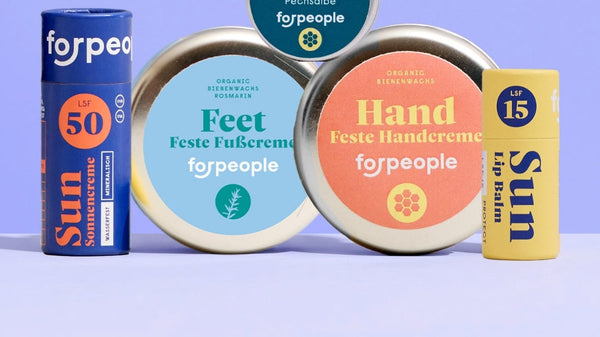
For babies' faces we have no product that is specifically labelled for this age group. For the cheeks, use a water-free wind and weather cream without fragrance and essential oils from the pharmacy that is labelled for infants, or ask your paediatrician. Our beeswax balm, pine resin salve and lemongrass lip balm contain essential oils and do not belong on a baby's face.
For sun on snow for older children and for yourself:
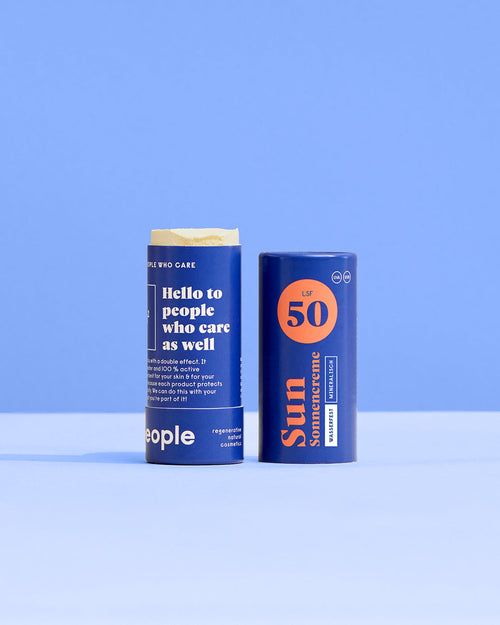
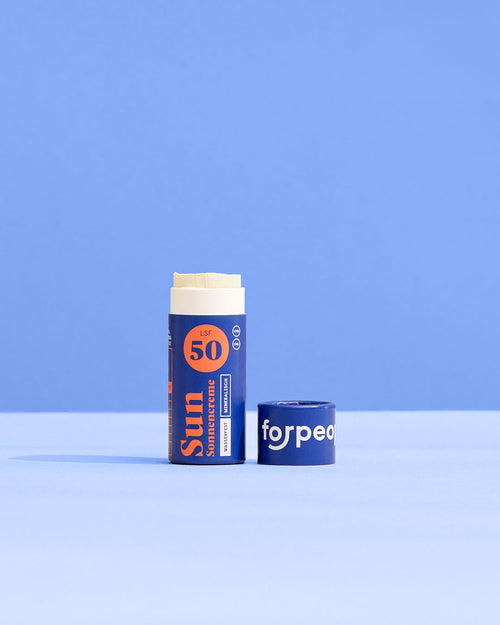
- Solid Sunscreen SPF50, 40 g, €17.90: mineral sun protection for face and body with zinc oxide and titanium dioxide (non-nano), plus, according to the ingredient list, shea butter, a plant-based fatty acid blend, beeswax and silica, without added fragrance.
- Solid Sunscreen SPF50 Travel Size, 20 g, €9.90: the same kind of sun protection in a small format for your jacket pocket.
According to the product pages, both are suitable for children from 10 months. The German Federal Office for Radiation Protection advises against any sunscreen in the first year of life; we follow this recommendation here and name the sunscreen for children from their first birthday. Do not use on broken or irritated skin.
Read more: Cold cream: water-free, but no protection against frost · Red hands and cheeks in the cold · Lip-licking dermatitis in children · Chilblains on toes and fingers
From the blog: Care for days in the snow: hands, lips, face
Sources
- Lehmuskallio E (1999): Cold protecting ointments and frostbite. A questionnaire study of 830 conscripts in Finland. Acta Dermato-Venereologica 79(1): 67–70. https://doi.org/10.1080/000155599750011750
- Lehmuskallio E (2000): Emollients in the prevention of frostbite. International Journal of Circumpolar Health 59(2): 122–130. PMID 10998829
- Stiftung Kindergesundheit (2016): Schnee und Berge auch für Zwerge? Wichtige Empfehlungen der Stiftung Kindergesundheit für den Winterurlaub mit kleinen Kindern. Newsletter, November 2016. Accessed 29 Oct 2026. kindergesundheit.de (PDF)
- Bundesinstitut für Öffentliche Gesundheit (BIÖG, German Federal Institute for Public Health): Hautprobleme bei Babys. kindergesundheit-info.de, as of 20 May 2026. Accessed 29 Oct 2026. kindergesundheit-info.de
- Bundesamt für Strahlenschutz (BfS, German Federal Office for Radiation Protection): Tipps zum UV-Schutz. As of 4 Aug 2026. Accessed 29 Oct 2026. bfs.de
- Massignan C, Cardoso M, Porporatti AL, Aydinoz S, Canto GL, Mezzomo LA, Bolan M (2016): Signs and symptoms of primary tooth eruption: a meta-analysis. Pediatrics 137(3): e20153501. https://doi.org/10.1542/peds.2015-3501
- DermNet: Atopic dermatitis. Stanway A (2004), updated by Jarrett P (February 2021), minor update May 2023. Accessed 29 Oct 2026. dermnetnz.org/topics/atopic-dermatitis
- Cooke A, Bedwell C, Campbell M, McGowan L, Ersser SJ, Lavender T (2018): Skin care for healthy babies at term: a systematic review of the evidence. Midwifery 56: 29–43. https://doi.org/10.1016/j.midw.2017.10.001
- Guillet G, Guillet MH (2000): Sensibilisation percutanée à l'huile d'amande chez le nourrisson et étude des pommades chez 27 enfants allergiques alimentaires. Allergie et Immunologie (Paris) 32(8): 309–311. PMID 11244925
- NHS: Hypothermia. Last reviewed 9 June 2023. Accessed 29 Oct 2026. nhs.uk/conditions/hypothermia