The problem: recognising white fingers
At the bus stop in the morning, reaching into the freezer or holding a cold steering wheel: suddenly one or more fingers turn waxy white, often with a sharp border, and feel numb. After a while they turn bluish. In the warm, the blood rushes back, the fingers turn red, throb and tingle. Such an attack lasts from a few minutes to a few hours. Triggers are cold, anxiety and stress; the toes, ears, nose, lips or nipples can also be affected. On brown and black skin the fingertips tend to look paler than usual (NHS: Raynaud's).
That the blood vessels in the skin narrow in the cold and the skin changes colour is, to begin with, a normal reaction. An international expert panel has therefore defined when to speak of Raynaud's phenomenon: the fingers are unusually sensitive to cold, they change colour in the cold, and they turn white, blue or both. White and blue are considered the decisive colours; the three-phase change of white, blue, red makes the diagnosis more likely but is not required (Maverakis et al. 2014).
It is not rare: an analysis of 33 studies estimates that just under 5% of the population have primary Raynaud's phenomenon. It is more common in women, in people with Raynaud's in the family, in smokers, in people doing manual work and in people with migraine (Garner et al. 2015).
The table helps you distinguish white fingers from other reactions to cold. It does not replace a diagnosis; only a medical examination can give you certainty.
| What you see | What it often is | What to do |
|---|---|---|
| The whole hands are cool and pale, turning red and warm indoors | normal vascular reaction to cold (Maverakis et al. 2014) | keep warm, warm up slowly |
| Skin mottled in a red-blue-white net pattern that disappears on rewarming | harmless mottling of the skin due to cold (DermNet: Livedo reticularis) | keep warm; if the pattern stays in the warm, have it checked |
| Individual fingers sharply white and numb, then blue, red on rewarming | Raynaud's phenomenon (Maverakis et al. 2014) | have it checked by a doctor once |
| Itchy or burning, red to purple swellings, hours after damp cold, lasting days | chilblains (DermNet: Chilblains) | keep warm and dry, have them checked if they recur |
| Itchy wheals a few minutes after cold | cold urticaria (DermNet: Cold urticaria) | have it checked, stay out of cold water until then |
| Skin white and numb after frost, later hard, blisters after rewarming | frostbite (DermNet: Frostbite) | get medical help straight away |
The harmless redness is described in Red hands and cheeks in the cold: what is normal and what helps. The two other reactions to cold have their own pages: Chilblains on toes and fingers: how to spot them, prevent them and what helps and Cold allergy (cold urticaria): hives from the cold – what to do?
Why fingers turn white in winter
What happens during an attack. In the cold, the body narrows the blood vessels in the skin to keep heat inside. With Raynaud's phenomenon this narrowing is so strong that the fingertips first turn pale because hardly any blood flows in, then blue because the tissue lacks oxygen, and finally red when the blood flows back (Maverakis et al. 2014). The tingling and throbbing afterwards come from the nerves as blood returns to them.
The typical triggers. Cold, cold wind and hands in cold water, as well as sudden emotional upset (DermNet: Raynaud phenomenon). Britain's NHS also names sudden temperature changes and caffeine (NHS: Raynaud's). Nicotine narrows the blood vessels and slows blood flow to the hands and feet (DermNet: Raynaud phenomenon). In autumn and winter everything comes together: cold mornings, wet gloves, the switch between heated rooms and icy air outside, cold drink bottles and shopping from the chiller cabinet.
Vibration at work. Working with vibrating tools, for example pneumatic drills, can also trigger Raynaud's phenomenon (DermNet: Raynaud phenomenon). Specialists speak of hand-arm vibration syndrome, which includes vibration-induced white finger. A review found an increased risk of such hand disorders with occupational vibration exposure, with odds ratios between 1.35 and 3.43 depending on the disorder; because most studies were cross-sectional, a causal link has not been firmly established (Gerger et al. 2023).
Primary or secondary. In primary Raynaud's phenomenon there is no underlying condition. It usually begins before the age of 25 (DermNet: Raynaud phenomenon), runs a benign course, usually affects both hands and leaves no tissue damage (Maverakis et al. 2014). Secondary Raynaud's is linked to another condition, above all connective tissue diseases such as systemic sclerosis; here small scars and open areas can develop on the fingertips (Maverakis et al. 2014). Certain medicines can also trigger Raynaud's phenomenon, for example some blood pressure and migraine medicines (DermNet: Raynaud phenomenon). Never stop such medicines on your own; talk to your practice. To tell the two forms apart, the doctor examines the fine vessels at the nail fold under a microscope and arranges blood tests if needed (Maverakis et al. 2014).
And the skin on the fingertips? Low temperatures and dry air weaken the skin's barrier function and make it more susceptible to mechanical stress (Engebretsen et al. 2016). If you feel the cold a lot in winter, wash your hands often and rinse them with warm water, you can easily end up with dry, cracked fingertips as well. That is a skincare matter; open, painful areas on the fingertips are not.
The solution step by step
| Step | What you do | Why |
|---|---|---|
| Straight away, during an attack | Go somewhere warm, put your hands under your armpits or hold them in lukewarm, not hot, water; circle or swing your arms | Swinging the arms can help get the circulation going again (DermNet: Raynaud phenomenon); numb fingers sense heat poorly |
| Every day | Put on gloves or mittens before your hands get cold; add a hat, scarf, warm socks and layers on your body | Warm clothing, especially on hands and feet, is one of the most important measures (NHS: Raynaud's) |
| Every day | Use pocket hand warmers, handle cold bottles and frozen food with gloves, drink from insulated cups | Cold on the hands is the most common trigger (DermNet: Raynaud phenomenon) |
| Every day | Keep your home warm, avoid sudden temperature changes, exercise regularly | NHS recommendations (NHS: Raynaud's) |
| Prevention | Do not smoke, keep caffeine moderate | Nicotine narrows the vessels (DermNet: Raynaud phenomenon); caffeine can trigger attacks (NHS: Raynaud's) |
| Prevention | If stress is a trigger: try breathing exercises, relaxation or exercise | The NHS mentions breathing exercises and yoga (NHS: Raynaud's) |
| At work | If you use vibrating tools, talk to your company doctor (occupational physician) about protection and breaks | Vibration increases the risk of white fingers (Gerger et al. 2023) |
| Skincare | Care for dry, rough fingertips after washing your hands and in the evening with a water-free hand cream; do not apply cream to open areas | A film of wax and oil protects the skin from drying out; open areas should be seen by a doctor |
How to care for cracked fingertips in a targeted way is described in Cracked, split fingertips: causes and what helps, and for the knuckles in Dry knuckles: why exactly there? If you wear disposable or protective gloves at work, you will find the right time for skincare in Hand cream under latex or nitrile gloves?
What helps – and what tends not to
| Habit or home remedy | Assessment |
|---|---|
| Mittens instead of fingered gloves | helps: the fingers warm each other, which is common practice |
| Hand and foot warmers, lined slippers | helps (DermNet: Raynaud phenomenon) |
| Warming numb fingers on the radiator or under hot water | tends not to: skin with reduced feeling does not notice when it gets too hot |
| "Just one" cigarette outside in the cold | no: nicotine and cold narrow the vessels even further |
| Lots of coffee to warm up | tends not to: caffeine can trigger attacks (NHS: Raynaud's) |
| Thick cream as cold protection | does not warm and does not protect against cold, see Cold cream: water-free, but no protection from frost |
| Stopping suspected medicines on your own | no: always discuss with your practice first |
Common mistakes
The most common mistake is putting on gloves only once the fingers are already white; then it takes a long time for them to warm up again. A second is thinking only about the hands: if you are cold all over because your jacket or hat is missing, the vessels in your hands and feet narrow all the more. Third, white fingers are dismissed for years as "poor circulation", even when they only started after the age of 30 or affect just one hand. Fourth: simply leaving out tablets you suspect. Fifth: ignoring cracked fingertips or putting cream on open areas instead of having them looked at by a doctor.
When to seek medical advice
Have every case of Raynaud's phenomenon checked once, so that an underlying condition is not missed. The first point of contact is your GP; depending on the findings, you may be referred to a vascular specialist, rheumatologist or dermatologist.
Seek medical advice soon if (NHS: Raynaud's):
- the attacks start for the first time after the age of 30,
- only one side of the body is affected,
- you also have joint pain, skin rashes or muscle weakness,
- the attacks are very severe, become more frequent or limit your everyday life,
- a child under 12 is affected.
The same applies if small scars, pits or open areas develop on the fingertips (Maverakis et al. 2014), if the skin on your fingers becomes thick and tight, or if you work with vibrating tools.
You need medical help straight away if a finger or hand suddenly becomes cold, white or blue and painful and does not recover in the warm, or if areas turn dark or black. That is not a typical Raynaud's attack. Skin that stays white, hard and numb after frost or forms blisters suggests frostbite (DermNet: Frostbite).
Frequently asked questions
Why do my fingers turn white in the cold?
The small vessels in the fingers narrow so much in the cold that hardly any blood flows into the fingertips. This is called Raynaud's phenomenon. As they warm up, the fingers first turn blue and then red because the blood returns.
Is Raynaud's syndrome dangerous?
The common primary form is benign and causes no lasting damage. In the secondary form another illness is behind it, and open areas can develop on the fingertips. That is why every case of Raynaud's phenomenon should be checked by a doctor once.
Raynaud's phenomenon, Raynaud's syndrome, Raynaud's disease: what is the difference?
The terms are not used consistently. Raynaud's phenomenon describes the sudden colour changes. Raynaud's disease usually means the primary form without an underlying condition, while secondary Raynaud's syndrome means the form with an underlying condition.
Can Raynaud's also affect the feet?
Yes. Besides the fingers, the toes are often affected, less often the ears, nose, lips or nipples. Warm socks, dry shoes and exercise help; more on cold, dry feet in Dry feet in winter: what causes it, what helps?
My hands are red and white blotchy in the cold: is that Raynaud's?
Not necessarily. A net-like, red-blue-white mottling that disappears on rewarming is common and harmless. Typical of Raynaud's are individual fingers that turn sharply white and numb. If a blotchy pattern stays in the warm, have it looked at by a doctor.
Do white fingers have anything to do with the heart?
Raynaud's phenomenon affects the small vessels of the fingers. A review found a link with cardiovascular disease, but it still needs to be confirmed. Chest pain, shortness of breath or palpitations should always be checked by a doctor.
Can Raynaud's occur while breastfeeding?
Yes, the nipples can also be affected by Raynaud's phenomenon; they can turn pale and hurt. If you notice this while breastfeeding, talk to your midwife or gynaecologist.
Which gloves make sense for white fingers?
Warm, lined mittens that stay dry, with thin liner gloves if needed. Put them on before you go out, and take a spare pair if they might get wet.
At forpeople
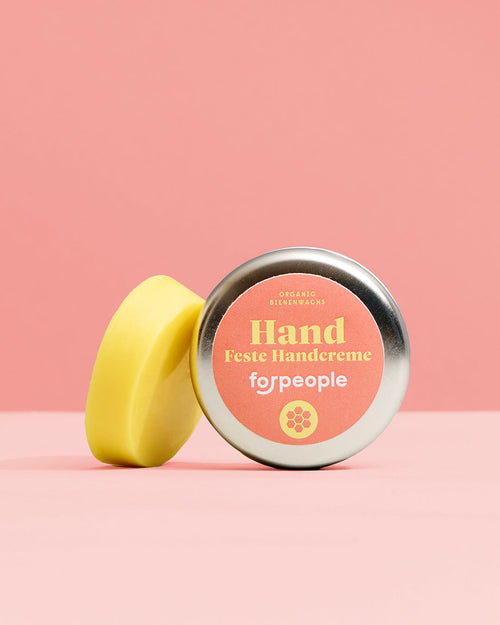
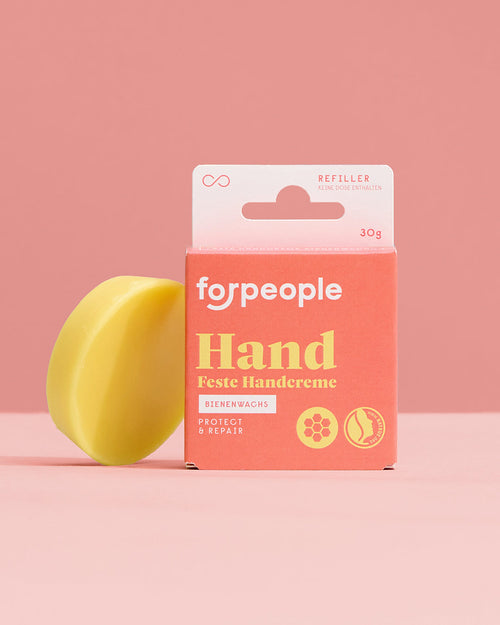
No cream helps against white fingers; skincare does not warm and does not change the circulation. For dry, rough fingertips and hands in winter, the Solid Hand Cream - Beeswax (30 g, €9.90) is suitable; according to its product page it is intended for dry, rough and stressed hands. According to its ingredient list it consists of beeswax, olive and sunflower oil, St. John's wort and aloe extract, without fragrance, without essential oils and without water; the metal tin fits in your jacket pocket. For refilling there is the Solid Hand Cream Refill - Beeswax (30 g, €7.90). Do not apply to open, broken or irritated areas; open areas on the fingertips should be seen by a doctor.
More on this: Skin peeling on fingers and hands: causes and what helps · Skin after ice bathing: red, burning, dry
Sources
- Maverakis E, Patel F, Kronenberg DG, Chung L, Fiorentino D, Allanore Y et al. (2014): International consensus criteria for the diagnosis of Raynaud's phenomenon. Journal of Autoimmunity 48–49: 60–65. https://doi.org/10.1016/j.jaut.2014.01.020
- Garner R, Kumari R, Lanyon P, Doherty M, Zhang W (2015): Prevalence, risk factors and associations of primary Raynaud's phenomenon: systematic review and meta-analysis of observational studies. BMJ Open 5(3): e006389. https://doi.org/10.1136/bmjopen-2014-006389
- NHS: Raynaud's. Last reviewed 20.07.2023, accessed 29.10.2026. https://www.nhs.uk/conditions/raynauds/
- DermNet: Raynaud phenomenon. Maurice P (2004), revised July 2021, accessed 29.10.2026. https://dermnetnz.org/topics/raynaud-phenomenon
- Gerger H, Søgaard K, Macri EM, Jackson JA, Elbers RG, van Rijn RM et al. (2023): Exposure to hand-arm vibrations in the workplace and the occurrence of hand-arm vibration syndrome, Dupuytren's contracture, and hypothenar hammer syndrome: a systematic review and meta-analysis. Journal of Occupational and Environmental Hygiene 20(7): 257–267. https://doi.org/10.1080/15459624.2023.2197634
- DermNet: Livedo reticularis. Ngan V (2003), updated by de Menezes S and Oakley A, September 2016, accessed 29.10.2026. https://dermnetnz.org/topics/livedo-reticularis
- DermNet: Chilblains. Oakley A (1999), updated by Tang GT and Nixon R, February 2021, accessed 29.10.2026. https://dermnetnz.org/topics/chilblains
- DermNet: Cold urticaria. Ngan V (2006), minor amendment by Coulson I, July 2024, accessed 29.10.2026. https://dermnetnz.org/topics/cold-urticaria
- DermNet: Frostbite. Ngan V (2005), accessed 29.10.2026. https://dermnetnz.org/topics/frostbite
- Engebretsen KA, Johansen JD, Kezic S, Linneberg A, Thyssen JP (2016): The effect of environmental humidity and temperature on skin barrier function and dermatitis. Journal of the European Academy of Dermatology and Venereology 30(2): 223–249. https://doi.org/10.1111/jdv.13301