The problem: when dry skin cracks and itches
It usually starts harmlessly. In November the shins get rough, and fine flakes collect on dark trousers. A few weeks into the heating season, lines appear that join up into a net, with reddish furrows in between. The skin itches, sometimes it burns, and in bed at night you scratch. By then dry skin has turned into eczema.
Specialists call it asteatotic eczema, xerotic eczema or eczema craquelé, after the cracked pattern; in German it is known as Exsikkationsekzem or Austrocknungsekzem (DermNet: Asteatotic eczema). A German reference work compares the appearance to cracked porcelain and names the lower legs, especially the front of the shin, the outer sides of the arms and the trunk as typical sites (Altmeyer 2025). It often starts on one shin and spreads to both lower legs (DermNet). It mainly affects older people, but anyone with very dry skin can get it (DermNet).
"Winter eczema" is not a fixed medical term. Many people mean asteatotic eczema, others any form of eczema that gets worse in winter. In children, itchy winter patches are more often atopic eczema; the difference is explained in Dry skin or atopic eczema? How to tell the difference. The table below helps you get your bearings. It does not replace a diagnosis; only a medical examination gives certainty.
| Feature | dry skin | asteatotic eczema |
|---|---|---|
| Appearance | dull, rough, finely flaking | a net of fine cracks with red furrows in between; scratch marks |
| Redness | hardly any | yes, along the cracks |
| Symptoms | feels tight, itches little | clearly itchy, sometimes burning or painful |
| Typical sites | shins, arms, hands | mainly the lower legs, then arms and trunk |
| Course | improves with care within a few days | usually needs medical treatment of the inflammation; often comes back |
Features according to DermNet: Asteatotic eczema and Altmeyer 2025. In older age, other conditions can look similar, such as late-onset atopic eczema, contact eczema, scabies or, rarely, the early stage of a blistering skin disease or a lymphoma of the skin (Harries et al. 2023). That is another reason to have it looked at.
Why this happens in autumn and winter
It starts with water loss from the horny layer, the outermost layer of the skin, when the skin barrier is weakened by predisposition and outside influences (DermNet). If the horny layer dries out a lot, it contracts and cracks in a net-like pattern. The skin in the cracks becomes inflamed and itches. Scratching deepens the cracks further.
Winter adds to this in several ways. Low humidity and low temperatures reduce the skin's barrier function and make it more reactive to irritants (Engebretsen et al. 2016). The medical literature names dry air, for example from fan heaters, and bathing too often, especially with soap, as triggers (DermNet), as well as long or hot baths and soaping the whole body every day (Altmeyer 2025). With age the skin produces less of its own fats; this is explained in Dry skin in old age: causes, winter care and applying oil safely. Why the shins in particular have so little fat is covered in Why are shins dry and flaky in winter?
Medicines can also contribute, for example water tablets (diuretics) and retinoids, as can an underactive thyroid or marked weight loss (DermNet). More on this in Dry skin from medication: causes and what you can do. The European guideline on chronic itch describes itch that occurs mainly in winter in older people with asteatotic eczema and often in atopic eczema or psoriasis (Weisshaar et al. 2025).
The solution step by step
| Step | What you do | Why |
|---|---|---|
| Right away: have it checked | show red, itchy cracks to your GP or a dermatologist; the treatment of the inflammation, often a cortisone cream for a few days, is decided by the practice | care alone is usually not enough for eczema; the medical literature also describes a short treatment of the red skin (DermNet) |
| Right away: curb scratching | keep fingernails short, wear soft cotton clothing, no wool directly on the legs | as recommended by the guideline on chronic itch (Weisshaar et al. 2025) |
| Every day: washing | lukewarm and brief, a bath for 20 minutes at most; soap only for armpits, groin and feet, otherwise a soap-free, unperfumed wash lotion; pat dry instead of rubbing | soap-free cleansers improved dry skin in older people compared with soap (Lichterfeld-Kottner et al. 2020); lukewarm water and patting dry are named in the guideline (Weisshaar et al. 2025) |
| Every day: moisturising | straight after washing, apply a rich, fat-based product to the whole dry area; several times a day if the skin is very dry; on the inflamed areas only what the practice recommends | the drier the skin, the more fat the product should contain; the best studied are products that combine fat with humectants such as urea (Augustin et al. 2019) |
| Prevention: indoor air | don't overheat rooms, keep the bedroom on the cool side, don't point fan heaters or hot-water bottles directly at the legs | the literature advises avoiding direct heat on the skin (DermNet); a low room temperature at night is named in the guideline (Weisshaar et al. 2025) |
| Long term: start early | from the start of autumn, before the first cracks, care for the skin daily and keep up the washing habits | the eczema usually responds quickly to treatment, but is very likely to come back (DermNet) |
How to measure and humidify indoor air is explained in Humidity and skin: what dry heated air does and what helps.
What helps – and what tends not to
| Measure | Assessment |
|---|---|
| Daily fat-based care, also after the inflammation has settled | helps; the literature names thick, greasy care several times a day as the basis (DermNet) |
| Care with urea or glycerin | well studied for dry skin (Augustin et al. 2019); leave-on products with humectants reduced dryness and itch in older people (Lichterfeld-Kottner et al. 2020). On open cracks only after asking your doctor |
| A long, hot bath to warm up | tends not to help; bathing too often and too hot is one of the triggers (Altmeyer 2025) |
| Rubbing off the flakes with a brush, mitt or scrub | tends not to help; the skin is not thickened but dried out and cracked, and friction irritates it further |
| Compresses with chamomile or tea tree oil | tends not to help; for itch the guideline advises avoiding such irritants (Weisshaar et al. 2025) |
| Over-the-counter cortisone cream on suspicion | not without a diagnosis; whether it is asteatotic eczema and how long such a cream is needed is for the practice to decide |
| Olive oil from the kitchen | adds fat and is an option on dry skin that is not inflamed; it contains no humectant |
| Humidifier | can help when the indoor air is very dry; mind the hygiene (see Humidity and skin) |
The difference between fat-based care and humectants is explained in Urea or water-free cream? Rough heels and dry hands.
Common mistakes
- Only reacting once it bleeds. If your shins crack every winter, start daily care in autumn.
- Only moisturising the cracks. Usually the whole lower leg is dry; the care belongs on the whole area.
- Soaping the whole body every day. This removes fat even where there is no dirt.
- Warming your legs in front of a fan heater or with a hot-water bottle. Direct heat dries the skin out further.
- Trying lots of new, perfumed products. On cracked skin the risk of irritation or contact allergy rises; the guideline names perfume-free products (Weisshaar et al. 2025).
- Stopping a prescribed cream too early or too late. Stick to the duration your practice gives you, and keep up the care afterwards.
When to get medical advice?
Cosmetics care for dry skin; they do not treat eczema. Have your skin looked at by your GP or a dermatologist if
- red, itchy cracks appear in a net-like pattern, even if you suspect it is "just" asteatotic eczema,
- areas weep, bleed, crust or hurt,
- the skin does not improve after about two weeks of consistent care or the eczema spreads; in severe cases the inflammation can spread over large parts of the body (DermNet),
- the skin suddenly scales heavily over large areas, especially with weight loss, fever or feeling very unwell; the practice will then look thoroughly for an internal cause (DermNet); more in Suddenly dry skin all over the body: causes and when to have it checked,
- the symptoms started after a new medicine; don't stop it on your own, talk to your practice,
- a lower leg is swollen or turns brownish; the practice will then also look for other causes,
- several people in your household itch at the same time; scabies is then a possibility (Harries et al. 2023); more in Itchy skin at night in bed: why it gets worse in the evening and what helps,
- you have diabetes or poor circulation in the legs; then cracks on the lower legs and feet belong in medical hands early.
On the same day you should seek medical help, outside surgery hours via the out-of-hours medical service (116 117 in Germany), if the skin around a crack becomes hot, swollen, red and painful. Bacteria can enter through cracked, dry skin and cause a tissue infection, which often occurs on the legs (NHS: Cellulitis). Call the emergency number 112 if this comes with a high temperature or shivering, a fast heartbeat or fast breathing, dizziness, confusion or cold, pale, clammy skin (NHS: Cellulitis). For itch in winter in general, see Itchy skin in winter: showering, care and when to see a doctor.
Frequently asked questions
What is asteatotic eczema?
Inflammation of the skin caused by severe drying out. The horny layer loses water, cracks in a net-like pattern, and the skin in the cracks becomes inflamed. Other names are xerotic eczema, eczema craquelé and, in German, Exsikkationsekzem or Austrocknungsekzem. It is caused by dryness, not by germs.
What does asteatotic eczema look like?
Like a net of fine cracks with red furrows running between them, similar to crazed porcelain or a dried-out riverbed. Scratch marks are often visible. The lower legs are most often affected.
Which cream or ointment helps with asteatotic eczema?
Your practice decides. A cortisone cream is often applied to the inflamed areas for a few days. For daily care: the drier the skin, the richer the product; products with urea are the best studied.
How long does asteatotic eczema last?
With treatment and consistent care it usually improves quickly. But it readily comes back, especially the next winter. That's why care stays part of everyday life even when the skin has settled.
Can asteatotic eczema appear on the hands or face?
Typical sites are the lower legs, arms and trunk. Red, scaly patches on the hands often have other causes, such as hand eczema; see Dry hands or hand eczema? How to tell the difference. New eczema on the face should be assessed by a doctor.
My child has winter eczema. Is it the same thing?
Usually not. Asteatotic eczema mainly affects older people. In children, chronic itch is mostly due to skin diseases, especially atopic eczema (Weisshaar et al. 2025). Have itchy, red patches in children looked at by a paediatrician.
Which ICD-10 code belongs to asteatotic eczema?
A German reference work assigns it to code L30.8, "other specified dermatitis" (Altmeyer 2025). Which code appears on a certificate is up to the practice.
Is asteatotic eczema dangerous?
Usually not, but it is unpleasant and can spread. Germs can get in through the cracks. If the skin becomes hot, swollen and painful, it needs medical attention the same day.
At forpeople
We don't recommend any of our own products for the inflamed eczema; the treatment is decided by your practice, and according to the product page our care does not belong on injured or irritated skin. For dry skin that is not inflamed, for example on the legs once the inflammation has settled or for prevention from the start of autumn, these are suitable:
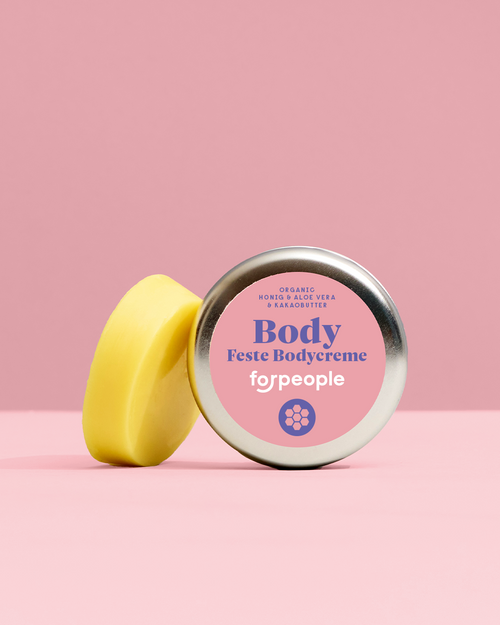
- Solid Body Butter - Beeswax & Aloe Vera, 40 g, €9.90: cocoa butter, olive oil, beeswax, sunflower oil, shea butter and aloe vera extract; according to the ingredient list without essential oils. According to the product page, apply after showering to still damp skin.
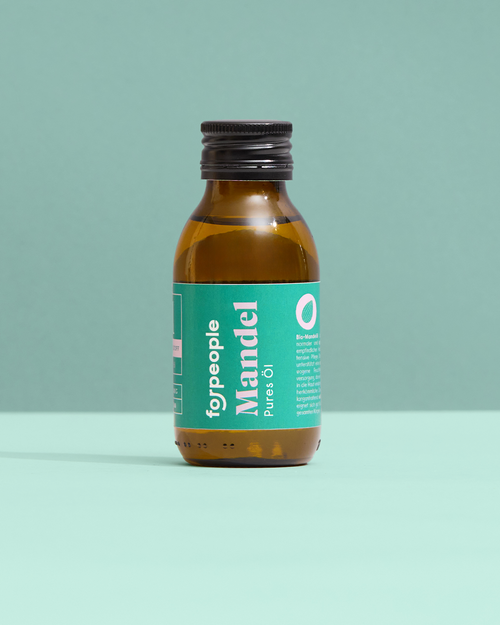
- Almond Oil - pure, 100 ml, €14.90: according to the ingredient list only almond oil; according to the product page intended for dry skin and large areas. Don't use it if you are allergic to almonds or nuts.
Both are water-free and contain no humectant such as urea. For very dry skin, a urea product from the pharmacy may be more suitable; ask your practice about it.
Read more: Dry skin in winter: what helps with cold and indoor heating · Psoriasis in winter: why it often gets worse and how to care for your skin
Sources
- DermNet: Asteatotic eczema (eczema craquelé). Oakley A, updated July 2014, accessed 29 Oct 2026. https://dermnetnz.org/topics/asteatotic-eczema
- Altmeyer P, Bacharach-Buhles M: Exsikkationsekzem L30.8. Altmeyers Enzyklopädie – Dermatology, updated 29 Jul 2025, accessed 29 Oct 2026. https://www.altmeyers.org/de/dermatologie/exsikkationsekzem-4685
- Augustin M, Wilsmann-Theis D, Körber A, Kerscher M, Itschert G, Dippel M, Staubach P (2019): Diagnosis and treatment of xerosis cutis – a position paper. Journal der Deutschen Dermatologischen Gesellschaft 17(Suppl 7): 3–33. https://doi.org/10.1111/ddg.13906
- Weisshaar E, Müller S, Szepietowski JC, Dalgard F, Garcovich S, Kupfer J et al. (2025): European S2k Guideline on Chronic Pruritus. Acta Dermato-Venereologica 105: adv44220. https://doi.org/10.2340/actadv.v105.44220
- Engebretsen KA, Johansen JD, Kezic S, Linneberg A, Thyssen JP (2016): The effect of environmental humidity and temperature on skin barrier function and dermatitis. Journal of the European Academy of Dermatology and Venereology 30(2): 223–249. https://doi.org/10.1111/jdv.13301
- Lichterfeld-Kottner A, El Genedy M, Lahmann N, Blume-Peytavi U, Büscher A, Kottner J (2020): Maintaining skin integrity in the aged: A systematic review. International Journal of Nursing Studies 103: 103509. https://doi.org/10.1016/j.ijnurstu.2019.103509
- Harries L, Traidl S, Klespe KC, Werfel T (2023): Altersekzeme und deren Therapie [Eczema and its treatment in older adults]. Die Dermatologie 74(9): 678–686. https://doi.org/10.1007/s00105-023-05206-6
- NHS: Cellulitis. Last reviewed 18 Apr 2024, accessed 29 Oct 2026. https://www.nhs.uk/conditions/cellulitis/