The problem: itching on the bump, hands and feet
The bump grows, the skin feels tight, and in the evening on the sofa it itches. Many pregnant women know this. In a British study of 6,532 pregnant women, about one in four had itching; those without a liver disorder felt it most often on the abdomen (Kenyon et al. 2010). The cause is usually changing hormones and the stretching of the skin; the itching usually stops after the birth (NHS: Itching in pregnancy).
One exception is important. In intrahepatic cholestasis of pregnancy (ICP), bile builds up in the liver and bile acids rise in the blood. It shows itself through severe itching without an actual rash, only with scratch marks, and usually occurs at the end of the second or in the third trimester; it affects about one in a hundred pregnant women (Weisshaar et al. 2025). Itching that is worst on the palms and soles or all over the body points more towards it (Kenyon et al. 2010). High bile acid levels are associated with a higher risk of premature birth, breathing problems in the newborn and the baby dying in the womb (Weisshaar et al. 2025). So: report itchy palms or soles, or itching that gets worse at night or keeps you awake, straight away (NHS).
The table helps you get your bearings. It does not replace a diagnosis; only a medical examination gives certainty.
| What you notice | What may be behind it | What you do |
|---|---|---|
| the bump itches, the skin feels tight, no rash, bearable | stretching of the skin, hormones, dry skin (NHS) | care and habits (see below); mention it at your antenatal check-up |
| severe itching on the palms and soles or all over, worse at night, no rash, usually from the second half of pregnancy | intrahepatic cholestasis of pregnancy (Weisshaar et al. 2025) (Kenyon et al. 2010) | same day: gynaecologist, midwife or maternity unit; blood test |
| very itchy red bumps that start in the stretch marks on the abdomen and merge into raised patches, usually in the last third | polymorphic eruption of pregnancy (DermNet: Polymorphic eruption of pregnancy) | have it checked by a doctor |
| a rash that starts at the navel itself, or blisters | pemphigoid gestationis is then considered (DermNet) | have it checked by a doctor promptly |
| itchy, eczema-like patches or bumps before the last third | atopic eruption of pregnancy, which starts much earlier than the other forms (Ambros-Rudolph et al. 2006) | have it checked by a doctor |
| tingling or itching in the legs at rest in the evening, urge to move them | restless legs syndrome; pregnancy is a possible cause, and it usually goes away after the birth (NHS: Restless legs syndrome) | mention it at your antenatal check-up |
In an analysis of 505 pregnant women with itchy skin conditions, the eczema form was most common, followed by polymorphic eruption of pregnancy; cholestasis accounted for 3 per cent (Ambros-Rudolph et al. 2006). Rare does not mean unimportant, though: it is the form you must not miss.
Why it itches, and what winter adds
On the abdomen, breasts and thighs the skin stretches a lot within a few months. This is also where stretch marks develop in 50 to 90 per cent of pregnant women (Brennan et al. 2012). Stretched, taut skin itches more readily, and changing hormones play a part (NHS). In autumn and winter, heated air and hot showers dry the skin out further. Wool and tight clothing rub over the bump, warm duvets keep warmth on the skin, and in the evening there is nothing to distract you; why itch increases at night is explained in Itchy skin at night in bed: why it gets worse in the evening and what helps.
Intrahepatic cholestasis of pregnancy has other causes. It is triggered by pregnancy hormones in women with an inherited predisposition and resolves after the birth; diet and seasonal variation are discussed as further influences (Weisshaar et al. 2025). A cream does nothing about it. It is diagnosed and graded by the bile acids in the blood: the British guideline speaks of a mild form from a peak value of 19 micromoles per litre, a moderate form from 40 and a severe form from 100 (RCOG 2022).
The solution step by step
| Step | What you do | Why |
|---|---|---|
| Right away if warning signs appear | itching on the palms or soles, very severe itching or itching that keeps you awake at night: call your gynaecologist, midwife or maternity unit the same day | this is the advice of the British health service (NHS); the diagnosis needs a blood test (RCOG 2022) |
| Every day: washing | shower or bathe in cool or lukewarm water for no longer than 20 minutes; no perfumed soaps or shower gels | NHS advice for itching in pregnancy (NHS) |
| Every day: moisturising | regularly apply an unperfumed product, ideally straight after patting dry; without essential oils | the NHS names unperfumed moisturisers (NHS); essential oils should be used as little as possible and with caution in pregnant women (BfR 2026) |
| Clothing | loose clothing made of cotton, no wool directly on the bump | the NHS recommends loose natural fibres such as cotton (NHS) |
| When it itches | pat or tap the skin instead of scratching; keep your fingernails short | (NHS); scratching injures the taut skin |
| In the evening | rather avoid spicy food and lots of coffee or black tea; don't overheat the bedroom | spicy food and caffeine can make itching worse (NHS) |
| With new products | try them on a small area first, not several at once | the BfR also advises a patch test on a small area of skin before using essential oils (BfR 2026); more in Trying a new product: how do I test it on a small area? |
What helps – and what tends not to
| Measure | Assessment |
|---|---|
| Unperfumed, fat-based care | helps with dry, tight skin (NHS); it changes nothing about cholestasis |
| Oils and creams to prevent stretch marks | no high-quality evidence; a Cochrane review of six studies with 800 women found no reliable difference (Brennan et al. 2012). Moisturising cares for the skin; there is no promise regarding stretch marks |
| Scented massage oils with essential oils | tends not to; reduce as far as possible in pregnancy (BfR 2026); how to mix without fragrance is explained in Mixing your own massage oil: how much essential oil per 100 ml? |
| Care creams with polidocanol, urea or menthol | the European guideline names them as acceptable additives in pregnancy that may additionally dampen itching (Weisshaar et al. 2025); ask your practice or a pharmacy which one suits you |
| Tablets or cortisone cream on your own initiative | tends not to; in pregnancy every treatment is carefully weighed up (Weisshaar et al. 2025); your practice decides |
| Long, hot baths | tends not to; 20 minutes at most, cool or lukewarm (NHS) |
Common mistakes
- Mistaking itchy hands and feet for dry skin. In pregnancy, itching on the palms and soles is a reason for a same-day phone call, not for a new cream.
- Waiting until the next antenatal appointment. Report warning signs immediately, also in the evening or at weekends via the maternity unit.
- Saying nothing more after normal blood results. If the itching continues or gets stronger, get in touch again.
- Applying scented oils over large areas of the bump. Essential oils are not needed to care for the skin in pregnancy.
- Scratching until the skin breaks. Taut skin tears easily, and open areas are no place for care products.
When to get medical advice?
On the same day, if necessary via the maternity unit of your hospital, get in touch if
- your palms or soles itch,
- the itching is very severe, gets worse at night or keeps you awake (NHS),
- your skin or eyes turn yellowish.
Also see your gynaecologist or GP if
- a new rash, bumps or swelling appear, or the itching is a heavy burden in everyday life and does not improve (NHS),
- small or large blisters form or the rash starts at the navel; then promptly (DermNet),
- you have atopic eczema or another eczema and it gets worse (NHS); background in Dry skin or atopic eczema? How to tell the difference,
- you had cholestasis in a previous pregnancy; such a history is typical of this form (Ambros-Rudolph et al. 2006). Mention it early at your antenatal care,
- it itches or burns in the intimate area or your discharge changes; the examination will clarify the cause.
With intrahepatic cholestasis of pregnancy, your care team sets out a plan with extra check-ups and medicines; sometimes labour is induced early (NHS). Immediately, even in the middle of the night, call your midwife or maternity unit if your baby is moving less than usual, you can no longer feel movements or the usual pattern changes; don't wait until the next day (NHS: Your baby's movements). In case of breathing difficulty, fainting or severe pain, call the emergency number 112.
Frequently asked questions
Is itching in pregnancy normal?
Yes, it is common: in a large British study it affected about one in four pregnant women. It is usually due to hormones, stretching and dry skin. Itching on the palms and soles or very severe itching at night, however, should be checked by a doctor the same day.
Why does my bump itch so much in pregnancy, especially in the evening?
The skin on the abdomen stretches quickly and often becomes drier. In the evening it is warmer, and nothing distracts you. If it itches very badly or a rash appears, have it looked at.
How do I recognise intrahepatic cholestasis of pregnancy?
By severe itching without an actual rash, often on the palms and soles, worse at night, usually from the second half of pregnancy. It can only be confirmed with a blood test of bile acids and liver values.
Is intrahepatic cholestasis of pregnancy dangerous for the baby?
With high bile acid levels, the risk of premature birth and, rarely, of the baby dying in the womb rises. That's why it is closely monitored. Most women with cholestasis have a healthy birth (NHS).
My hands and feet itch in pregnancy. What should I do?
Call your gynaecologist, midwife or maternity unit the same day and describe the itching precisely. Until then, cool the skin and don't scratch.
Do oils or creams help against stretch marks?
There is no high-quality evidence for this. Moisturising cares for the taut skin; according to current knowledge it does not reliably affect whether stretch marks develop.
Which care products can I use in pregnancy?
Ideally simple, unperfumed care without essential oils, and try new products on a small area first. If a deodorant stings under your arms, see Fragrance-free deodorant: what to look for with sensitive underarms; for burning, sore skin under the breasts see Sore skin under the breasts and in skin folds (intertrigo): what helps.
Can cholestasis come back in my next pregnancy?
A previous cholestasis is considered a typical sign of this form. Mention it early in every further pregnancy so that your practice can keep an eye on it.
At forpeople
We do not recommend products with essential oils during pregnancy. According to their ingredient lists, our body oils, the bee balm and the foot cream contain them; that is why we don't mention them here. For dry, tight skin without a rash, these are suitable:
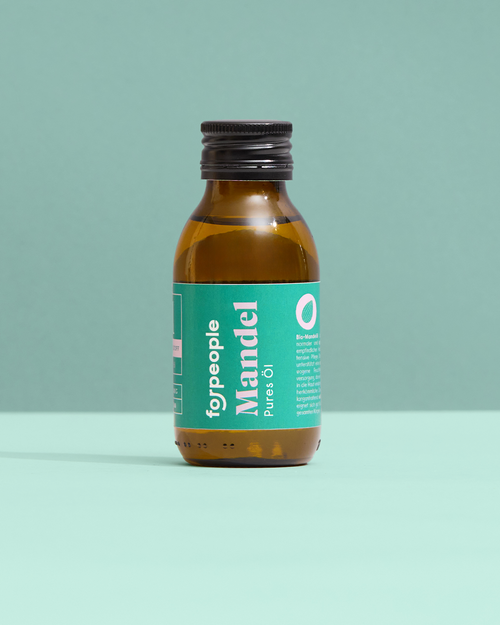
- Almond Oil - pure, 100 ml, €14.90: according to the ingredient list only almond oil, without added fragrance; according to the product page intended for dry skin and large areas. Don't use it if you are allergic to almonds or nuts.
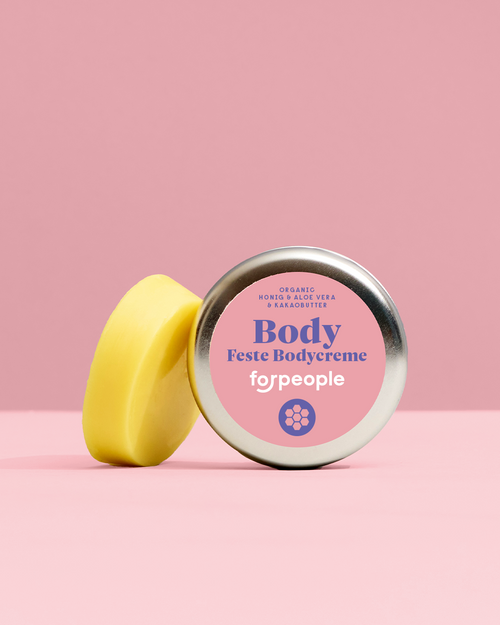
- Solid Body Butter - Beeswax & Aloe Vera, 40 g, €9.90: cocoa butter, olive oil, beeswax, sunflower oil, shea butter and aloe vera extract; according to the ingredient list without essential oils, the light scent comes from the beeswax. According to the product page, apply after showering to still damp skin.
According to the product pages, neither belongs on injured or irritated skin. A care product changes nothing about intrahepatic cholestasis of pregnancy and does not replace an examination. Which fragrance substances must be labelled is explained in Essential Oils and Fragrance Allergens.
Read more: Dry skin before your period or after stopping the pill: hormonal causes and care · Suddenly dry skin all over the body: causes and when to have it checked
Sources
- NHS: Itching in pregnancy. Last reviewed 24 Feb 2026, accessed 29 Oct 2026. https://www.nhs.uk/pregnancy/related-conditions/complications/itching-and-intrahepatic-cholestasis/
- Weisshaar E, Müller S, Szepietowski JC, Dalgard F, Garcovich S, Kupfer J et al. (2025): European S2k Guideline on Chronic Pruritus. Acta Dermato-Venereologica 105: adv44220. https://doi.org/10.2340/actadv.v105.44220
- Girling J, Knight CL, Chappell L; Royal College of Obstetricians and Gynaecologists (2022): Intrahepatic cholestasis of pregnancy. Green-top Guideline No. 43. BJOG 129(13): e95–e114. https://doi.org/10.1111/1471-0528.17206
- Kenyon AP, Tribe RM, Nelson-Piercy C, Girling JC, Williamson C, Seed PT et al. (2010): Pruritus in pregnancy: a study of anatomical distribution and prevalence in relation to the development of obstetric cholestasis. Obstetric Medicine 3(1): 25–29. https://doi.org/10.1258/om.2010.090055
- Ambros-Rudolph CM, Müllegger RR, Vaughan-Jones SA, Kerl H, Black MM (2006): The specific dermatoses of pregnancy revisited and reclassified: results of a retrospective two-center study on 505 pregnant patients. Journal of the American Academy of Dermatology 54(3): 395–404. https://doi.org/10.1016/j.jaad.2005.12.012
- DermNet: Polymorphic eruption of pregnancy. Oakley A (1999), updated by Elghblawi E, September 2017, accessed 29 Oct 2026. https://dermnetnz.org/topics/polymorphic-eruption-of-pregnancy
- Brennan M, Young G, Devane D (2012): Topical preparations for preventing stretch marks in pregnancy. Cochrane Database of Systematic Reviews 11: CD000066. https://doi.org/10.1002/14651858.CD000066.pub2
- German Federal Institute for Risk Assessment (BfR) (2026): Ätherische Öle: Duftende Wirkungen mit Einschränkungen [Essential oils]. Questions and answers of 2 September 2026. https://www.bfr.bund.de/fragen-und-antworten/thema/aetherische-oele-duftende-wirkungen-mit-einschraenkungen/
- NHS: Your baby's movements. Last reviewed 8 Jul 2024, accessed 29 Oct 2026. https://www.nhs.uk/pregnancy/keeping-well/your-babys-movements/
- NHS: Restless legs syndrome. Last reviewed 22 Sep 2025, accessed 29 Oct 2026. https://www.nhs.uk/conditions/restless-legs-syndrome/