







The problem: back from the sun, and the skin is flaking
Autumn holidays by the sea, a week of winter sun in the south or a ski trip: on holiday your skin was tanned and felt good. A few days after you get back it feels tight, fine flakes or whole patches of skin come off your shoulders, nose and chest, and your shins look grey and rough. Sometimes this only starts at home, when the heating is on and it is cold outside.
There is rarely just one cause. On holiday several influences come together that seem harmless on their own: lots of sun, lots of time in the water, a shower after every swim, air conditioning in the hotel, a long flight. At home, skin that has been strained like this then meets dry heated air.
Why skin dries out after a holiday
UV radiation plays the biggest role. It makes the cells of the epidermis divide faster, the epidermis becomes thicker, and the skin also produces more pigment, the tan (D'Orazio et al. 2013). At the same time, UV changes the stratum corneum itself: in laboratory tests on the stratum corneum of human skin, strength and cohesion between the cells decreased markedly after UV exposure because the fats between the cells and the junctions holding them together were damaged (Biniek et al. 2012). The result is a thicker stratum corneum that holds together less well and comes off in visible flakes. After sunburn, peeling usually starts a few days later (NHS: Sunburn); in experiments on mice, the barrier disruption after a high UV dose likewise only appeared after about three days and had largely recovered after about five days (Holleran et al. 1997).
The table shows what else affects the skin on holiday:
| Influence | What happens | |
|---|---|---|
| Sun without sunburn | a thicker stratum corneum that holds together less well and gradually comes off | D'Orazio et al. 2013, Biniek et al. 2012 |
| Sunburn | hot, red, painful skin; a few days later it flakes or peels, with blisters if the sunburn is severe | NHS: Sunburn |
| Lots of time in the water, hot showers | in one study, just ten minutes in water increased water loss through the skin, hot water much more than cold | Herrero-Fernandez et al. 2022 |
| Salt water | hardly studied; after swimming the water evaporates and salt stays on the skin, along with sun, wind and sand | our assessment |
| Chlorinated water in the hotel pool | see Dry skin after the pool: what does chlorinated water do? | separate page |
| Air conditioning and flying | very dry air, the stratum corneum loses water quickly; see Dry skin on a plane: causes and what helps | separate page |
| Return to cold and heated air | low humidity and cold weaken the barrier in general | Engebretsen et al. 2016 |
Sources for the table: D'Orazio et al. 2013, Biniek et al. 2012, NHS: Sunburn, Herrero-Fernandez et al. 2022, Engebretsen et al. 2016.
For context: the water study looked at hands that lay in a bowl for ten minutes, not at a day at the beach. That a holiday with lots of water and sun puts more strain on the stratum corneum than everyday life is therefore a reasonable assumption, but it has not been measured for every situation.
The solution step by step
| Step | What you do | Why |
|---|---|---|
| With fresh sunburn | get out of the sun, cool the skin, use a light, unperfumed moisturiser or aftersun, no petroleum jelly, no ice, do not pop blisters, keep the skin covered | this is what the UK National Health Service recommends; thick layers of fat do not belong on freshly burnt skin |
| When it flakes | do not pull off or rub away flakes and patches of skin, and no exfoliant either | underneath is young skin whose barrier is still recovering |
| Every day | shower briefly and lukewarm, pat dry, apply an oil or a solid butter to the still slightly damp, intact skin | hot water puts extra strain on the stratum corneum; the film of fat slows evaporation |
| At home | do not overheat rooms; on the face, first something water-based, then a few drops of oil | the weakened barrier meets dry heated air |
| On your next holiday | apply sun protection generously and reapply after swimming, briefly rinse off salt and chlorine, use care with fat on the plane | less UV and shorter strain mean less flaking afterwards |
Sources for the table: NHS: Sunburn, Herrero-Fernandez et al. 2022, Engebretsen et al. 2016. The order of the steps and rinsing off salt are based on practice.
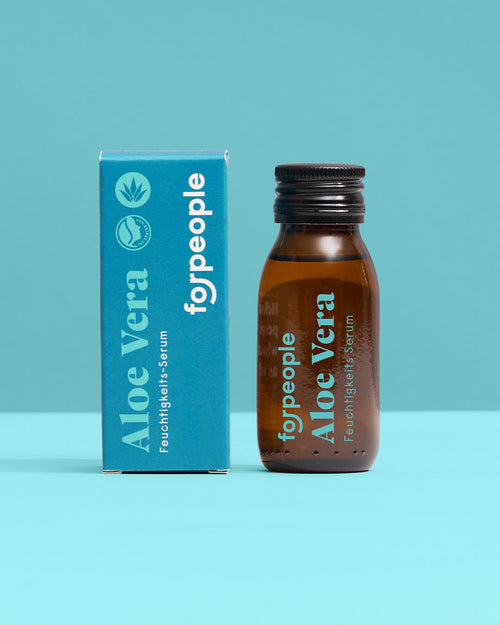
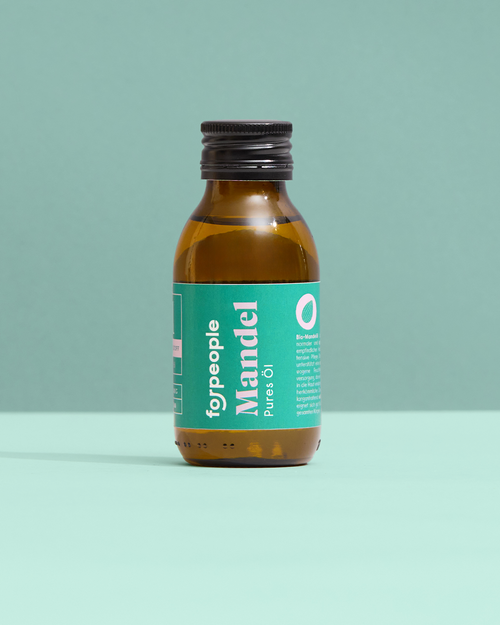
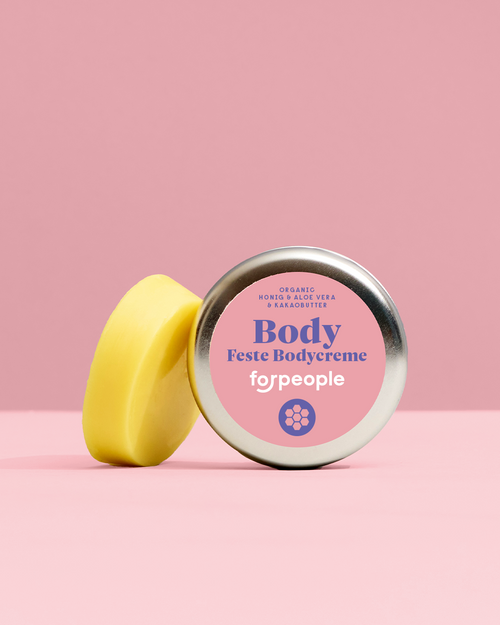
Which care fits when depends on the state of your skin. On intact skin after a sunny day, without sunburn, the Aloe Vera Serum 99.6% is suitable: according to its product page, it is meant as light care on intact skin after sun or shaving, contains no UV filter and does not belong on irritated or injured skin. It does not treat sunburn. Once the skin is no longer red and hot but only flaking, fat comes into play: the Almond Oil - pure on still-damp skin after showering or, for individual rough areas such as the shins, the Solid Body Butter - Beeswax & Aloe Vera. Why skin feels tight after showering is explained in Why does skin feel tight after a shower?.
What helps – and what tends not to
| Measure | Assessment |
|---|---|
| Pulling off peeling skin | tends not to: the UK National Health Service explicitly advises against it |
| An exfoliant to get rid of the flakes faster | tends not to while the skin is red or peeling; the barrier underneath is still recovering |
| Petroleum jelly or thick ointment on fresh sunburn | no: the UK National Health Service advises against it; cool first, then use light care |
| Oil or butter when the skin is only flaking | makes sense on intact skin: the film of fat slows evaporation |
| Briefly rinsing with fresh water after the sea | sensible as a habit, even if not specifically studied; moisturise afterwards |
| A long hot shower after the flight home | tends not to: hot water increases water loss through the skin more than cold water |
| Aftersun that is supposed to undo sun damage | not supported as a promise: care can cool and keep the skin supple, it does not reverse sun damage |
Sources: NHS: Sunburn, Herrero-Fernandez et al. 2022. How the film of fat works is described in Occlusion and TEWL: how a wax film protects your skin.
Common mistakes
- Pulling off patches of skin because it looks tidier. Underneath is skin that is not ready yet.
- Taking a hot bath straight away at home to warm up after the flight. That puts further strain on the already stressed stratum corneum.
- Skipping sun protection on a winter holiday. On snow, in the mountains and in the south, UV radiation is high in winter too; see Sunscreen in winter: when it makes sense in everyday life and Sun protection in the mountains and on snow.
- Applying too little sun protection. How much it should be with a solid sunscreen is explained in How much solid sunscreen do I need?.
- Mistaking an itchy rash after sun exposure for dry skin. It can be a light reaction and should be checked.
- Using only water-based care. In heated air it evaporates quickly; why is explained in Does aloe vera dry out the skin? Causes and what helps.
When to seek medical advice?
After sunburn, the UK National Health Service advises getting urgent medical advice if the skin blisters or swells, if a very high temperature, dizziness, feeling sick, a headache or muscle cramps come along with it, and always if a baby or young child has sunburn (NHS: Sunburn). Severe sunburn can lead to heat exhaustion or heatstroke.
An itchy, red rash with small raised spots, blisters or blotches that appears a few hours to days after sun exposure can be polymorphic light eruption, often called sun allergy. It is more likely when the skin is suddenly exposed to strong sun after a break, for example on holiday, and usually clears in about a week without sun. Seek medical advice if the rash gets worse or has not improved after a week, if it swells, or if joint and muscle pain or extreme tiredness come along with it (NHS: Polymorphic light eruption).
Also have it checked if
- skin comes off over large areas without you having had sunburn, or fever comes along with it,
- areas weep, crust or become inflamed,
- the skin has not settled after two or three weeks despite care,
- after the holiday you notice a mole that has changed or is new.
Frequently asked questions
Why is my skin flaking after my holiday?
UV radiation thickens the stratum corneum and weakens how well its cells hold together. After you get back, this layer gradually comes off. Lots of water, air conditioning, flying and heated air dry the skin out further.
Can I pull off the skin when it is peeling?
No. Do not pull off or rub away the patches of skin; underneath is young skin whose barrier is still recovering. Instead, keep the skin supple with care once it is no longer red.
How long does skin peel after sunburn?
Peeling usually starts a few days after the sunburn. How long it lasts depends on how badly the skin was burnt. If it has not improved after one to two weeks or blisters form, have it looked at.
Does salt water dry out the skin?
This has hardly been studied. What has been shown is that longer contact with water increases water loss through the skin. Briefly rinsing with fresh water and moisturising afterwards is a simple habit.
What helps with dry skin after sunburn?
First cool the skin and use a light, unperfumed moisturiser, not petroleum jelly. Once the skin is no longer red and hot but only flaking, oil or a solid butter on still-damp skin after showering keeps it supple.
Why is my skin even drier at home after the holiday?
Because it moves from warm, often humid air into cold and dry heated air. Low humidity and cold weaken the barrier, which is already strained by sun and water.
Do I need sunscreen on a winter holiday?
On snow, in the mountains and in the south, yes. In everyday winter life in the lowlands, usually not. Reapply after swimming, sweating or towelling.
At forpeople
Our products care for dry, intact skin; they do not treat sunburn. According to their safety notes, they do not belong on irritated or injured skin.
Aloe Vera Serum 99.6%, 50 ml, €9.90: aloe vera juice with citric acid, potassium sorbate and sodium benzoate, without essential oils; as light care after a sunny day on intact skin, without UV filter.
Almond Oil - pure, 100 ml, €14.90: pure almond oil for skin, hair and lips, when the skin is only flaking.
Solid Body Butter - Beeswax & Aloe Vera, 40 g, €9.90: water-free, for dry, rough areas on the body.
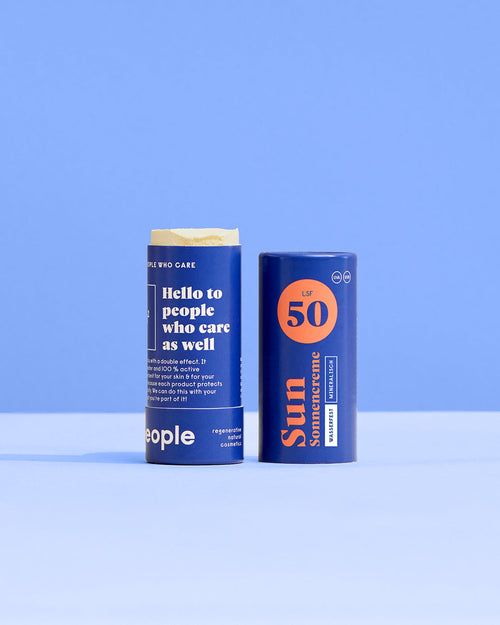
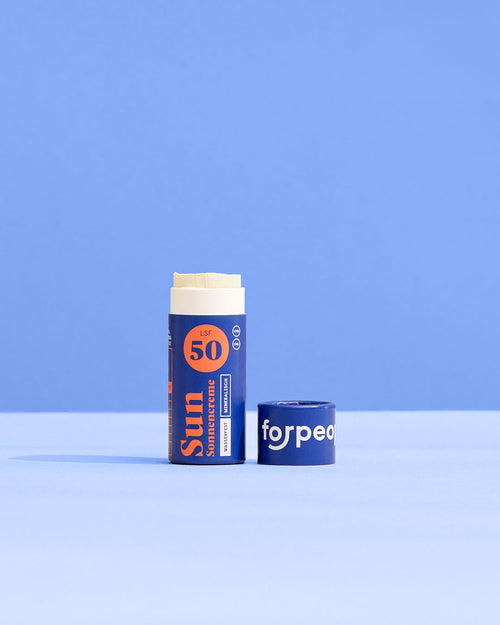
Solid Sunscreen SPF50, 40 g, €17.90: mineral UV protection with zinc oxide and titanium dioxide, both non-nano according to the ingredients list, tested water-resistant, for face and body; for hand luggage there is the Solid Sunscreen SPF50 Mini with 20 g for €9.90.
More: Does Cream Count as a Liquid in Hand Luggage? · Humidity and skin: what dry heated air does and what helps · Dry skin in winter: what helps with cold and indoor heating
Sources
- D'Orazio J, Jarrett S, Amaro-Ortiz A, Scott T (2013): UV radiation and the skin. Int J Mol Sci 14(6): 12222–12248. https://doi.org/10.3390/ijms140612222
- Biniek K, Levi K, Dauskardt RH (2012): Solar UV radiation reduces the barrier function of human skin. Proc Natl Acad Sci U S A 109(42): 17111–17116. https://doi.org/10.1073/pnas.1206851109
- NHS: Sunburn. Page last reviewed 24.11.2025, accessed 29.10.2026. https://www.nhs.uk/conditions/sunburn/
- Holleran WM, Uchida Y, Halkier-Sorensen L, Haratake A, Hara M, Epstein JH, Elias PM (1997): Structural and biochemical basis for the UVB-induced alterations in epidermal barrier function. Photodermatol Photoimmunol Photomed 13(4): 117–128. https://doi.org/10.1111/j.1600-0781.1997.tb00214.x
- Herrero-Fernandez M, Montero-Vilchez T, Diaz-Calvillo P, Romera-Vilchez M, Buendia-Eisman A, Arias-Santiago S (2022): Impact of Water Exposure and Temperature Changes on Skin Barrier Function. J Clin Med 11(2): 298. https://doi.org/10.3390/jcm11020298
- Engebretsen KA, Johansen JD, Kezic S, Linneberg A, Thyssen JP (2016): The effect of environmental humidity and temperature on skin barrier function and dermatitis. J Eur Acad Dermatol Venereol 30(2): 223–249. https://doi.org/10.1111/jdv.13301
- NHS: Polymorphic light eruption. Page last reviewed 10.06.2025, accessed 29.10.2026. https://www.nhs.uk/conditions/polymorphic-light-eruption/