











Why the stable is hard on your hands in winter
In its brochure on skin protection, the German agricultural social insurance SVLFG names what strains the hands every day in farming, forestry and gardening jobs: wet work, wearing gloves for long periods, abrasion and aggressive substances. Three processes weaken the horny layer. Dust, dirt and cleaning agents draw lipids out of it. Water and sweat inside the glove make it swell. Mechanical abrasion damages it (SVLFG 2021).
In winter, cold is added. In the cold, the skin has less blood flow and produces less sebum; cold air is drier and draws moisture from the skin (DGUV 2026). A review concludes that low humidity and low temperatures lead to a general decrease in the skin's barrier function and make it more susceptible to mechanical stress (Engebretsen et al. 2016). That matches the experience that the same fork handle leaves more marks in January than in June. The German workplace rule TRGS 401 also counts cold among the conditions that can increase the hazard to the skin (AGS 2022).
The skin often cracks at the fingertips first. Why is explained on the page Cracked fingertips in winter: causes and care.
Which job strains the skin in which way
The table matches the usual stable tasks to the strains described by the SVLFG and the German Social Accident Insurance. This has not been measured for individual stable tasks; the matching is practical experience.
| Task | What strains the skin | What helps |
|---|---|---|
| Mucking out and bedding down | Friction from the fork handle, dust, damp bedding | Work gloves with a good grip; knock off dust before you wash your hands |
| Feeding hay and straw | Dry dust, hard stalks, small scratches | Gloves and long sleeves |
| Watering, carrying buckets, hosing down | Cold water, cold metal, wet gloves | Liquid-tight, lined gloves; change pairs that are soaked through |
| Grooming and picking out hooves | Dirt, wetness, many movements without gloves | Thin gloves that leave you a sense of touch; dry your hands afterwards |
| Reins, lead rope and lunge line | Friction and pull on cold skin, wet leather | Riding gloves that are dry |
| Washing your hands afterwards | Water and soap dissolve skin lipids | Wash with lukewarm water and a mild product, dry well, then apply cream |
Gloves: warm, dry, and a spare pair
The SVLFG advises wearing gloves in the cold that keep your hands warm. Gloves with tested cold protection are marked to the standard EN 511 (SVLFG 2021). From the same brochure:
- Dry hands first: only put gloves on over clean, dry hands.
- Spare pair: change gloves that are soaked through. That is why a second pair belongs in your stable jacket.
- Drying: turn the gloves inside out before you wear them again and let them dry.
- Leather: it keeps you warm but is not suitable for wet work.
- Tight gloves: do not wear them longer than necessary. Cotton gloves underneath absorb the sweat.
- Machinery: do not wear gloves near rotating parts, because they can be drawn in.
A routine in three moments
- Before the stable: do not put cream on your hands right beforehand. A fresh greasy film makes the fork handle and reins slippery, and dust sticks to it. If you apply care in the morning, do it early and thinly, so that nothing is left sitting on the skin when you set off. In a business, what goes on before work is a skin protection product in line with the skin protection plan; care products are not meant for that (DGUV 2026).
- After the stable: knock off coarse dirt while it is dry. Then wash your hands with lukewarm water and a mild product, without a brush. Water that is too cold cleans less well, water that is too warm increases the irritant effect of cleansers (DGUV 2026); hand brushes put mechanical strain on the skin (SVLFG 2021). Dry your hands carefully, including between the fingers, and apply the care product to dry skin.
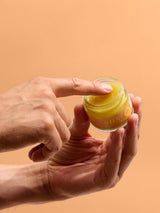
- Before bed: now the layer can be thicker. Applying cream once more before going to bed helps the skin recover overnight (SVLFG 2021). Cotton gloves keep the care product on your hands; how that works is described in Overnight hand mask: what it does and how to do it.
Solid cream, cold and Melkfett
After work, your skin mainly needs fat. A film of wax and oil reduces the evaporation of water from the skin; the mechanism is explained on the page Occlusion and TEWL: how a wax film protects your skin. Water-free care also contains no water that evaporates on the skin and cools it in the process. It does not protect against frost: Cold cream: water-free, but no protection from frost.
In a cold stable, a solid cream turns hard, because waxes and oils become firmer at low temperatures. Carry the tin close to your body in an inside pocket and warm it briefly in your closed hand. More on this under Storing solid cosmetics: heat, summer and winter.
The best-known home remedy in German stables is Melkfett (udder balm). What is in it and what it can do is explained on the page Melkfett (udder balm) for hands: what is in it, what can it do?.
When to seek medical advice?
Cosmetics do not belong on open, bleeding or weeping cracks; cover them cleanly. Seek medical advice if cracks are deep or do not close, if the skin is very red or swollen, forms small blisters or pus, and if redness, scaling or a burning feeling do not settle after a few days despite gloves and care. The same goes for skin changes after contact with animals or stable products, and for fingers that stay white and numb after being in the cold. If you work in a stable for a living, turn to a skin specialist's practice or an occupational physician; where a work-related skin disease is suspected, the SVLFG can start its specialist referral procedure (Hautarztverfahren) (SVLFG 2021).
Frequently asked questions
Should I put cream on my hands right before mucking out or riding?
No. A fresh film of wax and oil makes your grip on fork, rope and reins less secure. Care belongs to the time after work and before bed; in the morning, early and thinly at most.
Why is my solid hand cream so hard in the stable?
Waxes and oils become firmer in the cold. That does not change the cream. Carry the tin in an inside pocket or warm it briefly in your hand; then you can take off a thin layer again.
Wet gloves: keep wearing them or change?
Change. In wet gloves your hands get cold, and the horny layer swells. The SVLFG advises swapping gloves that are soaked through, and turning gloves inside out and letting them dry before you wear them again.
Is cold water enough for washing my hands in the stable?
Lukewarm water is better. If the water is too cold, dirt comes off less easily, and people tend to reach for harsher cleansers. Water that is too warm increases the irritant effect of cleansers. That is how the German Social Accident Insurance describes it.
Melkfett or solid hand cream: which should I use?
Both are rich, fat-based care for the time after work. The products differ in raw materials, scent and skin feel. Read the ingredient list and take what you like using and will use regularly.
Can I also use the hand cream on my horse or my dog?
No. Our hand creams are cosmetic products for human skin. They are not meant for animals; ask at your vet's practice for that.
At forpeople
Our solid creams and salves are care products for the time after work. They are not skin protection products, not frost protection and no substitute for gloves. According to the product information, they are not to be used on injured or irritated skin.
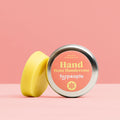
- Solid Hand Cream - Beeswax, 30 g, €9.90: according to the ingredient list, beeswax, olive and sunflower oil, St. John's wort and aloe extract. Without water and without added scent.
- Beeswax Salve Larch & Mandarin in a Glass Jar, 50 g, €12.90: a soft salve for the evening at home. It is scented and contains larch resin, propolis and essential oils; what that can mean is covered in Allergic to tree resin, colophony or propolis?.
- Protection Set for Dry Hands, Feet & Lips, €54.90: according to the ingredient list, it contains the solid hand cream, the solid foot cream, a lip balm and the beeswax salve.
If you notice a skin reaction, stop using the product. More on this: Dry skin in winter: what helps with cold and indoor heating · Hand care for manual work and gardening: what works? · How do I apply a solid cream correctly?
From the blog: Hands and feet through winter: a routine for morning and evening · Skincare for days in the snow: hands, lips, face
Sources
- Sozialversicherung für Landwirtschaft, Forsten und Gartenbau (2021): Hautschutz. Broschüre B34, Reihe „Aktuelles zu Sicherheit und Gesundheitsschutz“, Stand 01/2021. https://www.svlfg.de/koerperschutz
- Deutsche Gesetzliche Unfallversicherung (2026): DGUV Information 212-017 Auswahl, Bereitstellung und Benutzung von beruflichen Hautmitteln. Ausgabe August 2026. https://publikationen.dguv.de/regelwerk/dguv-informationen/853/auswahl-bereitstellung-und-benutzung-von-beruflichen-hautmitteln
- Engebretsen KA, Johansen JD, Kezic S, Linneberg A, Thyssen JP (2016): The effect of environmental humidity and temperature on skin barrier function and dermatitis. Journal of the European Academy of Dermatology and Venereology 30(2): 223–249. https://doi.org/10.1111/jdv.13301
- Ausschuss für Gefahrstoffe (2022): TRGS 401 Gefährdung durch Hautkontakt – Ermittlung, Beurteilung, Maßnahmen. Ausgabe Oktober 2022, GMBl 2022 S. 895–926 (Nr. 40), zuletzt geändert GMBl 2024 S. 769 (Nr. 36). https://www.baua.de/DE/Angebote/Regelwerk/TRGS/TRGS-401