



What playing demands of your lips
Lips dry out quickly anyway. Almost three times as much water evaporates through the red of the lips as through the cheek (Kobayashi & Tagami 2004); the background is explained in Why do lips dry out so quickly?. Playing adds four things:
- Pressure: In a measurement on 60 people playing the trumpet, the force at the mouthpiece rose with loudness and with pitch. No significant link with proficiency was found (Barbenel et al. 1988).
- Friction and covering: A review of skin changes in musicians names, for the lower lip under the clarinet reed, a combination of friction, local pressure, shearing forces and covering of the skin (Gambichler et al. 2004).
- Moisture: Saliva and breath keep wetting the lips. Saliva evaporates quickly, and the lips are drier afterwards than before.
- Cold: Low temperatures and dry air reduce the barrier function of the skin in general and make it more susceptible to mechanical stress (Engebretsen et al. 2016). The review looked at skin, not specifically at the red of the lips.
Why a fresh greasy film gets in the way when you play
There are reports of experience on this but, to our knowledge, no measurement. In German- and English-language musicians' forums, wind players write for example:
- A greasy balm belongs on the lips after playing, not before (tuba).
- Shortly after applying it, the notes of the third octave no longer speak (flute).
- The lip balm stick smears onto the reed, and no note comes out (clarinet).
- Unless it is wiped off, the flute slides on the lip.
- Others notice no difference.
These are individual experiences, not evidence. Embouchure is an interplay of lips, tongue, teeth, jaws and cheeks, and according to a review article the specialist literature on it is thin and partly contradictory (Woldendorp et al. 2016). Questions about playing technique are therefore for your teacher, not for this page. Try out changes to your lip care when practising, not on the day of a performance.
Before, during and after playing: the overview
These recommendations are practice. They follow from the reports of experience and from the fact that a film of wax and oil reduces evaporation as long as it is in place (Occlusion and TEWL: how a wax film protects your skin).
| When | Recommendation | Why |
|---|---|---|
| Overnight | a thicker layer, a soft salve if you like | the film stays on for a long time and is not worn off by eating, drinking or playing |
| Right before playing | apply nothing; with dry lips a very thin layer, blotted after a few minutes | a fresh film changes the contact with the instrument (experience) |
| In the break | dab your lips dry instead of licking them; lip care only if needed, and thinly | saliva evaporates and leaves the lips drier |
| After playing | wipe lips and mouthpiece dry, then apply the stick | now the film no longer gets in the way |
| Outdoors in winter | apply indoors and early; between pieces, a scarf or cloth over your mouth | cold, dry air and wind |
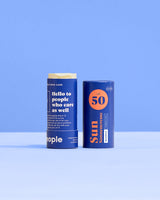
| Outdoors in the sun | lip balm with a sun protection factor, applied early and renewed in the breaks | from a UV index of 3 protection is required (BfS, UV index) |
If you blot the film before playing, you also take away part of the sun protection. Shade and a hat with a brim help in addition. More on this: Do I need lip balm with SPF?. On care at night: Dry lips in the morning: does lip balm overnight help?.
Brass, reed, flute: where the film sits
- Brass instruments: The rim of the mouthpiece rests on both lips. Residues of lip care end up on the rim and in the cup.
- Clarinet and saxophone: The reed rests on the lower lip. Grease and scent transfer to the reed.
- Oboe and bassoon: Both lips enclose the double reed.
- Flute: The lower lip rests against the lip plate. On a fresh film the instrument can slip (experience).
For all of them: wipe your lips and the contact surface before playing, keep mouthpiece and reed clean, and do not share your mouthpiece with others. The review mentioned above advises the same (Gambichler et al. 2004). The stick for afterwards is fine in the instrument case, as long as the case is not left in a hot car: Storing solid cosmetics: heat, summer and winter. For string instruments: Guitar: should you moisturise fingertip calluses?.
Does lip balm make you dependent?
The worry comes up in several forum threads: if you keep applying balm, you will soon be unable to play without it. One person reports having missed the stick when it was left at home, then stopping altogether, and nothing changed in their playing. A balm of wax and oil does not make you physically dependent: the red of the lips produces hardly any oil of its own anyway. What does exist is habit: Can you become dependent on lip balm?
If you always play with a film on your lips, you get used to that feeling. If lip care comes after playing and at night, the feeling at the instrument stays the same. The forums also mention home remedies such as honey; more on that in Honey, oil, quark: do home remedies help chapped lips?.
When to seek medical advice?
Have it checked by a doctor if your lips stay swollen after playing, if numbness, tingling or pain do not go away, if small blisters form (including recurring ones, as with cold sores), if cracks bleed or do not close, or if a red, scaly patch remains exactly where the mouthpiece or reed rests. The review describes reactions to friction and pressure there as well as contact allergies, for example to nickel in mouthpieces or to cane reeds (Gambichler et al. 2004). For lasting embouchure problems, your teacher and a performing arts medicine clinic are the right places to turn to. If your lips burn or redden after a new lip balm, stop using it.
Frequently asked questions
Can I use lip balm right before a performance?
Better not for the first time. Care for your lips the evening before. If it has to be on the day: apply a very thin layer, wait a few minutes, blot the rest.
How much time do I need between applying lip balm and playing?
There is no measured figure. Experiences in forums range from “makes no difference” to an hour's gap. Try it out when practising.
Does lip balm help when my lips are tired or swollen after long playing?
No. A film of wax and oil cares for dry lips. Tiredness and swelling come from the strain; that calls for breaks. If the swelling stays, get medical advice.
Does lip balm damage the mouthpiece or the reed?
Greasy residues stick to the contact surface. They wipe off metal; with reeds, woodwind players in forums report taste and poorer response. So wipe your lips before playing.
Do I need sun protection on my lips for outdoor performances?
From a UV index of 3, protection is required according to Germany's Federal Office for Radiation Protection; your lips are uncovered skin. Apply early and renew the film in the breaks.
At forpeople
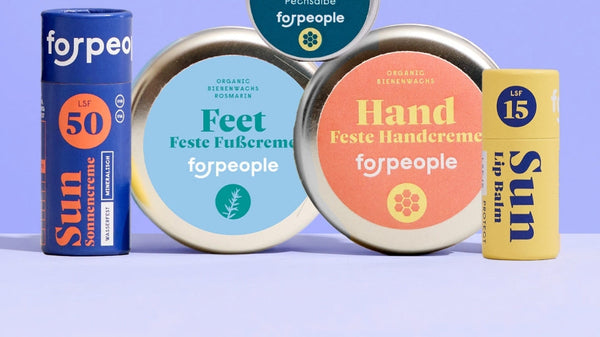
We do not offer a lip balm specifically for brass and wind players, and we make no statements about embouchure or tone. What our products contain is in the ingredient lists.
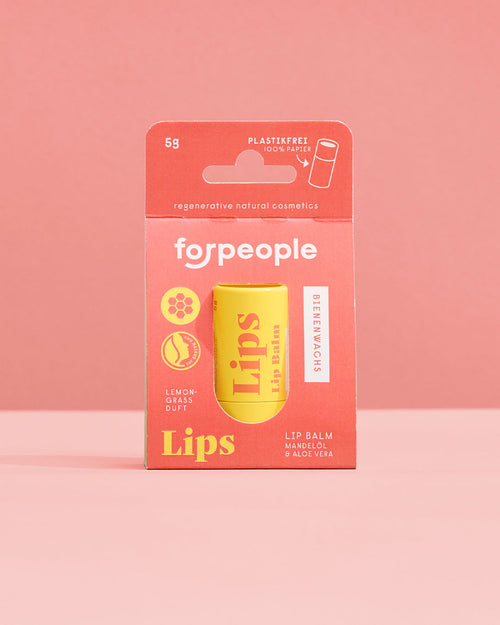
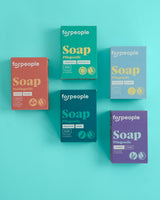
- Lip Balm - Lemongrass, 5 g, €4.90: a firm stick for the time after playing. According to the ingredient list, beeswax, sunflower oil, shea butter, almond oil, hemp seed oil, aloe vera extract and lemongrass essential oil, without menthol or camphor. It smells of lemongrass; citral, citronellol and geraniol are declared.
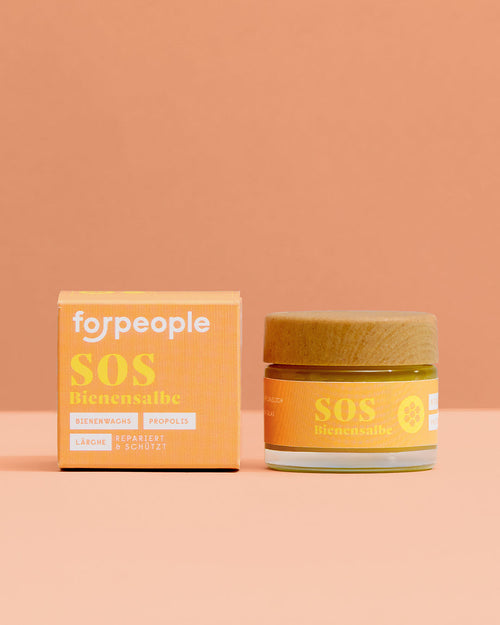
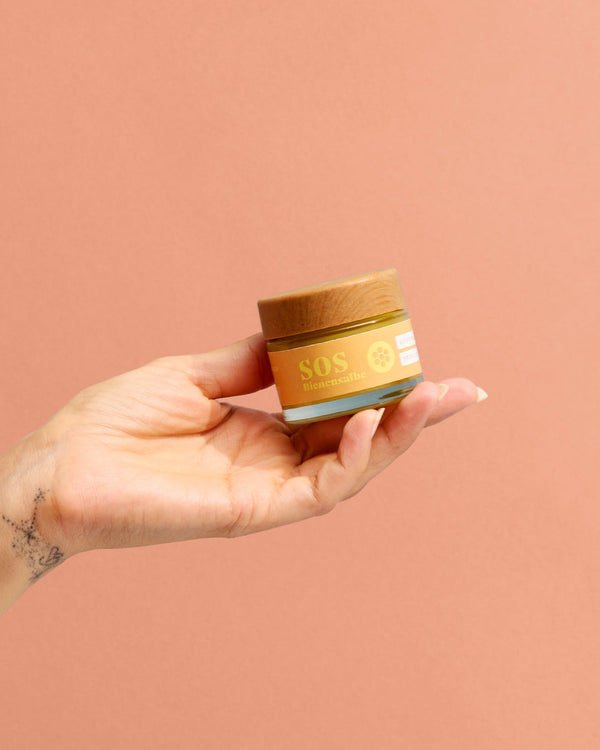
- Beeswax Salve Larch & Mandarin in a Glass Jar, 50 g, €12.90: softer than a stick, for the thicker layer at night. It consists of olive, almond and castor oil, beeswax, larch resin, propolis and essential oils of mandarin, rosemary and fir. It is scented, and not everyone tolerates resin and propolis: Allergic to tree resin, colophony or propolis?
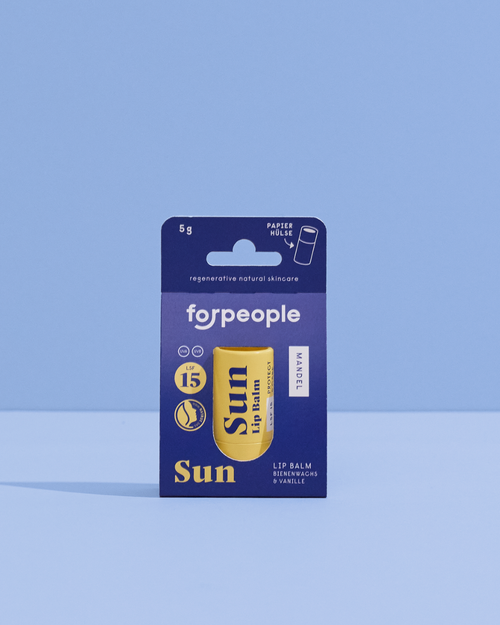
- Lip Balm - SPF15 Almond & Vanilla, 5 g, €7.90: for performances outdoors. The UV filters are zinc oxide and titanium dioxide, non-nano according to the product information; the stick contains no essential oils, but it does contain vanilla extract.
The two sticks come in a paper tube from which you push the balm up from below. All three products are cosmetics and, according to the product information, not meant for injured or irritated skin. If your skin reacts, stop using them.
More on this: Dry lips in the morning: does lip balm overnight help? · Can you become dependent on lip balm? · Cold cream: water-free, but no protection from frost · Guitar: should you moisturise fingertip calluses?
From the blog: Skincare for days in the snow: hands, lips, face · Bee Balm with Beeswax and Propolis for Dry Skin
Sources
- Kobayashi H, Tagami H (2004): Functional properties of the surface of the vermilion border of the lips are distinct from those of the facial skin. British Journal of Dermatology 150(3): 563–567. https://doi.org/10.1046/j.1365-2133.2003.05741.x
- Barbenel JC, Kenny P, Davies JB (1988): Mouthpiece forces produced while playing the trumpet. Journal of Biomechanics 21(5): 417–424. https://doi.org/10.1016/0021-9290(88)90147-9
- Gambichler T, Boms S, Freitag M (2004): Contact dermatitis and other skin conditions in instrumental musicians. BMC Dermatology 4: 3. https://doi.org/10.1186/1471-5945-4-3
- Engebretsen KA, Johansen JD, Kezic S, Linneberg A, Thyssen JP (2016): The effect of environmental humidity and temperature on skin barrier function and dermatitis. Journal of the European Academy of Dermatology and Venereology 30(2): 223–249. https://doi.org/10.1111/jdv.13301
- Woldendorp KH, Boschma H, Boonstra AM, Arendzen HJ, Reneman MF (2016): Fundamentals of Embouchure in Brass Players: Towards a Definition and Clinical Assessment. Medical Problems of Performing Artists 31(4): 232–243. https://doi.org/10.21091/mppa.2016.4038
- Bundesamt für Strahlenschutz (BfS): Was ist der UV-Index? Stand 4. August 2026. https://www.bfs.de/DE/themen/opt/uv/uv-index/einfuehrung/einfuehrung.html