


Where the ink sits and what you see it through
In tattooing, the pigments are placed in the middle layer of the skin, the dermis. The pigments are mostly insoluble and are deposited there (BfR 2025).
Above the dermis lie the epidermis and, on the very outside, the stratum corneum. So you always see your tattoo through these layers, rather like a picture behind a pane of glass. If the pane is rough, the picture looks paler, although nothing about the picture has changed.
Skincare only reaches the pane. In a study with six volunteers, four plant oils and paraffin oil penetrated only into the uppermost layers of the stratum corneum (Patzelt et al. 2012). A care oil therefore does not get as far as the ink in the dermis. More on this: How long does a care film stay on the skin?
Why a tattoo looks dull on dry skin
Horn cells are shed continuously from the surface of the stratum corneum. Under stress from outside, this last step is often disturbed, and the skin becomes dry and flaky (Rawlings & Harding 2004). The structure is explained in The skin barrier explained simply.
What that means for appearance is shown by an experiment on skin without a tattoo. When the skin was dried out with acetone and alcohol, it reflected more light and scattered it more strongly. When it was treated with moisturisers and greasy film formers such as petroleum jelly, scattering decreased. The authors conclude that moisturised skin scatters less light at the surface, more light penetrates into deeper layers, and the skin appears darker and more translucent (Jiang & DeLaCruz 2011).
This is how we apply that to a tattoo: over dry skin there is a pale veil of scattered light. It makes black look greyer and colours paler. Over cared-for skin this veil is weaker, and contrast increases. That is our interpretation; we did not find a measurement on tattooed skin.
Oil has a second effect. A review of the optics of skin describes that clear, fat-soluble liquids reduce reflection at the skin surface because they match the refractive indices. This is described for very flaky skin (Anderson & Parrish 1981).
Oil, butter or lotion: what changes the look?
The entries in the table are based on experience, not on measurements.
| Form | What sits on the skin | How the tattoo looks | How long | Skin feel |
|---|---|---|---|---|
| Body oil or pure plant oil | a thin film of oil | richer at once, with a visible sheen | until the oil has been absorbed or rubbed off | light |
| Solid body butter | fat and wax | dry, flaky areas look smoother; less sheen | longer, because the wax stays on top | noticeable film |
| Body lotion | water and some fat | smoother, hardly any sheen | rather short; part of the water evaporates | light, little film |
The effect lasts as long as the film: until clothing, water or sweat remove it. There is no fixed number of hours. On how the three forms are made up: Body oil or body lotion: what is the difference? and Body Oil or Body Butter – Which One When?
The routine: how often and with what
Once the tattoo has healed, you care for the area like the rest of your skin. The steps are common practice.
- As often as the rest of your skin: Moisturise your tattoo when you moisturise your body, for example after showering. If the skin does not feel tight or flaky, the tattoo does not need anything either.
- On slightly damp skin: Oil and butter contain no water; they hold the water that is already in the skin. More on this: How soon should you moisturise after a shower? The 3-minute rule
- Use little: A few drops of oil are enough for a forearm. If the skin is still very shiny after a few minutes, it was too much.
- Dry areas separately: On elbows, knees, shins and ankles, a solid butter stays on longer than an oil.
- Before a photo or an occasion: A few drops of oil make the design look richer for the moment. Let them sink in before clothing goes over the top; see Does body oil stain? Clothes, bed linen, towels.
- Outdoors, sun protection is what counts: A care oil is not sun protection. What your tattoo needs in the sun is covered in the next section.
What skincare cannot do
- Bring colour back: According to a review, about 2.5 milligrams of pigment are introduced per square centimetre of skin during tattooing. In animal experiments, around one third of that disappeared from the skin within weeks; studies of old tattoos confirmed this (Bäumler 2015). No cream brings back what has left the skin.
- Sharpen lines: The outlines are formed where the pigments lie, in the dermis. Skincare only changes how clearly you see through the stratum corneum.
- Protect from the sun: The German Federal Institute for Risk Assessment recommends protecting tattoos from the sun. Certain pigments can be split by sunlight, and the tattoo fades faster (BfR 2025). How to protect it is covered in Protecting a healed tattoo from fading.
- Replace a studio: Only a studio can refresh or touch up a tattoo.
When to go to the studio, when to seek medical advice?
A freshly done tattoo is a wound. The skin is injured, its barrier is impaired, and it is more susceptible to infections (BfR 2025). During this time, only the aftercare your studio gives you applies; if you have complaints, seek medical advice. This page gives no instructions for it.
Tattooed skin can react later, too. According to the BfR, effects can occur immediately, after weeks or only after years; mostly they are local skin irritations or allergic skin reactions. In the sun, tattooed areas are often more sensitive, for example with swelling, itching, stinging, pain or redness (BfR 2025). Have it checked by a doctor if parts of the tattoo are raised or swell, if small lumps form, if the area itches, burns, weeps or hurts for some time, or if a spot within the design changes. Moisturising is not a treatment for this. If your skin reacts to a skincare product, stop using it.
Frequently asked questions
Do I have to moisturise a healed tattoo every day?
No. It needs as much care as the skin in the same place would without a tattoo. If the skin is dry, moisturise it; if it is not, the tattoo is not missing out on anything.
Does oil make the colours stronger?
They look stronger, but only temporarily and only optically. The film of oil smooths the surface and reduces scattered light. Nothing changes about the pigments; once the film is gone, the tattoo looks as it did before.
Can I refresh a faded tattoo with cream?
No. Skincare makes the skin look smoother, but it does not bring colour back. Only a studio can refresh a tattoo.
Do I need a special tattoo cream?
For the time directly after tattooing, what your studio recommends applies. After that, a body care product you like to use is enough. What a product is shows in its ingredient list, not in the word “tattoo” on the pack.
Can scented skincare go on tattooed skin?
On skin that looks and feels normal, the same applies as on the rest of your body. Essential oils are fragrances; try a new product on a small area first: Trying a new product: how do I test it on a small area?
At forpeople
We do not carry a dedicated tattoo product. The following products are body care and sun protection for uninjured skin, tattooed or not.
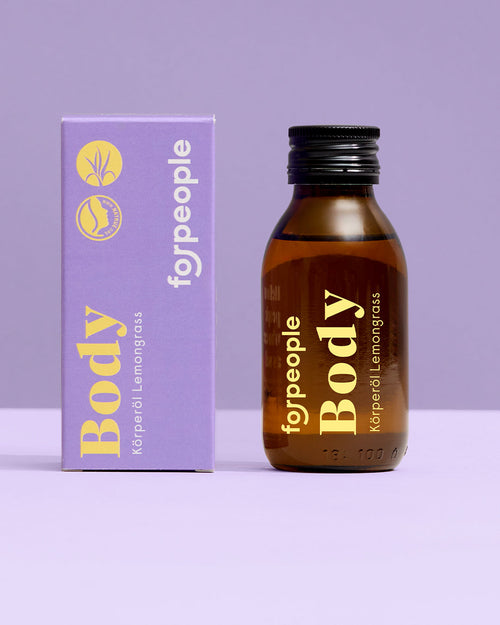
- Body Oil - Lemongrass, 100 ml, €16.90: sesame oil, safflower oil, sea buckthorn seed oil, sunflower oil, turmeric extract and lemongrass essential oil. A thin film with a visible sheen; the ingredient list names citral, geraniol and citronellol.
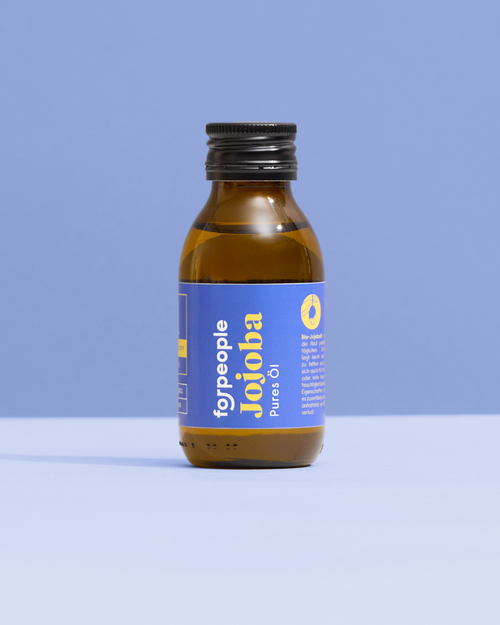
- Jojoba Oil - pure, 100 ml, €16.90: a single oil, without added scent according to the ingredient list.
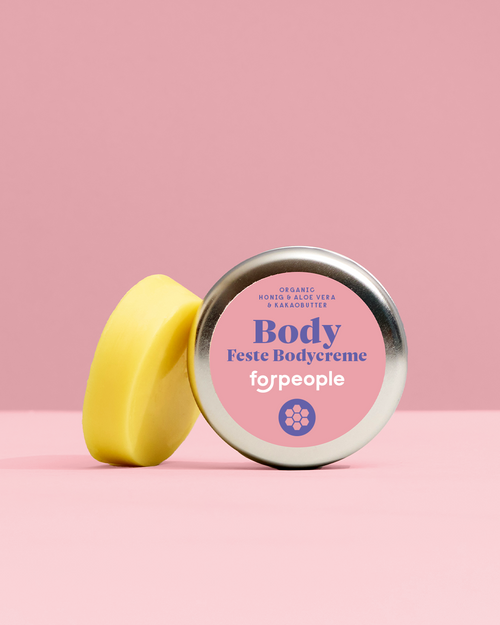
- Solid Body Butter - Beeswax & Aloe Vera, 40 g, €9.90: cocoa butter, olive oil, beeswax, sunflower oil, shea butter and aloe vera leaf extract, without added essential oils according to the ingredient list. For dry areas.
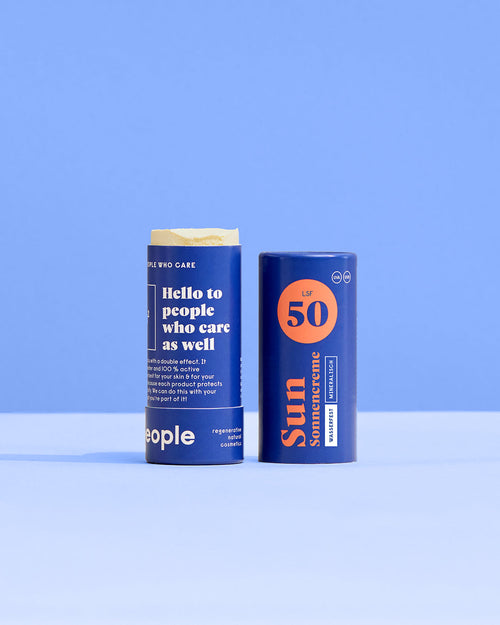
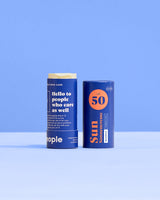
- Solid Sunscreen SPF50, 40 g, €17.90: mineral sun protection with zinc oxide and titanium dioxide (non-nano) in shea butter and beeswax, for days outdoors.
According to the product pages, the following applies to all four: do not use on injured or irritated skin. That is why they do not belong on a freshly done tattoo. If you notice a skin reaction, stop using the product.
More on this: Protecting a healed tattoo from fading · Moisturising your body: morning or evening? · Without fragrance and essential oils: ingredients at a glance
From the blog: Face & Body Oils: Which Oil Suits Which Skin Type?
Sources
- Bundesinstitut für Risikobewertung (BfR) (2025): Fragen und Antworten zu Tätowiermitteln. Aktualisierte Fassung vom 6. Mai 2025. https://www.bfr.bund.de/fragen-und-antworten/thema/fragen-und-antworten-zu-taetowiermitteln/
- Patzelt A, Lademann J, Richter H, Darvin ME, Schanzer S, Thiede G et al. (2012): In vivo investigations on the penetration of various oils and their influence on the skin barrier. Skin Research and Technology 18(3): 364–369. https://doi.org/10.1111/j.1600-0846.2011.00578.x
- Rawlings AV, Harding CR (2004): Moisturization and skin barrier function. Dermatologic Therapy 17 Suppl 1: 43–48. https://doi.org/10.1111/j.1396-0296.2004.04s1005.x
- Jiang ZX, DeLaCruz J (2011): Appearance benefits of skin moisturization. Skin Research and Technology 17(1): 51–55. https://doi.org/10.1111/j.1600-0846.2010.00462.x
- Anderson RR, Parrish JA (1981): The optics of human skin. Journal of Investigative Dermatology 77(1): 13–19. https://doi.org/10.1111/1523-1747.ep12479191
- Bäumler W (2015): Absorption, distribution, metabolism and excretion of tattoo colorants and ingredients in mouse and man: the known and the unknown. Current Problems in Dermatology 48: 176–184. https://doi.org/10.1159/000369222