







The problem: tingling, burning, flaking – what is behind it?
In winter, lips are dry from cold air and central heating, red after a day on the slopes, and in the middle of a cold one spot suddenly starts to tingle. Is it dryness, sunburn, a spot or a cold sore? The difference matters, because a cold sore is contagious from the first signs until it has completely cleared up (NHS).
The overview below is based on medical sources and helps you narrow things down. It does not replace a diagnosis: only a medical examination can give you certainty.
| What you see and feel | What may be behind it | What to do now |
|---|---|---|
| First tingling, itching or burning in one spot, then small blisters in a cluster that burst and crust over; often in the same spot again and again | cold sore (herpes labialis) (IQWiG), (DermNet, Herpes simplex) | do not touch, wash your hands, pharmacy; see below |
| The whole lip, often mainly the lower lip, is red, warm and swollen a few hours after sun on snow; later it peels | sunburn: redness usually appears 2 to 6 hours after sun exposure and peaks after 12 to 24 hours (DermNet, Sunburn) | cool the lips, no more sun; see a doctor if blisters form |
| Rough, tight lips, fine flakes of skin, small cracks, no blisters; comes with cold, wind and heated air | chapped, dry lips (DermNet, Cheilitis) | do not lick, apply a balm |
| The lips keep peeling for weeks, often only the lower lip, even though you look after them | exfoliative cheilitis, a rare form of lip inflammation (DermNet) | stop picking and licking, have it checked by a dermatologist |
| A single red, painful bump with pus at the edge of the lip | spot or boil (NHS) | do not squeeze; see a doctor if it swells |
| A painful, flat sore on the inside of the lip or in the mouth | mouth ulcer, not contagious (NHS, Mouth ulcers) | dentist or GP if it does not go away |
| Red sores or blisters that turn into honey-yellow to golden-brown crusts | impetigo, a contagious bacterial skin infection (NHS) | have it treated by a doctor |
| Lips itch, burn or flake after you started a new lip balm, lipstick or toothpaste | irritation or contact allergy to a lip product (DermNet, Cheilitis) | stop the product, allergy test if needed |
Cracked, weeping corners of the mouth are a separate topic: Cracked corners of the mouth: causes, care and when to see a doctor. Red, flaky skin around the mouth is covered in Dry skin around the mouth and on the chin.
Why this happens in winter
The virus is already there. Cold sores are usually caused by herpes simplex virus type 1. In Germany, an estimated 60 to 90 percent of people carry this virus, and in about 20 to 40 percent of them it leads to cold sores at some point. The virus rests in nerve ganglia in the face and, during an outbreak, travels along the nerve fibres to the lip (IQWiG), usually to the same spot (DermNet).
Triggers pile up in winter. Typical triggers include colds and fever, stress, physical exertion, hormonal changes such as before a period, minor injuries around the lips and sunlight (IQWiG), (DermNet). Often, however, no trigger can be found (DermNet). The medical sources do not list cold on its own; cracked lips, however, are small injuries, and those are a known trigger.
Sun on snow. Snow reflects a large share of UV radiation, and it is stronger at altitude; why, is explained in Sun protection in the mountains and in snow. In one trial, 38 people prone to cold sores had their lips deliberately exposed to UV light. Without sunscreen, 71 percent developed an outbreak after 2.9 days on average; with sunscreen on the lips, none did (Rooney et al. 1991). During a week of high-altitude skiing, 12 percent of 51 participants who knew the problem had an outbreak after a median of three and a half days. An SPF 15 sunscreen made no measurable difference compared with a placebo (Mills et al. 1987). A Cochrane review reaches the same mixed picture (Chi et al. 2015): sun protection on the lips makes sense, but it is no reliable protection against cold sores.
Timing tells you a lot. If the lip turns red on the same day as the sun exposure, sunburn is likely (DermNet, Sunburn). If one spot starts to tingle two to four days after a day on the slopes and blisters follow, a cold sore is more likely. Both can also happen together.
Cold, wind and heated air dry the lips out. Lips lose more water than the skin next to them and produce hardly any oil of their own. The reasons are explained in Why do lips dry out so quickly? If you then moisten them with your tongue, you keep the cycle going, because saliva evaporates quickly. Licking, biting and picking can also make persistent peeling worse (DermNet).
The solution step by step
| When | What you do | Why |
|---|---|---|
| At the first tingle | Do not touch the spot. If you do, wash your hands with soap before and after. Ask a pharmacist whether a cold sore treatment is right for you. | A cold sore is contagious from the moment it tingles (NHS). According to IQWiG, over-the-counter antiviral creams shorten an outbreak by about a day, but only if you start early (IQWiG). |
| As long as there are blisters or crusts | Do not kiss anyone, especially not babies. Do not share towels, glasses, cutlery or lipstick. Do not burst blisters or pick off crusts. | The viruses are in the blister fluid and can also spread via objects (IQWiG). Infection is dangerous for newborn babies (NHS). |
| As long as there are blisters | Do not run your lip balm over the blisters and never share it. Care for the unaffected part of the lip with clean fingers or a stick that does not touch the blisters. | A stick that has been drawn over open blisters can carry viruses. Many people start a new stick after an outbreak; that is caution, not a rule. |
| With sunburn | No more sun, cool damp compresses; do not open blisters. Until the redness fades, avoid lip products with essential oils, menthol or camphor. | Sunburn usually fades after 3 to 7 days; cool compresses feel good on the skin (DermNet, Sunburn). |
| With chapped lips | Do not lick them, do not pull off flakes, apply a thin layer of a balm made of wax and oil several times a day, a little more in the evening. | A film of wax and oil slows evaporation; saliva does not. What home remedies are worth is covered in Home remedies for chapped lips. |
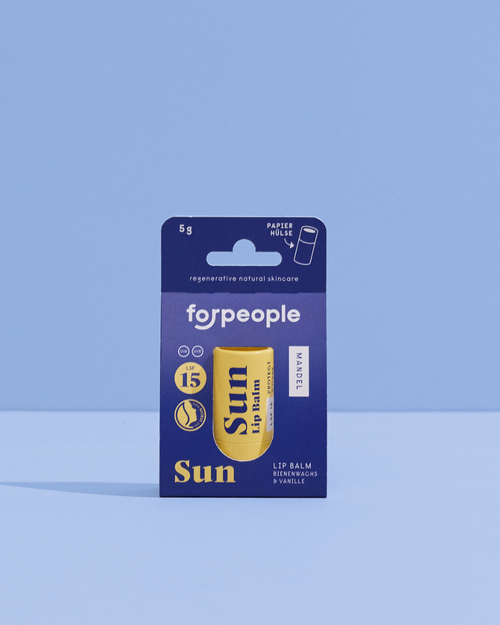
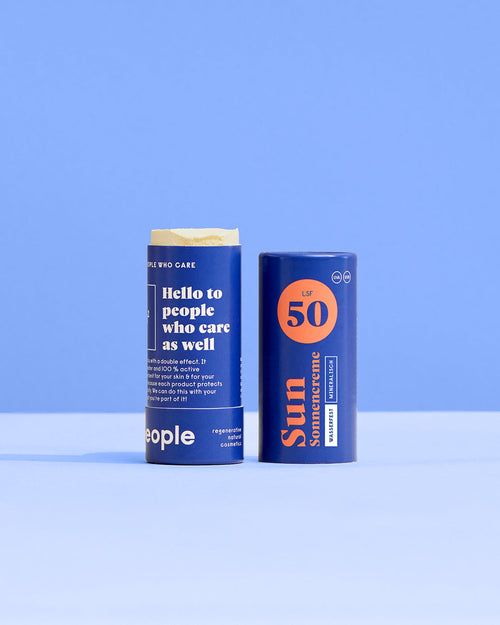
| Outdoors in snow and mountains | Before going out, apply lip care with sun protection, for example the Lip Balm - SPF15 Almond & Vanilla, and reapply after eating, drinking and wiping your mouth. Protect your face with sunscreen, for example the Solid Sunscreen SPF50 stick. | For people with cold sores, the UK's NHS advises a lip balm with at least SPF 15 in the sun (NHS). What SPF 15 means on the lips is explained in Do I need lip balm with SPF? |
| Prevention | Note your own triggers, such as sun, colds, your period or stress. If you get cold sores very often, discuss prevention with your doctor. | Preventive tablets reduce the number of outbreaks only slightly when taken long-term (Chi et al. 2015). |
If your whole face got burned or reddened by the wind on a ski day, see Windburn on the face after skiing.
What helps – and what rather does not
| Measure or home remedy | Assessment |
|---|---|
| Over-the-counter cold sore creams, gels or patches from the pharmacy | can shorten an outbreak by about a day if you start at the first tingle (IQWiG); patches cover the spot (NHS). Ask your pharmacist. |
| Lip care with sun protection in the sun | sensible (NHS); prevented UV-triggered cold sores in experiments, but not measurably while skiing (Chi et al. 2015) |
| Lysine or other supplements for prevention | The Cochrane review found no evidence of an effect for lysine or for a tested vitamin supplement (Chi et al. 2015). |
| Toothpaste, alcohol or tea tree oil on the blisters | rather not: there is no solid evidence that they work, and on open skin such substances can add irritation. What is in essential oils is explained in Essential oils and fragrance allergens. |
| Bursting blisters, picking off crusts | no: the fluid contains viruses, and open spots tear more easily (IQWiG), (NHS) |
| Acidic and salty food during an outbreak | better avoided if it stings (NHS) |
| Lip scrub on peeling lips | rather not while the lips are irritated or cracked; more in Lip scrubs: useful, how often and with what? |
Typical mistakes
The most common mistake is to carry on as usual at the first tingle: touching the spot, putting lipstick over it, kissing or picking up a baby. Yet a cold sore is contagious before you can see any blisters (NHS). The second mistake is to mistake a cold sore for a spot and squeeze it, which spreads the virus-laden fluid. Third: treating chapped, peeling lips with one new product after another. Every new product can cause irritation itself, and a reaction can no longer be traced. Fourth: on snowy days, putting sunscreen on your face but forgetting your lips.
When to seek medical advice
An ordinary cold sore clears up on its own within about one to two weeks if you are otherwise well (IQWiG). Seek medical advice if any of these apply:
- A baby has blisters on the face or mouth, or a newborn has been in contact with someone who has a cold sore. Newborns are particularly at risk (IQWiG). See a doctor straight away.
- You or your child have atopic eczema and many blisters appear on the face or body, together with fever or swollen lymph nodes. This can be a widespread herpes infection of the skin (DermNet). See a doctor straight away.
- An eye is red, watery or painful, your vision gets worse, or blisters form on the eyelid. Herpes can affect the cornea (IQWiG). See an ophthalmologist or emergency service the same day.
- The cold sore has not started to clear up after ten days, is very large or very painful, or your gums and the inside of your mouth are swollen and sore (NHS).
- Your immune system is weakened, for example by chemotherapy, or you are pregnant (NHS).
- You get cold sores very often, for example more than five times a year. This affects five to ten percent of people with cold sores (IQWiG).
- Sunburn on the lips forms blisters, or you also have fever, headache or nausea (DermNet, Sunburn).
- Your lips keep peeling for weeks despite care, a spot stays rough, hardened or keeps crusting over, or you suspect an allergy.
If your lips, tongue or throat suddenly swell, or you have trouble breathing, call the emergency number 112.
Frequently asked questions
Cold sore or spot: how can I tell the difference?
A spot is a single red bump with a point of pus. A cold sore starts with tingling or burning, then several small, clear blisters appear close together. Do not squeeze either.
Sunburnt lips or a cold sore?
Sunburn reddens the whole lip that was exposed to the sun within a few hours; the lip is warm and swollen and peels after a few days. A cold sore appears in one spot, with tingling and blisters, and after sun exposure often only two to four days later.
Cold sore or mouth ulcer?
A mouth ulcer is a flat, painful sore on the inside of the lip or in the mouth and, according to the NHS, is not contagious. A cold sore usually sits on the outside at the edge of the lip and forms blisters that crust over.
How long is a cold sore contagious?
From the first tingle until the spot has completely cleared up, including while crusts are still there. During this time, do not kiss anyone and do not share anything that touches your mouth.
Can I use lip balm when I have a cold sore?
On the unaffected part of the lip, yes, with clean fingers or a stick that does not touch the blisters. No lip balm stick belongs on the blisters themselves; there are pharmacy products for them.
Why do my lips keep peeling?
Usually because of cold, heated air and licking. If the peeling does not stop after weeks of using a balm, a reaction to a lip product or a rare form of lip inflammation may be behind it. That is a matter for a dermatologist.
Why do I get cold sores after skiing?
UV light can wake the resting virus, and radiation is high on snow. In studies, the blisters appeared about three days later. Lip protection with SPF makes sense, but it does not reliably prevent an outbreak.
At forpeople
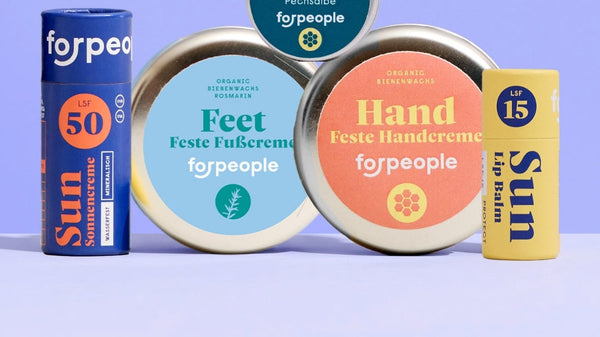
We do not sell a cold sore treatment; that is what the pharmacy is for. For chapped lips and sun protection outdoors, these products fit, each for the purpose stated on its product page. According to their safety information, they do not belong on broken or irritated skin, so not on cold sore blisters or sunburnt lips.
- Lip Balm - SPF15 Almond & Vanilla, 5 g, €7.90: for the lips; with the mineral UV filters zinc oxide and titanium dioxide, according to the ingredient list including beeswax, sunflower oil, shea butter, almond oil and vanilla extract, without essential oils. If you are allergic to almonds, note the almond oil.
- Solid Sunscreen SPF50, 40 g, €17.90: for face and body, with zinc oxide and titanium dioxide, according to the ingredient list without fragrance and essential oils; keep it away from the eye area.
More on this: Lip-licking eczema in children: a red ring around the mouth
From the blog: Skin care for days in the snow
Sources
- Institute for Quality and Efficiency in Health Care (IQWiG), gesundheitsinformation.de: Lippenherpes (cold sores). Updated 8 January 2025, accessed 29 October 2026. gesundheitsinformation.de/lippenherpes.html
- NHS: Cold sores. Last reviewed 19 February 2024, accessed 29 October 2026. nhs.uk/conditions/cold-sores
- DermNet: Herpes simplex. Oakley A (1997, updated October 2015). Accessed 29 October 2026. dermnetnz.org/topics/herpes-simplex
- Rooney JF, Bryson Y, Mannix ML, Dillon M, Wohlenberg CR, Banks S, Wallington CJ, Notkins AL, Straus SE (1991): Prevention of ultraviolet-light-induced herpes labialis by sunscreen. The Lancet 338(8780): 1419–1422. https://doi.org/10.1016/0140-6736(91)92723-f
- Mills J, Hauer L, Gottlieb A, Dromgoole S, Spruance S (1987): Recurrent herpes labialis in skiers. Clinical observations and effect of sunscreen. American Journal of Sports Medicine 15(1): 76–78. https://doi.org/10.1177/036354658701500111
- Chi CC, Wang SH, Delamere FM, Wojnarowska F, Peters MC, Kanjirath PP (2015): Interventions for prevention of herpes simplex labialis (cold sores on the lips). Cochrane Database of Systematic Reviews 2015(8): CD010095. https://doi.org/10.1002/14651858.CD010095.pub2
- DermNet: Sunburn. Huang N (2025), reviewed by Coulson I, last reviewed December 2025. Accessed 29 October 2026. dermnetnz.org/topics/sunburn
- DermNet: Exfoliative cheilitis. Dyall-Smith D (2010). Accessed 29 October 2026. dermnetnz.org/topics/exfoliative-cheilitis
- NHS: Mouth ulcers. Last reviewed 11 March 2024, accessed 29 October 2026. nhs.uk/conditions/mouth-ulcers
- DermNet: Cheilitis. Oakley A (2010). Accessed 29 October 2026. dermnetnz.org/topics/cheilitis