Your lip balm says “hemp oil”, so does your face oil, and the question is obvious: is it the same as in CBD drops, and could a drug test react? The answer depends on which part of the plant an ingredient comes from. That is exactly what the INCI name tells you, once you know how to read it.
Seeds, leaves, flowers: where THC and CBD are formed
Hemp and cannabis are the same plant species, Cannabis sativa. Its cannabinoids, including the intoxicating Δ9-tetrahydrocannabinol (THC) and cannabidiol (CBD), are formed in glandular hairs that secrete a sticky resin of cannabinoids and terpenes. These glandular hairs sit mainly on the female flowering and fruiting tops, most densely on the small bracts that surround the seed (Citti et al. 2019).
The inside of the seed is free of cannabinoids, but the outside can be soiled with this resin (Citti et al. 2019). A laboratory study measured this: seeds of fibre hemp contained a total of 0 to 12 micrograms of THC per gram, most of it on the surface. A quick wash removed around 90 per cent, and the seed kernel itself contained less than 0.5 micrograms per gram (Ross et al. 2000). If the seeds are cleaned properly before pressing, the oil contains only traces of cannabinoids. However, some commercial hemp seed oils have been reported with more than 10 ppm THC and over 1,000 ppm CBD (Citti et al. 2019). So how much ends up in the oil depends on the variety and on cleaning, not on pressing as such.
For hemp seed oil sold as food, a maximum level has applied in the EU since 2023: 7.5 milligrams of THC equivalents per kilogram, calculated as the sum of THC and its acid precursor (Regulation (EU) 2022/1393). This regulation applies to food, not to cosmetics. But it shows the order of magnitude involved when we talk about traces.
Hemp on the INCI list: what each name means
The EU database of cosmetic ingredients lists dozens of entries containing “Cannabis Sativa”. The plant part is always part of the name (CosIng):
| INCI name | What it is according to CosIng | Relation to THC and CBD |
|---|---|---|
| Cannabis Sativa Seed Oil | fixed oil pressed from the seeds; function: skin conditioning | seeds are free of cannabinoids inside; traces possible via resin on the seed coat |
| Hydrogenated Cannabis Sativa Seed Oil | hydrogenated hemp seed oil | as hemp seed oil |
| Cannabis Sativa Seed Extract | extract of the seeds | as hemp seed oil |
| Cannabis Sativa Leaf Extract | extract of the leaves | leaves without flower heads do not count as “cannabis” under narcotics law |
| Cannabis Sativa Flower/Leaf/Stem Extract | extract of flowers, leaves and stems | comes from the cannabinoid-rich parts of the plant |
| Cannabidiol – Synthetically Produced | synthetically produced CBD | CBD as a pure substance |
| Cannabidiol – Derived from Extract or Tincture or Resin of Cannabis | CBD from extract, tincture or resin | CBD from the plant |
If “hemp oil” only appears on the front of the pack, the ingredient list tells you whether seed oil is meant. According to their ingredient lists, our products contain only hemp seed oil, no extract of leaves or flowers and no CBD. How to read the list in general is explained in How to Read an INCI List; our ingredients in plain English are listed in INCI names explained: our ingredients in plain English.
What the law distinguishes: seeds, flowers, CBD
All substances listed in Schedules I and II of the 1961 Single Convention on Narcotic Drugs are prohibited in cosmetics (Regulation (EC) No 1223/2009, Annex II No 306). Schedule I lists cannabis, cannabis resin and extracts and tinctures of cannabis. “Cannabis” here explicitly means only the flowering or fruiting tops; seeds and leaves are excluded as long as they are not accompanied by these tops. Growing hemp exclusively for fibre and seed is not covered by the Convention (Single Convention 1961, Art. 1 and 28). For hemp seed oil, the question of narcotics law therefore does not arise.
CBD is more complicated. In 2020 the Court of Justice of the European Union ruled that CBD obtained from the whole hemp plant does not, according to the scientific knowledge at the time, contain a psychoactive substance and is therefore not a narcotic drug within the meaning of the Convention. According to the judgment, a national ban must be justified by the protection of public health and be proportionate (CJEU, C-663/18). Whether a particular CBD cosmetic may be sold can depend on its origin, processing and THC content; that is a legal question for manufacturers and authorities, not one you can answer from the label.
Regardless of this, the following applies to every cosmetic product: it is intended to clean, perfume, change the appearance of, protect or keep in good condition the skin, hair, nails or lips (Art. 2). Advertising must not imply characteristics or functions a product does not have (Art. 20). Claims that CBD cosmetics work against particular complaints should therefore be read with caution.
What is in hemp seed oil
Like every plant oil, hemp seed oil consists almost entirely of triglycerides. What stands out is its fatty acid profile: a good three quarters are polyunsaturated fatty acids. An analysis of four cold-pressed hemp seed oils found these average values (Prescha et al. 2014):
| Fatty acid | Short notation | Share in hemp seed oil | Classification |
|---|---|---|---|
| Linoleic acid | C18:2 (omega-6) | 55.2 % | main fatty acid |
| Alpha-linolenic acid | C18:3 (omega-3) | 18.9 % | triple unsaturated, oxidises fastest |
| Oleic acid | C18:1 | 12.5 % | monounsaturated |
| Palmitic acid | C16:0 | 6.1 % | saturated |
| Stearic acid | C18:0 | 2.6 % | saturated |
| Gamma-linolenic acid | C18:3 (omega-6) | 2.2 % | omega-6 fatty acid with three double bonds |
The values vary with variety and harvest. What linoleic and linolenic acid mean for skin feel and shelf life is explained in detail in Linoleic or oleic acid? Fatty acids in plant oils explained; a comparison with other face oils is given in Argan, jojoba, almond or rosehip oil: how do they differ?
The many double bonds have a downside: hemp seed oil reacts faster with oxygen. The manufacturers of the oils studied stated a shelf life of only six months, and the peroxide value, a measure of early oxidation products, rose on average from 3.2 to 8.7 milliequivalents per kilogram during that time (Prescha et al. 2014). In everyday terms: close it tightly, store it cool and dark, and use it up quickly. How to tell that an oil has gone off is explained in How to tell if a skin oil is rancid; the chemistry behind it in Why does oil go rancid? Oxidation, key values and shelf life. What “cold-pressed” changes is covered in Cold-pressed or refined: what the difference means for oils.
Hemp seed oil on the face and lips
On the skin, hemp seed oil is first and foremost a plant oil: it leaves a thin film, slows evaporation and makes dry areas supple. CosIng gives its function as “skin conditioning” (CosIng). Because it is thin, it is often blended with other oils in face oils. It works best if you apply a face oil to slightly damp skin or over a water-based serum; why is explained in Can a face oil replace face cream?
Two points are often overestimated. First, the question of whether hemp oil clogs pores: in the original tables on which the popular comedogenicity lists are based, hemp oil was never tested; figures for it online cannot be traced back to a measurement. More on this in Comedogenic oils: where the scale comes from and what it is worth. Second, the fatty acids: whether linoleic acid from an applied oil does anything in the skin has hardly been studied for finished products. Honestly, the main thing that can be said about hemp seed oil on the face is this: it is a light care oil that oxidises quickly and should be fresh.
When to seek medical advice
If your skin turns red after using an oil, burns or develops wheals, stop using the product. If the reaction persists or comes back, have it checked by a dermatologist. If you know you are allergic to hemp, ask your doctor before using it. If you have a skin condition, its treatment belongs in medical hands; hemp seed oil and CBD cosmetics are no substitute. Test a new product on a small area first: Trying a new product: how do I test it on a small area?
Frequently asked questions
Does hemp oil in cosmetics get you high?
No. Hemp seed oil comes from the seeds, which contain no cannabinoids inside. Traces of THC can get into the oil via resin on the seed coat; well-cleaned seeds produce an oil with traces at most.
Can a cream with hemp oil make a drug test positive?
There is hardly any research on cosmetics with hemp seed oil. In a study with five CBD skin products, i.e. not with seed oil, THC was not detectable in the blood and no urine sample was positive by US criteria; some saliva tests were above the threshold, however (Zamarripa et al. 2024). If you are tested regularly, talk to the testing body.
Is hemp oil the same as CBD oil?
No. Hemp seed oil is pressed from seeds and is a plant oil. CBD oils contain cannabidiol from flowers and leaves or synthetically produced CBD, usually dissolved in a carrier oil, which may also be hemp seed oil.
How do I spot CBD on an INCI list?
By the entries “Cannabidiol” or by extracts of flowers and leaves, such as “Cannabis Sativa Flower/Leaf/Stem Extract”. “Cannabis Sativa Seed Oil” is seed oil.
Is hemp oil good for the face?
It is a light plant oil that keeps the skin supple and blends well with other oils. Because it contains a lot of linoleic and linolenic acid, it oxidises quickly; it is most pleasant fresh and tightly closed.
Is hemp oil comedogenic?
Nobody knows reliably. Hemp oil was not tested in the original comedogenicity tables. Try a new face oil on a small area first.
How long does hemp seed oil keep?
In one study, manufacturers of cold-pressed hemp seed oils stated six months. In finished products, shelf life depends on the whole formula; check the symbol for shelf life after opening and the smell.
At forpeople
According to the ingredient lists, hemp seed oil is contained in these products (and in sets that include them), always as part of the oil and fat phase and without extract of flowers or leaves:
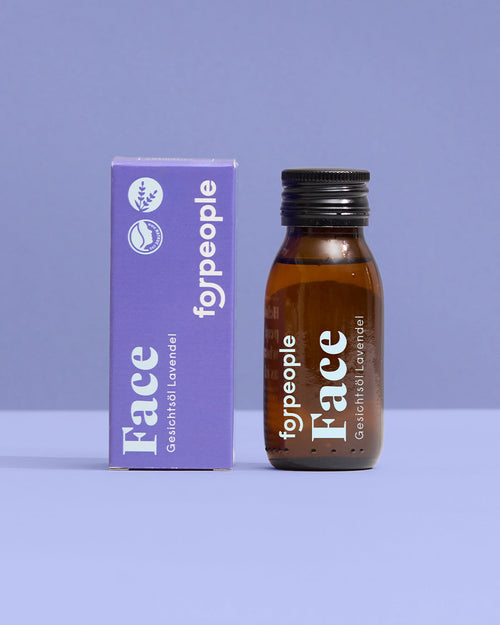
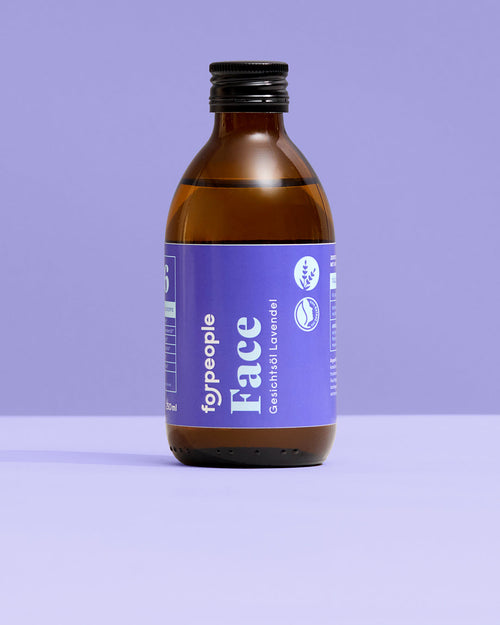
- Face Oil - Lavender, 50 ml, €21.90 (also as Faceoil - Lavender large with 250 ml for €79.90): argan, rosehip, jojoba, borage and hemp oil with lavender essential oil; according to the product page, 2–3 drops on the cleansed, slightly damp face.
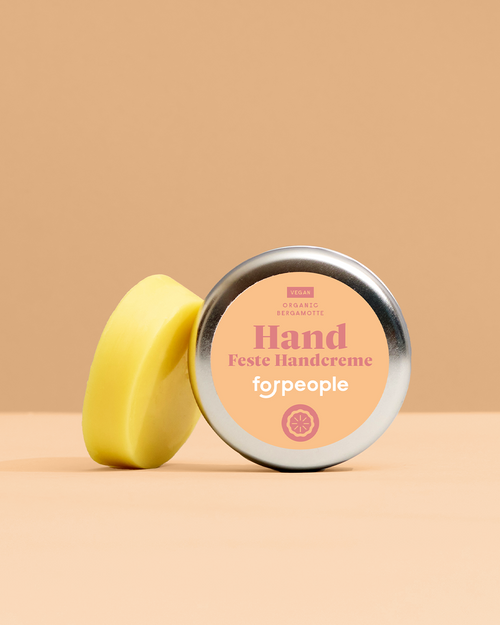
- Solid Vegan Hand Cream - Bergamot, 30 g, €9.90: candelilla wax, jojoba oil, olive oil, shea butter and hemp seed oil with lemon and bergamot oil; water-free, for the hands.
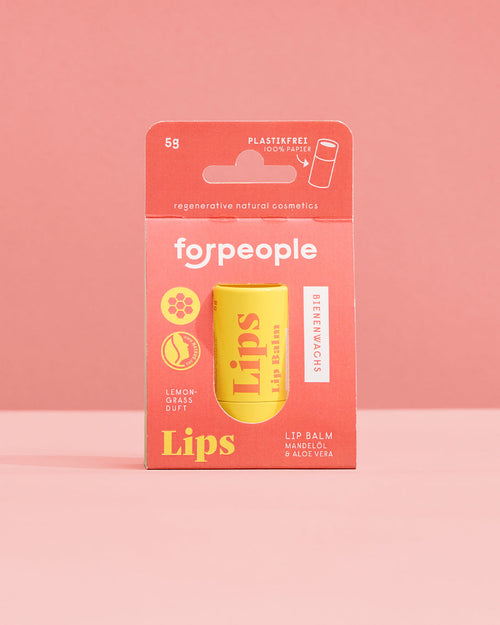
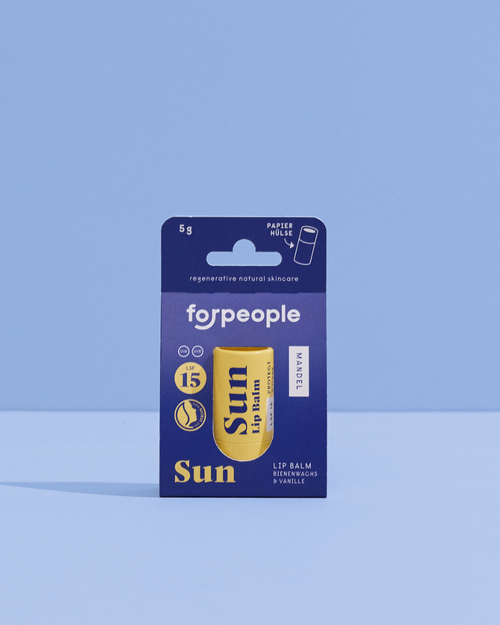
- Lip Balm - Lemongrass, 5 g, €4.90, and Lip Balm - SPF15 Almond & Vanilla, 5 g, €7.90: beeswax, sunflower oil, shea butter, almond oil, hemp oil and aloe extract; one with lemongrass oil, the other with a mineral sun protection factor of 15.
For all of them: close tightly and do not leave in the sun or in a hot car. Questions about lip balm when eating and drinking are answered in You swallow some of your lip balm: is that a problem?
Read more: Solid hand cream: beeswax or bergamot – which one suits you? · Blending your own face oil: ratios, scent, shelf life · Vitamin E (tocopherol) in cosmetics: what it is for and what it cannot do
Sources
- European Commission: CosIng – database of cosmetic substances and ingredients. Entries Cannabis Sativa Seed Oil, Hydrogenated Cannabis Sativa Seed Oil, Cannabis Sativa Seed Extract, Cannabis Sativa Leaf Extract, Cannabis Sativa Flower/Leaf/Stem Extract, Cannabidiol – Synthetically Produced, Cannabidiol – Derived from Extract or Tincture or Resin of Cannabis; accessed 29 October 2026. ec.europa.eu/growth/tools-databases/cosing
- Regulation (EC) No 1223/2009 of the European Parliament and of the Council of 30 November 2009 on cosmetic products, Article 2(1)(a), Article 20(1), Annex II No 306. eur-lex.europa.eu
- United Nations (1961/1972): Single Convention on Narcotic Drugs, 1961, as amended by the 1972 Protocol, Article 1(1)(b), Article 28(2), Schedule I. unodc.org
- Court of Justice of the European Union (2020): Judgment of 19 November 2020, Case C-663/18 (B S and C A, “Kanavape”), paragraphs 72–76 and operative part. eur-lex.europa.eu
- Ross SA, Mehmedic Z, Murphy TP, ElSohly MA (2000): GC-MS analysis of the total delta9-THC content of both drug- and fiber-type cannabis seeds. Journal of Analytical Toxicology 24(8): 715–717. https://doi.org/10.1093/jat/24.8.715
- Citti C, Linciano P, Panseri S, Vezzalini F, Forni F, Vandelli MA, Cannazza G (2019): Cannabinoid Profiling of Hemp Seed Oil by Liquid Chromatography Coupled to High-Resolution Mass Spectrometry. Frontiers in Plant Science 10: 120. https://doi.org/10.3389/fpls.2019.00120
- Commission Regulation (EU) 2022/1393 of 11 August 2022 amending Regulation (EC) No 1881/2006 as regards maximum levels of delta-9-tetrahydrocannabinol (Δ9-THC) in hemp seeds and products derived therefrom. eur-lex.europa.eu
- Prescha A, Grajzer M, Dedyk M, Grajeta H (2014): The Antioxidant Activity and Oxidative Stability of Cold-Pressed Oils. Journal of the American Oil Chemists' Society 91(8): 1291–1301. https://doi.org/10.1007/s11746-014-2479-1
- Zamarripa CA, Tilton HE, Lin S, Cone EJ, Winecker RE, Flegel RR et al. (2024): Pharmacokinetics and pharmacodynamics of five distinct commercially available hemp-derived topical cannabidiol products. Journal of Analytical Toxicology 48(2): 81–98. https://doi.org/10.1093/jat/bkae001