





What wetness changes at the handle
On the oar and on the paddle your hands are rarely dry: spray, rain, sweat.
- Damp skin rubs harder. A review of friction blisters sums it up: moist skin increases frictional forces, very dry or very wet skin lowers them (Knapik et al. 1995). In an experiment with 22 people, friction between forearm and fabric rose with skin moisture; against completely wet fabric the coefficient of friction was more than twice as high as for natural skin on dry fabric (Gerhardt et al. 2008).
- Softened skin blisters more readily. In an experiment on the heel, skin soaked in water warmed up faster under repeated loading than dry skin. The authors conclude that the risk of blisters is higher (Kirkham et al. 2014).
- Palms are susceptible. Blisters are more likely where a thick horny layer is held tightly to the tissue underneath, that is on the palms of the hands and the soles of the feet (Knapik et al. 1995).
The measurements were taken on the forearm and the heel, not on an oar handle. The direction does fit what rowers themselves report: in a survey they named, alongside untrained hands, heavy sweating, wet hands, salt from the sea and slippery synthetic handles in the rain as triggers (Grima et al. 2022).
How calluses form and why thick edges tear is explained in Gym calluses: care for them or remove them?
How common calluses and blisters are
For rowing there are figures. In a survey of 145 rowers who train on the water, 69 per cent regularly had calluses; most did not find them painful. Fifteen per cent got blisters regularly, more than 70 per cent occasionally or rarely. Both sat mainly on the lower parts of the fingers and the upper edge of the palm.
As triggers, 52 per cent named untrained hands, for example at the start of the season, 35 per cent a change of oar or seat in the boat, 30 per cent gripping too hard and 20 per cent heavy sweating. How often and how hard someone trained, by contrast, made hardly any difference (Grima et al. 2022). A review of rowing injuries also counts blisters and abrasions among the skin problems of the sport (Rumball et al. 2005).
For paddle sports the data are thinner. In a survey of 95 dragon boat athletes, 78.9 per cent reported blisters (Mukherjee et al. 2014). For kayak, open canoe and stand-up paddleboarding we did not find a comparable survey of the hands.
Where it rubs and what helps
| Sport | Where it rubs | What helps |
|---|---|---|
| Rowing, sculling or sweep | Lower parts of the fingers and upper edge of the palm; the handle is turned with every stroke | Hold loosely, keep handles clean, build up volume slowly at the start of the season |
| Rowing machine | The same places; no turning, but sweat on the handle | Dry hands and handle in between |
| Kayak with a double-bladed paddle | Between thumb and index finger and at the base of the fingers | Keep the shaft free of sand and salt, loosen your grip |
| Open canoe and stand-up paddleboarding | Palm of the upper hand on the top grip, fingers of the lower hand on the shaft | A paddle of the right length, change sides regularly |
| Dragon boat | As in the open canoe; blisters are common | Build up volume slowly, cover sensitive spots with tape before training |
The information on rowing comes from the survey (Grima et al. 2022). The information on paddle sports and the column "What helps" are practical experience from the sports, not measurements.
Routine after training
- Rinse. Wash off salt, sand and dirt with tap water and a little soap.
- Dry thoroughly. Between the fingers too. Let softened skin dry first before you file or apply cream.
- Keep edges flat. Calluses stay; only raised edges come off. Rowers trim or file calluses when they become too thick (Grima et al. 2022). Once a week with a fine file is usually enough. No blades, do not tear anything off. How to file is described in Caring for fingertip calluses when climbing.
- Apply cream. Massage in a small amount of cream, thinly during the day, a little more in the evening. A water-free cream made of wax and oil lays a film on the skin that reduces evaporation; it does not dissolve the callus. The mechanism is explained in Occlusion and TEWL: how a wax film protects your skin.
- Before the next session: wash your hands, dry them, no cream. A fresh film of fat changes your grip; more in Moisturise before or after climbing?
Start of the season, gloves and sun
Start of the season: Repeated, low-intensity friction makes the epidermis thicker, and that may make blisters less likely (Knapik et al. 1995). So build up the kilometres step by step in spring. Moving from the rowing machine into the boat counts too: on the water, turning the handle and wetness are added.
Gloves and tape: Gloves spare the skin but change the feel for oar or paddle. In the survey about 20 per cent used gloves when they had blisters, fewer among the competitive rowers; around 44 per cent covered blisters with tape (Grima et al. 2022).
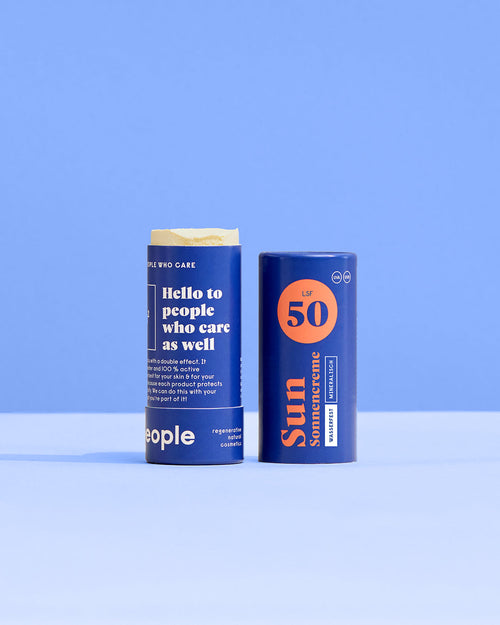
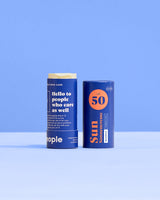
Sun: When you row or paddle, the backs of your hands are often in the sun for hours. A sunscreen such as the mineral Solid Sunscreen SPF50 (40 g, €17.90) fits there; the palms stay free so that the handle does not slip. More in Sun protection on the water: sailing, SUP and paddling.
When to seek medical advice?
We do not give instructions for opening or treating blisters; that belongs in medical or nursing hands. In the survey around 2 per cent reported blisters that had become infected (Grima et al. 2022). That is rare, but to be taken seriously. Have your hand looked at by a doctor promptly if
- a blister or open spot is red, warm or swollen, throbs or discharges pus,
- a red streak runs towards the wrist or you develop a fever,
- a blister fills with cloudy or bloody fluid,
- an open spot has not closed after a few days.
Cosmetics do not belong on open, weeping or bleeding spots. Keep them clean and cover them.
Frequently asked questions
Should I remove calluses from rowing?
No. Flat calluses protect the hand. Only file raised edges flat so that they do not catch on the handle.
Does hand cream make calluses too soft?
A thin layer of water-free cream keeps the callus supple but does not dissolve it. Whether cared-for calluses tear less often on the oar has, to our knowledge, not been measured; it is experience from the sport. Do not apply cream straight before training.
Why do I get blisters in spring although I was on the rowing machine all winter?
On the rowing machine you only pull. In the boat you turn the handle with every stroke, and your hands get wet. In the survey many named a change of oar or seat as a trigger. Increase your time on the water step by step.
Does salt water attack the hands?
Rowers name salt as one trigger for blisters. We do not know of any measurements. After the outing, rinse your hands with tap water, dry them and apply cream.
Where should the hand cream go in the boat?
In the boat bag, not in the blazing sun. A solid cream does not leak; in the heat it becomes soft and firms up again once it cools. More in Storing solid cosmetics: heat, summer and winter.
At forpeople
Care for the time after training, on intact skin:
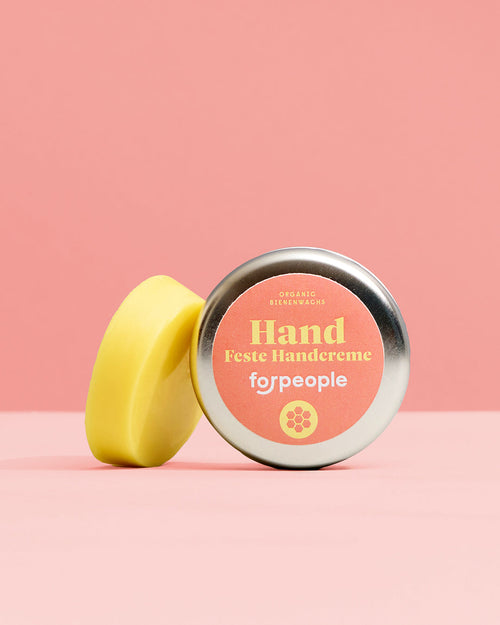
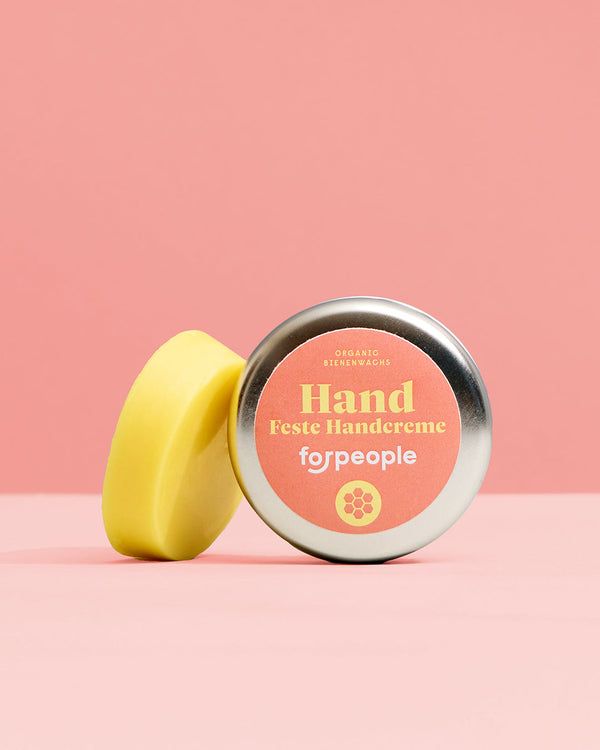
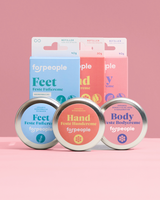
- Solid Hand Cream - Beeswax, 30 g, €9.90: beeswax, olive and sunflower oil, St. John's wort and aloe extract; without water and without added fragrance.
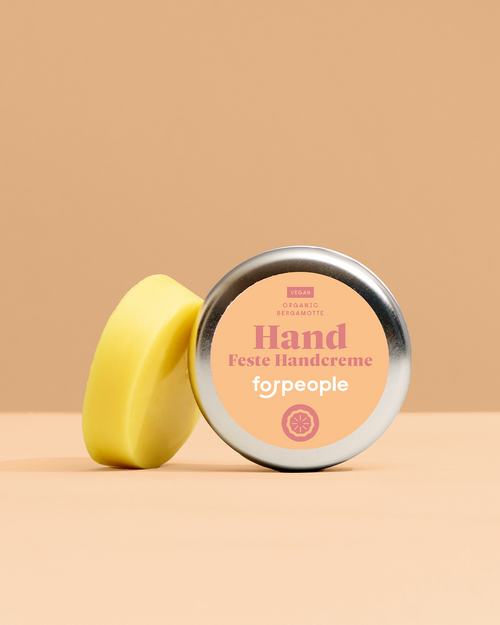
- Solid Vegan Hand Cream - Bergamot, 30 g, €9.90: vegan, with candelilla wax, jojoba oil and shea butter; with lemon and bergamot essential oils.
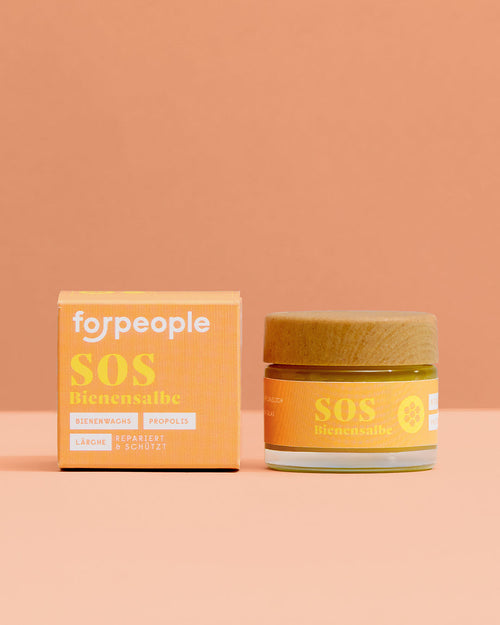
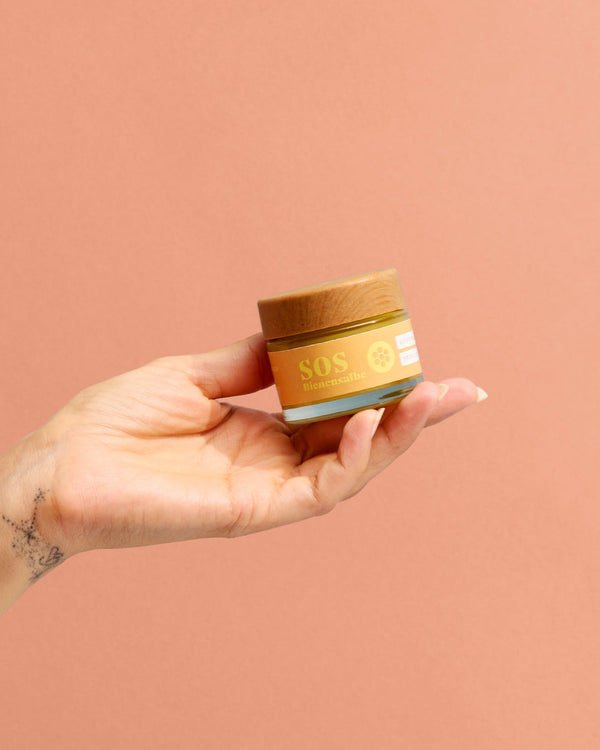
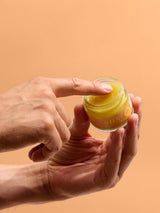
- Beeswax Salve Larch & Mandarin in a Glass Jar, 50 g, €12.90: a soft salve for the evening. It contains larch resin, propolis and essential oils; what that can mean for you is explained in Allergic to tree resin, colophony or propolis?
Do not use the products on injured or irritated skin.
More on this: Removing handball resin: what dissolves it, and what your skin needs · Climbing chalk: what it does to your skin · Preventing chafing when running and cycling
From the blog: Climbing with cracked hands? Solid hand cream with beeswax nourishes, protects and holds up. · Bee Salve: Beeswax & Propolis for Dry, Stressed Skin
Sources
- Grima JN, Vella Wood M, Portelli N, Grima-Cornish JN, Attard D, Gatt A et al. (2022): Blisters and Calluses from Rowing: Prevalence, Perceptions and Pain Tolerance. Medicina (Kaunas) 58(1): 77. https://doi.org/10.3390/medicina58010077
- Knapik JJ, Reynolds KL, Duplantis KL, Jones BH (1995): Friction blisters. Pathophysiology, prevention and treatment. Sports Med 20(3): 136–147. https://doi.org/10.2165/00007256-199520030-00002
- Gerhardt LC, Strässle V, Lenz A, Spencer ND, Derler S (2008): Influence of epidermal hydration on the friction of human skin against textiles. J R Soc Interface 5(28): 1317–1328. https://doi.org/10.1098/rsif.2008.0034
- Kirkham S, Lam S, Nester C, Hashmi F (2014): The effect of hydration on the risk of friction blister formation on the heel of the foot. Skin Res Technol 20(2): 246–253. https://doi.org/10.1111/srt.12136
- Mukherjee S, Leong HF, Chen S, Foo YX, Pek HK (2014): Injuries in Competitive Dragon Boating. Orthop J Sports Med 2(11): 2325967114554550. https://doi.org/10.1177/2325967114554550
- Rumball JS, Lebrun CM, Di Ciacca SR, Orlando K (2005): Rowing injuries. Sports Med 35(6): 537–555. https://doi.org/10.2165/00007256-200535060-00005