







For years, the same deodorant was enough. For a few weeks now, your shirt has smelled by the afternoon, and after half an hour at the gym. The first thought is that the product has stopped working. Before you switch, it is worth going through the other factors. How deodorant works in principle is explained in How do aluminium-free deodorants work? Odour, sweat and ingredients; this page is about why it suddenly no longer fits.
Odour is teamwork: glands, bacteria and their mix
Fresh sweat hardly smells. The scent glands of the armpit, the apocrine glands, only start working at puberty and release a fatty secretion into the hair follicles (Baker 2019). Bacteria turn this into odour, and which bacteria matters.
In a study of 24 women and men in Geneva, certain groups of bacteria were linked to odour and others were not: corynebacteria went along with stronger odour, propionibacteria rather with weaker odour. Among the staphylococci there were groups in both directions; Staphylococcus hominis was among those linked to odour notes. Odour increased from morning to afternoon (Troccaz et al. 2015). Laboratory experiments fit this: Staphylococcus hominis releases particularly large amounts of a strong-smelling sulphur compound from an odourless precursor, while Staphylococcus epidermidis, also common in the armpit, releases little (Bawdon et al. 2015).
For the question of why a deodorant suddenly stops being enough, this means: it is not just the number of bacteria that counts, but also their composition. If it shifts, the same amount of sweat smells different. What research knows about the skin microbiome in general is covered in The skin microbiome and skin care: what research knows.
Do bacteria get used to a deodorant?
You often hear this explanation. For deodorants, we have not found a study that shows such an adaptation. What does exist is research on how products change underarm bacteria. In a US study, the number of culturable bacteria rose when participants stopped using deodorant or antiperspirant and approached that of people who use nothing at all; with an antiperspirant it dropped sharply again. People who had used products for a long time and then paused mostly had staphylococci in their armpits, while those who never used anything had more corynebacteria (Urban et al. 2016).
So the underarm flora responds to habits. That it becomes "resistant" after years of using the same product has not been shown. For a deodorant cream with baking soda, the mechanism also speaks against it: baking soda neutralises the acidic odour compounds and is not something that specifically kills bacteria. That is a chemical consideration, not a measured finding. How baking soda works in deodorant is explained in Baking soda in deodorant: why it's there and skin reactions.
The most common reasons at a glance
| Possible reason | What is behind it | What you can check |
|---|---|---|
| More sweat | Heat, exercise, body weight, fever; more moisture and more secretion for the bacteria | Does it only happen in certain situations? |
| Hormones | Puberty, pregnancy, menopause with hot flushes | Does the timing fit a hormonal change? |
| Medication | Some medicines, for example some antidepressants, make you sweat more | A new medicine in the last few weeks? Do not stop it yourself, talk to your doctor |
| Clothing | Synthetic fabrics hold on to odour more strongly; residues remain even after washing | Does the shirt smell as soon as it warms up? |
| Hair and shaving | Underarm hair holds secretion and bacteria; after shaving, washing is more thorough | Has anything changed in how you shave? |
| Amount and timing | Deodorant applied to damp or unwashed skin, too little or unevenly | Clean, dry skin, thin and even |
| Switching from antiperspirant | More sweat and more bacteria once the aluminium salts are gone | When did you switch? |
| Diet, alcohol | Strongly spiced food and alcohol are considered to make it worse; the evidence is thin | Is there a link with particular days? |
Sources for the table: NHS: Body odour, Baker 2019, IQWiG 2023, Callewaert et al. 2014, Lanzalaco et al. 2016, Urban et al. 2016, Fialová et al. 2016. The questions in the right-hand column are practical pointers, not a diagnosis.
When the shirt smells, not the armpit
A frequently overlooked reason is in the wardrobe. In a study from Ghent, 26 people handed in their shirts after an intensive spinning class; after 28 hours a trained panel rated the odour. The polyester shirts smelled considerably more intense and less pleasant than the cotton ones. On polyester, micrococci in particular multiplied, which hardly occurred on cotton; staphylococci were found on both fabrics (Callewaert et al. 2014). So the fabric is not just a carrier; it helps determine which bacteria stay and how it smells.
This explains a typical experience: a freshly washed sports shirt smells as soon as it warms up, even though the armpit has just been washed and freshly treated. Then a different deodorant will not help; the shirt needs attention. For body odour, the NHS advises changing and washing clothes regularly, wearing natural fabrics such as cotton, wool and silk and avoiding tight clothing made of synthetic fabrics (NHS 2025). From practice: do not leave sweaty clothes in your gym bag for hours. Where deodorant cream leaves greasy marks in fabric, odours also linger; how to avoid that is covered in Does deodorant cream stain? Preventing and removing marks.
Shaving, amount, timing
Hair: Underarm hair gives secretion and bacteria extra surface. In a study of 30 men, wet shaving followed by washing reduced odour immediately by 57 percent, considerably more than washing alone; trimming with scissors made no clear difference. On the following two days, too, washing worked better after the single shave (Lanzalaco et al. 2016). Only men were studied, and shaving has its own pitfalls: freshly shaved skin can sting with some deodorants, see Deodorant after shaving: why does it sting and what helps?
Preparing the skin: A deodorant without aluminium salts works on odour, not on sweat. It therefore needs a washed, well-dried armpit. On damp skin or over old sweat, it has less of a chance. How much and when is covered in Applying deodorant cream: how much, when, how often?
Time of day: Underarm odour increases over the course of the day (Troccaz et al. 2015). If you apply early in the morning and are still out in the evening, you are more likely to reach the limit on a warm day. Then it helps to wash your armpits in between and apply again, rather than putting one layer on top of the next.
Switching from antiperspirant
If you have just switched from an antiperspirant with aluminium salts to a deodorant without them, you often experience exactly this "suddenly not working". That is down to the principle: an antiperspirant narrows the sweat ducts, a deodorant does not. In the Geneva study, people who did not use antiperspirant carried on average about 50 times as many bacteria in their armpits as people who did (Troccaz et al. 2015), and after stopping, the number of bacteria rises again (Urban et al. 2016). The first few weeks are therefore not a fair test of a new deodorant. What to expect is described in Aluminium-free deodorant: how it works and how to switch; the difference between the two principles in Deodorant or antiperspirant: what is the difference?
Hormones, stress and diet: what is known
Menopause: Hot flushes and sweating episodes are the most common menopausal symptoms and can also disturb sleep. They usually subside after about four to five years. Why they occur is not clear; it is thought that falling oestrogen levels make the body's temperature regulation fluctuate (IQWiG 2023). More sweat means more work for a deodorant, without it having become any worse. What changes in the skin during this time is covered in Dry skin during menopause: what changes?
Stress: The sweat glands on the palms and soles respond to emotional as well as heat stimuli. How the scent glands in the armpit are controlled has been little studied; isolated glands respond in the laboratory to messenger substances that are also released under stress (Baker 2019). It is often said that stress sweat smells different; we have not found reliable figures on this.
Diet: The NHS advises not eating too much strong-smelling or spicy food and not drinking too much alcohol (NHS 2025). Research on this is limited and sometimes surprising: in a Czech study with three experiments, women rated men's underarm odour after a larger amount of garlic as more attractive and less intense in two experiments, and found no difference in one (Fialová et al. 2016). A change of diet as a solution for a deodorant that is no longer enough cannot be derived from this.
When to see a doctor
Body odour is usually harmless. The NHS does, however, name signs for which you should see your GP (NHS 2025):
- The odour has changed and smells different from usual.
- You suddenly sweat much more than usual, for no obvious reason.
- The odour is affecting you, even though you have tried the usual measures.
Among the conditions that can make body odour stronger, the same source names diabetes and kidney and liver disease (NHS 2025). Increased sweating can also be caused by fever, infections, metabolic or hormonal disorders and medication (Baker 2019). Have night sweats checked if they happen regularly and wake you up, if fever, cough or diarrhoea come with them, or if you are losing weight without trying (NHS 2023). Do not stop a medicine you suspect yourself; discuss it with your doctor. If the skin in your armpit reacts to a deodorant with redness or stinging, Baking soda in deodorant: why it's there and skin reactions can help; if the irritation persists, see a doctor about that too.
Frequently asked questions
Can your body get used to a deodorant?
We have not found a study that shows such an adaptation. What has been shown is that underarm bacteria change when you switch or stop your product. When a deodorant seems to weaken, the amount of sweat, clothing or how it is applied are usually behind it.
Why has my deodorant stopped working during menopause?
Hot flushes and sweating episodes are common during menopause. More sweat means more work for a deodorant. If the symptoms are severe, your GP or gynaecologist can advise you.
Why does my sports shirt smell even after washing?
Synthetic fabrics such as polyester hold on to odour more strongly than cotton, and different bacteria multiply on them. If the shirt smells as soon as it warms up, it is the fabric, not the deodorant.
Does it help to switch deodorant?
Sometimes, for example if a different principle suits your daily life more closely. Check clothing, shaving and application first. Switching from antiperspirant to deodorant often brings more odour in the first few weeks, not less.
How long does a deodorant cream last?
There is no number of hours that applies to everyone. How long one application lasts depends on how much you sweat, how warm it is and what you are wearing. That is why we do not give a number of hours for our deodorant cream.
Should I apply deodorant twice a day?
If you notice it is no longer enough by the afternoon, yes, but on freshly washed, dry skin. A new layer over old sweat does little.
When should I see a doctor about sweat odour?
If the odour changes, you suddenly sweat much more, you regularly wake up drenched at night, or fever, weight loss or a new medicine come into the picture.
At forpeople
Our deodorant cream works on odour and does not reduce the amount of sweat. How long it lasts for you depends on sweat, weather and clothing. Wash with soap and water beforehand.
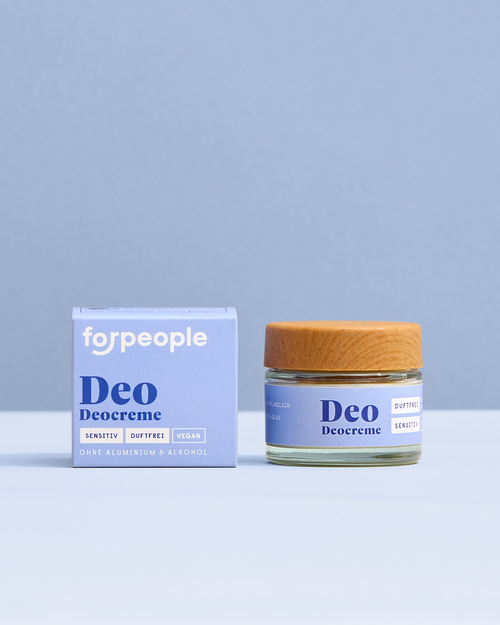
Sensitive Deodorant Cream, 50 g, €8.90: potato starch, shea butter, baking soda, sunflower oil, corn starch and candelilla wax; no added fragrance, no essential oils, no alcohol and no aluminium salts. According to the product page, a pea-sized amount per armpit is enough.
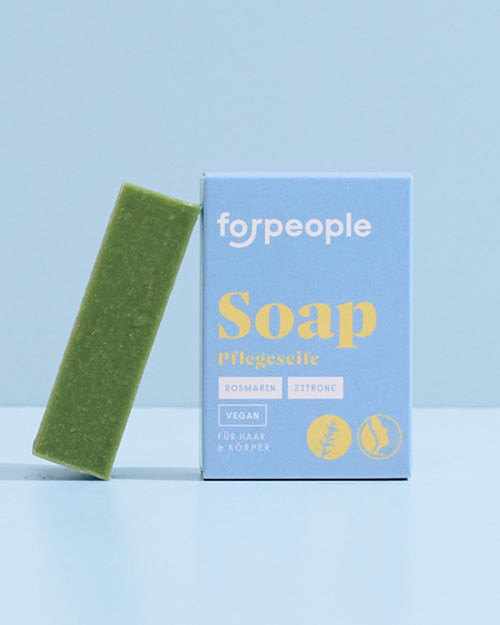
Aloe Vera Soap – Rosemary & Lemon, 75 g, €8.90: for washing your armpits before applying; contains essential oils of rosemary and lemon. How to shower with a bar of soap is covered in Bar soap or shower gel: differences for skin and everyday use.
More on this: Fragrance-free deodorant: what to look for with easily irritated underarms · Making deodorant cream: baking soda, starch and fat in the right ratio · How do aluminium-free deodorants work? Odour, sweat and ingredients
Sources
- Troccaz M, Gaïa N, Beccucci S, Schrenzel J, Cayeux I, Starkenmann C, Lazarevic V (2015): Mapping axillary microbiota responsible for body odours using a culture-independent approach. Microbiome 3(1): 3. https://doi.org/10.1186/s40168-014-0064-3
- Bawdon D, Cox DS, Ashford D, James AG, Thomas GH (2015): Identification of axillary Staphylococcus sp. involved in the production of the malodorous thioalcohol 3-methyl-3-sulfanylhexan-1-ol. FEMS Microbiol Lett 362(16): fnv111. https://doi.org/10.1093/femsle/fnv111
- Urban J, Fergus DJ, Savage AM, Ehlers M, Menninger HL, Dunn RR, Horvath JE (2016): The effect of habitual and experimental antiperspirant and deodorant product use on the armpit microbiome. PeerJ 4: e1605. https://doi.org/10.7717/peerj.1605
- Callewaert C, De Maeseneire E, Kerckhof FM, Verliefde A, Van de Wiele T, Boon N (2014): Microbial odor profile of polyester and cotton clothes after a fitness session. Appl Environ Microbiol 80(21): 6611–6619. https://doi.org/10.1128/AEM.01422-14
- Lanzalaco A, Vanoosthuyze K, Stark C, Swaile D, Rocchetta H, Spruell R (2016): A comparative clinical study of different hair removal procedures and their impact on axillary odor reduction in men. J Cosmet Dermatol 15(1): 58–65. https://doi.org/10.1111/jocd.12197
- Fialová J, Roberts SC, Havlíček J (2016): Consumption of garlic positively affects hedonic perception of axillary body odour. Appetite 97: 8–15. https://doi.org/10.1016/j.appet.2015.11.001
- Baker LB (2019): Physiology of sweat gland function: The roles of sweating and sweat composition in human health. Temperature 6(3): 211–259. https://doi.org/10.1080/23328940.2019.1632145
- NHS (2025): Body odour (BO). Last reviewed 14.05.2025, accessed 29.10.2026. https://www.nhs.uk/conditions/body-odour-bo/
- NHS (2023): Night sweats. Last reviewed 09.11.2023, accessed 29.10.2026. https://www.nhs.uk/symptoms/night-sweats/
- Institut für Qualität und Wirtschaftlichkeit im Gesundheitswesen (IQWiG) (2023): Wechseljahrsbeschwerden. gesundheitsinformation.de, updated 02.01.2023, accessed 29.10.2026. https://www.gesundheitsinformation.de/wechseljahrsbeschwerden.html