The problem: your hands burn after cooking
In autumn and winter there is more braising and preserving: chilli con carne, spicy soups, pickled hot peppers, plus potatoes, garlic, celery and parsnips for stews. Half an hour after chopping, your fingertips start to burn, the burning gets stronger rather than weaker, and cold water only helps while your hands are in it. Others notice itching or small wheals after peeling potatoes, or after weeks of handling a lot of garlic their fingertips are cracked and scaly.
Different processes lie behind these complaints. Chilli irritates nerve endings directly, and that affects everyone. Potatoes, garlic or tomatoes can trigger an allergy or skin irritation in some people. The juice of celery and parsnip can cause a skin reaction together with sunlight. And in winter there are hands that are already dry and cracked from frequent washing; more on this in Cracked, split fingertips: causes and what helps.
Why chilli burns and water barely helps
A nerve signal, not a burn. The heat of chilli comes from capsaicinoids, above all capsaicin. Capsaicin binds to the TRPV1 receptor on pain fibres. This receptor normally responds to heat; that is why chilli on the skin feels like a burn (Reyes-Escogido et al. 2011). Medically, this is described as contact dermatitis caused by capsaicin, also known as "Hunan hand"; the skin often looks unremarkable, and the burning wears off by itself after a few hours (Hitl et al. 2025).
Fat instead of water. Capsaicin is fat-loving and dissolves in fat, oil and alcohol (Reyes-Escogido et al. 2011). Water alone therefore rinses it off poorly; cold water feels good while your hands are in it, but the burning often comes back afterwards (Hitl et al. 2025). This explains why poison control specialists mention vegetable oil as well as water (Poison Control 2010). However, there are no comparative studies on which method works most reliably on the skin; the case reports show no consistent approach (Hitl et al. 2025).
Potato, garlic, tomato. Proteins in raw foods can trigger contact urticaria in some people: itchy wheals at the point of contact that appear minutes to an hour after contact and usually disappear within a day. Foods mentioned include onion, garlic, celery, carrot, tomato and spices such as paprika (DermNet: Food handlers). For raw potatoes, hand eczema caused by potato protein has been described; it appeared when cooking and disappeared when the potato was avoided (Obtułowicz et al. 2016). Garlic is considered probably the most common cause of allergic contact dermatitis on the fingertips, typically on the thumb, index and middle finger of the hand that holds the clove (DermNet: Garlic).
Celery and parsnip. Their juice contains furocoumarins. If the skin is then exposed to sun, redness with blisters can develop after about 24 to 48 hours, often in streaks; this is not an allergy but a direct reaction to light (DermNet: Phytophotodermatitis). In winter this is less common because the sun is weaker, but it can matter before a day of skiing, for example; this is our own assessment.
The solution step by step
| Step | What you do | Why |
|---|---|---|
| Right away | Do not touch your face, your eyes or contact lenses | Capsaicin on your fingers easily gets to where it burns even more |
| Right away | Put a tablespoon of cooking oil on your hands, rub it in for a minute, wipe it off with kitchen paper | Capsaicin dissolves in oil; vegetable oil is mentioned by poison control specialists |
| Afterwards | Wash your hands thoroughly with soap and lukewarm water, including under the nails, and dry them well | Soap takes the oil and the dissolved capsaicin with it |
| Afterwards | Cool them: apply cold, damp cloths or hold your hands in cool water | Cold makes the burning more bearable for a while but does not remove capsaicin |
| In the evening | When the burning has passed and the skin is uninjured, apply a rich hand cream without essential oils | Oil, soap and water have taken fat out of the skin |
| Prevent | Cut chillies and hot peppers wearing disposable nitrile or rubber gloves; wash the knife and board afterwards | Gloves are explicitly recommended when handling hot peppers |
| Prevent | If potatoes or garlic make your hands itch: gloves, hold garlic with a knife and fork rather than your fingers, wash your hands afterwards | Less skin contact, less reaction; garlic allergens, however, pass through many types of glove |
Sources for the table: Reyes-Escogido et al. 2011, Poison Control 2010, Hitl et al. 2025, Moyle et al. 2004. The amount of oil and the time are common practice. How to get oil off your hands gently is explained in Oil and grease on your hands: how do you wash them off gently?; why cream can sting at first on irritated skin is covered in Why does hand cream sting on cracked hands?
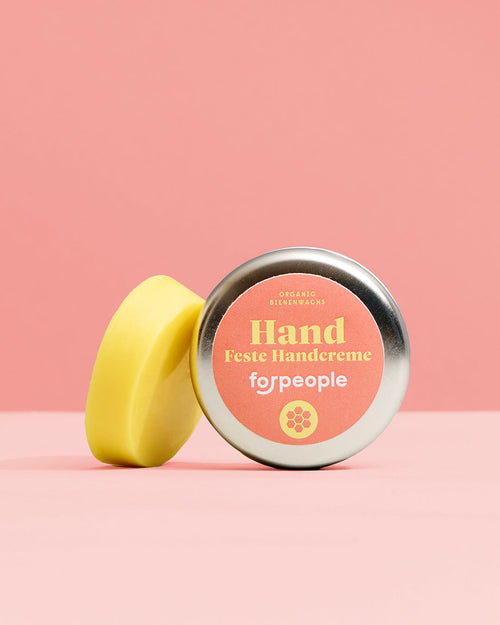
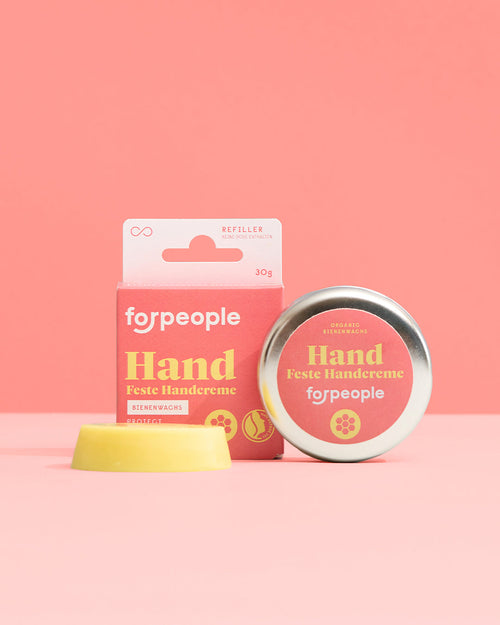
For care afterwards, the Solid Hand Cream - Beeswax is suitable: according to its product page for dry, rough and stressed hands, practical after washing your hands or as care in the evening. According to its ingredient list it consists of beeswax, olive and sunflower oil, St John's wort and aloe extract and contains no essential oils. It is care for intact skin, not a remedy for the burning, and does not belong on blisters or open spots. While you are working with uncovered food, the cream stays in the tin; why is explained in Hand cream in the kitchen: what applies when you handle food?
What helps – and what does not
| Remedy or assumption | Assessment |
|---|---|
| Cooking oil, then soap | makes sense; capsaicin dissolves in oil, and soap takes both with it |
| Cold water only | feels good briefly but removes capsaicin poorly; the burning often comes back |
| Milk, yoghurt or quark on the hands | a popular tip, not studied for the skin; in the mouth, fat, protein, sugar and cold all play a part |
| Vinegar or acidic solutions | mixed; one poison centre mentions diluted vinegar, while in a case report an acidic solution made the pain worse |
| High-proof alcohol or disinfectant | better not; it does dissolve capsaicin but dries out and irritates skin that is already stressed |
| Hand cream against the burning | no; cream cares for the skin afterwards but does nothing to the capsaicin |
Sources: Reyes-Escogido et al. 2011, Poison Control 2010, Hitl et al. 2025. The entries on alcohol and hand cream are our own assessment.
Common mistakes
- Touching your eyes or contact lenses after cutting. Capsaicin burns particularly strongly in the eye.
- Holding your hands under cold water for minutes on end. The burning comes back as soon as they warm up again.
- Scrubbing with a brush or scouring agent. This irritates the skin further.
- Cutting without gloves when your hands are cracked from winter. Split skin is already irritated; gloves protect it.
- Going straight out into the sun after handling celery or parsnips. Wash your hands thoroughly first.
- Taking fingertips that crack again and again for dry skin. A garlic or other contact allergy may be behind it.
When to seek medical advice
The burning after chilli is usually unpleasant but over after a few hours. Seek medical advice or call your regional poison information centre (the German Federal Office of Consumer Protection and Food Safety keeps a list of poison centres (BVL)) if
- blisters form, the skin swells a lot or the pain remains very strong for hours despite the steps above; in one documented case with blisters, treatment in an emergency department was needed (Poison Control 2010),
- chilli has got into an eye: rinse immediately with plenty of water for about 15 minutes (Poison Control 2010), then have contact lenses removed or take them out with washed hands; if pain, redness or visual problems persist, see an eye doctor or go to an emergency department,
- a child has got chilli in the eyes or mouth and reacts strongly,
- wheals, small blisters or an itchy, scaly eczema keep appearing on your hands after potatoes, garlic or other vegetables; whether an allergy is behind it can be clarified by a dermatologist with suitable tests (Obtułowicz et al. 2016); more in Dry hands or hand eczema? How to tell the difference,
- blisters appear on the skin after celery, parsnip and sun (DermNet: Phytophotodermatitis).
Call 112 if you develop shortness of breath or tightness in the chest, for example after inhaling fumes when searing chillies (Poison Control 2010), or if after contact with a food you develop wheals all over your body, swelling of the lips, tongue or face, or circulatory problems. With an allergy, contact urticaria can spread beyond the point of contact (DermNet: Food handlers). How wheals caused by cold differ from this is explained in Cold allergy (cold urticaria): hives from the cold – what to do?
Frequently asked questions
What helps when my hands burn after chilli?
Put cooking oil on your hands, rub it in and wipe it off, then wash with soap and cool them. Do not touch your face. The burning is usually over after a few hours.
Why does water not help against chilli on the hands?
Capsaicin dissolves in fat and alcohol but poorly in water. Cold water cools briefly but hardly rinses the capsaicin off.
How long do hands burn after chilli?
Usually a few hours. If severe pain lasts longer or blisters form, seek medical advice.
Why do my hands burn after cutting peppers?
Hot paprika and pepper varieties contain capsaicin just like chilli. Paprika is also listed among the foods that cause wheals at the point of contact in some people.
Why do my hands itch after peeling potatoes?
Often it is the wetness that irritates the skin. In some people the skin also reacts to proteins in raw potato, with wheals or an itchy eczema. Gloves help; if it keeps happening, have it checked by a dermatologist.
Why do my fingertips burn after garlic?
Garlic can irritate the skin and is a known cause of allergic eczema on the fingertips, typically on the hand that holds the clove. Hold garlic with a knife and fork; gloves only partly protect.
Does milk help against chilli on the skin?
It is a popular tip. It has not been studied for the skin. Oil followed by soap is the more obvious choice, because capsaicin dissolves in fat.
Which gloves should I use to cut chillies?
Disposable gloves made of nitrile, latex or rubber are recommended. If you react to latex, use nitrile.
At forpeople
We have no product for the burning itself; that is what oil and soap from the kitchen are for. For your hands afterwards, once the skin has settled and is uninjured, there is our solid hand cream without essential oils.
Solid Hand Cream - Beeswax, 30 g, €9.90: beeswax, olive and sunflower oil, St John's wort and aloe extract; water-free, in a refillable metal tin.
Solid Hand Cream Refill - Beeswax, 30 g, €7.90: the same formula for refilling.
Hand Care Set – For Rough, Cracked Hands (2× Solid Hand Cream), 60 g in total, €16.90: one tin and one refill, for example for the kitchen and the bathroom.
More on this: Dry, cracked hands: causes and what helps · Rough hands from washing up and cleaning: what helps? · Hand cream under latex or nitrile gloves? · Cream stings on your face: why, and what you can apply now
Sources
- Reyes-Escogido ML, Gonzalez-Mondragon EG, Vazquez-Tzompantzi E (2011): Chemical and pharmacological aspects of capsaicin. Molecules 16(2): 1253–1270. https://doi.org/10.3390/molecules16021253
- Poison Control, National Capital Poison Center (2010): Capsaicin: When the chili is too hot. McDaniel-Price A, accessed 29 October 2026. https://www.poison.org/articles/2010-oct/capsaicin-when-the-chili-is-too-hot
- Hitl M, Radovanović K, Kladar N (2025): "Chili Burn" – A Case Report of Contact Dermatitis Caused by Capsicum Peppers. Life (Basel) 15(4): 539. https://doi.org/10.3390/life15040539
- DermNet: Skin problems in food handlers and the catering industry. Ford S (2012), accessed 29 October 2026. https://dermnetnz.org/topics/skin-problems-in-food-handlers-and-the-catering-industry
- Obtułowicz A, Pirowska M, Wojas-Pelc A (2016): Contact eczema of hands caused by contact with potato protein. Ann Agric Environ Med 23(2): 377–378. https://doi.org/10.5604/12321966.1203909
- DermNet: Garlic. Rademaker M (1999), accessed 29 October 2026. https://dermnetnz.org/topics/garlic
- DermNet: Phytophotodermatitis. Coulson I, November 2021, accessed 29 October 2026. https://dermnetnz.org/topics/phytophotodermatitis
- Moyle M, Frowen K, Nixon R (2004): Use of gloves in protection from diallyl disulphide allergy. Australas J Dermatol 45(4): 223–225. https://doi.org/10.1111/j.1440-0960.2004.00102.x
- Bundesamt für Verbraucherschutz und Lebensmittelsicherheit (BVL) [German Federal Office of Consumer Protection and Food Safety]: List of poison emergency call centres and poison information centres in Germany and Austria. Accessed 29 October 2026. https://www.bvl.bund.de/DE/Arbeitsbereiche/01_Lebensmittel/03_Verbraucher/09_InfektionenIntoxikationen/02_Giftnotrufzentralen/lm_LMVergiftung_giftnotrufzentralen_node.html