Bergamot smells fresh and is found in many care products, including one of our solid hand creams. At the same time, you read that bergamot oil and St John's wort don't go well with sun. Both are partly true. This page separates what is proven, what is regulated and what is open, and says at the end what this means for our products.
What phototoxic means and what it doesn't
In a phototoxic reaction, a substance on or in the skin absorbs energy from light, mainly in the UVA range, and damages skin cells in the process. It looks like strong redness after too much sun, sharply limited to the areas where the substance was, and can form blisters. The delay is typical: in two described cases after using a bergamot aromatherapy oil, blisters appeared 48 to 72 hours after the light exposure; one of the two people had not even applied the oil, but had been exposed to it evaporated in a sauna and then went to a tanning salon. Through the same substances, bergamot oil also stimulates pigment formation (Kaddu et al. 2001); brownish marks can remain after a reaction. In an animal experiment, one of the substances in lemon oil even caused such browning without visible redness beforehand (Naganuma et al. 1985).
The German Federal Institute for Risk Assessment sums it up: certain essential oils, for example from citrus fruits, can cause phototoxic reactions on the skin after exposure to sunlight; sun should be avoided in such cases (BfR 2026).
Unlike an allergy, a phototoxic reaction does not require prior sensitisation. It depends on the amount of the substance and the light dose; IFRA's limit for bergapten is also based on such dose-response relationships (IFRA 2020, 2023). The allergy side of the same oils is a separate topic: bergamot and lemon oil are now also on the EU list of fragrance allergens that must be labelled (Regulation (EC) No 1223/2009, Annex III entries 352 and 353). More on this in Fragrance allergens: the list of substances that must be labelled and Essential Oils and Fragrance Allergens.
Which oils are affected
Furocoumarins are found mainly in the peel of certain citrus fruits and get into the oil during cold pressing. For expressed bergamot oil, a review gives a bergapten content of about 0.2 percent (Navarra et al. 2015). In lemon oil, the two phototoxic substances varied more than twentyfold depending on origin, bergapten between 4 and 87 ppm and oxypeucedanin between 26 and 728 ppm; lime and bitter orange oil also contained a lot of oxypeucedanin (Naganuma et al. 1985). That is why furocoumarin-free bergamot oils are also produced for perfume and cosmetics, for example by vacuum distillation of the peel (Navarra et al. 2015). The usual INCI name, such as "Citrus Aurantium Bergamia Peel Oil", tells you neither whether an oil was expressed or distilled nor whether the furocoumarins have been removed.
| Oil (name in the ingredient list) | What is known about furocoumarins | IFRA maximum in products that stay on the skin | At forpeople, according to the INCI list, in |
|---|---|---|---|
| Bergamot oil (Citrus Aurantium Bergamia Peel Oil) | expressed: about 0.2 % bergapten; furocoumarin-free grades exist | 0.4 % for expressed oil | Solid Vegan Hand Cream - Bergamot and refill; Aloe Vera Soap - Lemongrass (as "Fruit Oil", rinsed off) |
| Lemon oil (Citrus Limon Peel Oil) | cold-pressed: bergapten and oxypeucedanin, varying widely | 2.0 % for cold-pressed oil | Solid Vegan Hand Cream - Bergamot and refill; Aloe Vera Soap – Rosemary & Lemon (rinsed off) |
| Bitter orange oil (Citrus Aurantium Peel Oil) | expressed: a lot of oxypeucedanin | 1.25 % for expressed oil | Aloe Vera Soap with Scrub - Coffee & Orange (rinsed off) |
| Lime and grapefruit (expressed), angelica root, cumin, rue | own IFRA standards because of phototoxicity | each with its own value | none of our products |
| Mandarin (Citrus Reticulata Peel Oil) | for cold-pressed tangerine oil, from the same species, IFRA gives low levels that do not require a restriction on their own | no separate restriction | Beeswax Salve |
| Sweet orange (Citrus Aurantium Dulcis or Citrus Sinensis Peel Oil) | not on the IFRA list of furocoumarin-containing oils | none | Aloe Vera Soap with Scrub - Coffee & Orange |
| Lemongrass (Cymbopogon Flexuosus Oil) | not a citrus oil but a grass; not on the IFRA list | none for phototoxicity | Aloe Vera Soap - Lemongrass, Lip Balm - Lemongrass, Body Oil - Lemongrass |
| St John's wort extract (Hypericum Perforatum Flower/Twig Extract) | contains no furocoumarin, but depending on how it is made, hypericin (see below) | – | Solid Hand Cream - Beeswax and refill; Solid Foot Cream – Rosemary & Sage |
The maximum levels come from the IFRA standards and apply to the finished product, for example hand cream, body lotion, lip and underarm products. For products that are mainly rinsed off, such as soap and shower gel, these standards set no restriction. If a product contains several such oils, they add up: their shares, each expressed as a percentage of its maximum, must not exceed 100 in total. If the bergapten content has been measured, products for sun-exposed skin may contain no more than 15 ppm (0.0015 percent) in total (IFRA 2020, 2023).
What the law and the industry regulate
- EU Cosmetics Regulation: furocoumarins such as 5-methoxypsoralen (bergapten) are banned, except for normal content in natural essential oils. A fixed limit applies only to sun protection and bronzing products: below 1 mg per kg (Regulation (EC) No 1223/2009, Annex II entry 358).
- EU scientific committee: in 2005, the then Scientific Committee on Consumer Products (SCCP) considered a total of more than 1 ppm of furocoumarins in any finished cosmetic product a concern, not only in sun protection products. The authors of an analysis it reviewed noted that cold-pressed citrus oils generally contain many furocoumarins and would have to be distilled before use to stay below this level (SCCP 2005). So far, this limit has not been written into the regulation for all products.
- IFRA: the standards of the fragrance association are an industry standard, not a law. They restrict expressed bergamot, lemon and bitter orange oil and other oils in products that stay on the skin (IFRA 2020, 2023).
- Safety assessment: every cosmetic product needs a safety assessment before it is sold, which takes its intended use into account (Regulation (EC) No 1223/2009, Article 10).
What you can tell from the label: from the ingredient list, only the type of oil, not its quality. How to read the list is explained in How to Read an INCI List.
St John's wort: hypericin and the sun
St John's wort contains hypericin, a red plant pigment that is activated by light. A severe light reaction after taking larger amounts by mouth is known (Schempp et al. 2000). The European Medicines Agency describes that after 1,800 mg of an extract daily for 15 days, the skin reacted more strongly to UVA; at the recommended dose, no signs of phototoxicity were reported. For medicinal products with St John's wort for use on the skin, it gives the warning to avoid intense UV exposure of the treated areas during use (EMA 2022).
For use on the skin there is one small study: 16 volunteers applied St John's wort oil or a St John's wort ointment to the forearm and were exposed to simulated sunlight. Judged by eye, the light dose at which the skin turned red did not change. A more precise measurement with a device showed slightly stronger redness after the oil. The authors see no indication of a strong phototoxic potential, but consider the trend possibly relevant for very fair skin, previously damaged skin or long exposure (Schempp et al. 2000).
How much hypericin ends up in an extract depends heavily on how it is made. In an analysis of St John's wort oil prepared by the classic method in the sun, no hypericin was found at all; the red colour came from fat-soluble breakdown products (Maisenbacher & Kovar 1992). We did not find a study on creams in which a St John's wort extract makes up only a small part. If you use pure St John's wort oil, you can follow this warning for medicinal products and avoid intense sun on the oiled areas afterwards.
What this means for our products
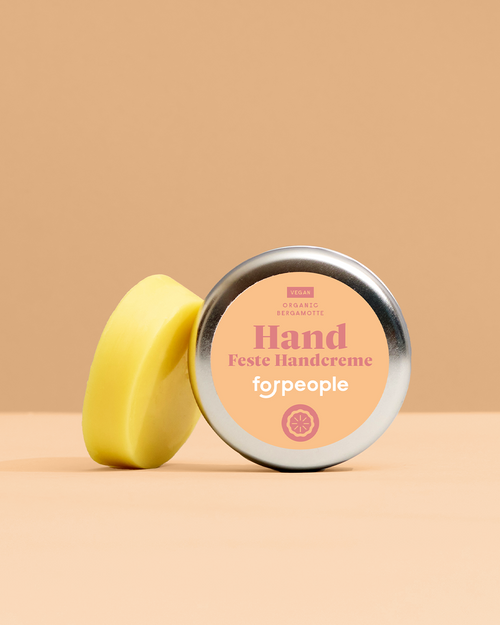
Solid Vegan Hand Cream - Bergamot: according to the INCI list, it contains lemon peel oil (Citrus Limon Peel Oil) and bergamot peel oil (Citrus Aurantium Bergamia Peel Oil), plus the fragrance components limonene, geraniol, citral and linalool. Whether the oils are expressed or distilled, whether the bergamot oil is low in furocoumarins and how high the shares are is not stated on the label. That is why we do not say it is free of phototoxic potential. The cream has been assessed and notified as a cosmetic under EU law; but hands get a lot of sun in everyday life. Our recommendation: before long hours in strong sun, on snow or before a tanning bed, don't apply it to the backs of your hands right beforehand; use it in the evening or on days without long sun exposure.
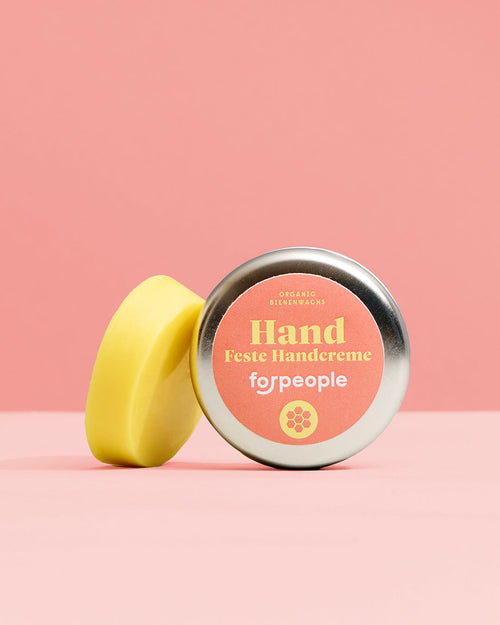
Solid Hand Cream - Beeswax: it contains no essential oils and no citrus oil, but a St John's wort extract. There is no study on light reactions for a cream of this kind; so for hands in long, intense sun, the same applies as above. Which of the two hand creams suits which situation is compared in Solid hand cream: beeswax or bergamot – which one suits you?
Soaps and bee salve: the soaps with lemon, bergamot or bitter orange oil are rinsed off; the IFRA standards set no restriction for that. The bee salve contains mandarin peel oil, for which IFRA sets no separate restriction.
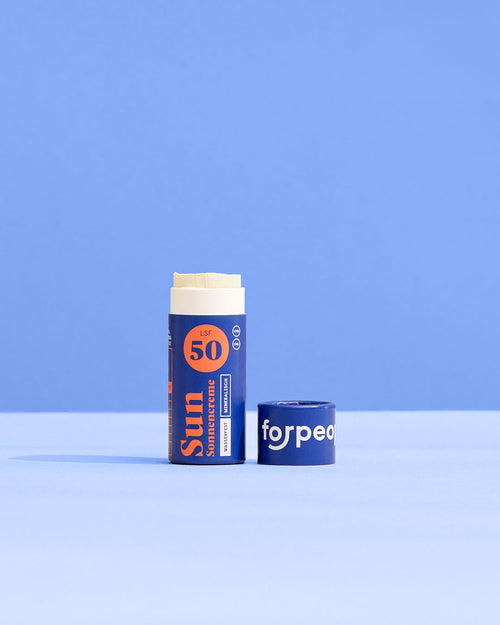
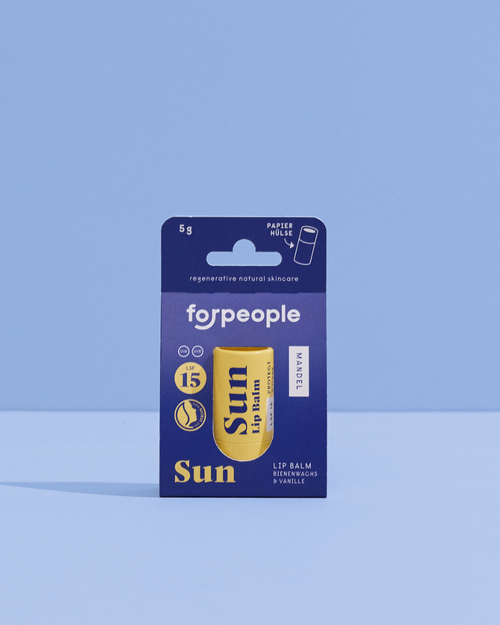
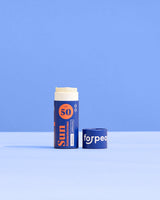
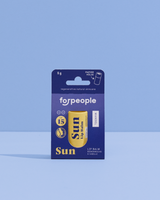
Regardless of any oils, the backs of your hands need sun protection in long sun, for example the Solid Sunscreen SPF50 Mini; why there in particular is explained in Sun protection for the backs of your hands. For lips in the sun there is the Lip Balm - SPF15 Almond & Vanilla, which contains no citrus oil.
How to handle it in everyday life
- Read the ingredient list. Look for "Peel Oil" from bergamot, lemon, lime, grapefruit and bitter orange. Sweet orange (Dulcis, Sinensis) and lemongrass are not on the IFRA list of furocoumarin-containing oils; for mandarin (Reticulata), IFRA sets no separate restriction.
- Does it stay on the skin or is it rinsed off? Creams, oils, lotions, perfume and deodorant are relevant, not soap and shower gel.
- Before long sun and tanning beds: don't apply products with citrus oils from the table whose quality you don't know right beforehand to areas of skin that will be in the sun (BfR 2026).
- When blending your own: never put citrus oils neat on the skin, dose sparingly and use the IFRA values as a guide. Worked examples are in Mixing your own massage oil: how much essential oil per 100 ml? and Blending your own face oil: ratios, scent, shelf life.
- If you prefer care without any essential oils, there is an overview in Without fragrance and essential oils: ingredients at a glance.
When to seek medical advice?
If blisters form after sun on areas where an oil or fragranced product was applied, if the redness is extensive or painful, or if dark marks remain for weeks, have it looked at by a doctor and take the product with you. If you take medication that can make the skin more sensitive to light, or take St John's wort by mouth, clarify questions about sun and interactions with your doctor or pharmacist. How to report a reaction and what else to do: Reacting to a cosmetic: what to do, where to report, returns.
Frequently asked questions
Is every bergamot oil phototoxic?
No. There are grades from which the furocoumarins have been removed, for example by vacuum distillation (Navarra et al. 2015). In the ingredient list both have the same name; only the manufacturer knows which grade was used.
Are limonene, citral or linalool phototoxic?
These substances are listed because of possible allergies. In Naganuma's analysis, the phototoxic effect of lemon oil was due almost entirely to two furocoumarins, bergapten and oxypeucedanin (Naganuma et al. 1985).
Does this also apply to soap with citrus oil?
For products that are mainly rinsed off, the IFRA standards set no restriction for phototoxicity (IFRA 2020, 2023).
How long should I avoid the sun after applying it?
We did not find a reliable time span for cosmetic products. The simplest approach is to apply products with citrus oils such as bergamot or lemon in the evening or on days without long sun exposure.
Is lemongrass a citrus oil?
No. Lemongrass is a grass; its oil smells of lemon because it contains citral. It is not on the IFRA list of furocoumarin-containing oils.
Can I use the bergamot hand cream in summer?
Yes, in everyday life. Before long hours in strong sun or before a tanning bed, don't apply it to the backs of your hands right beforehand but in the evening; on a day in the sun, your hands need sun protection.
I take St John's wort tablets. Does this affect me?
The stronger reaction to UVA has been described for taking high amounts by mouth (EMA 2022). Whether this applies to you and which interactions exist is something to clarify with your doctor or pharmacist.
At forpeople
What is in our products is listed in full in the ingredient list on each product page. For the questions on this page, these four matter:
- Solid Vegan Hand Cream - Bergamot, 30 g, €9.90: vegan, with candelilla wax, jojoba oil and shea butter; scent from lemon and bergamot oil. Before long sun, don't apply it to the backs of your hands right beforehand.
- Solid Hand Cream - Beeswax, 30 g, €9.90: without essential oils, with olive and sunflower oil plus St John's wort and aloe extract.
- Solid Sunscreen SPF50 Mini, 20 g, €9.90: mineral filters zinc oxide and titanium dioxide, for face and body, including the backs of the hands.
- Lip Balm - SPF15 Almond & Vanilla, 5 g, €7.90: with mineral sun protection factor 15, without citrus oil.
Test anything new on a small area; how to do that is explained in Trying a new product: how do I test it on a small area?
Read more: SPF, UVA and water resistance: what the labels mean
Sources
- Regulation (EC) No 1223/2009 of the European Parliament and of the Council of 30 November 2009 on cosmetic products, consolidated version of 18.05.2026: Article 10, Annex II entry 358, Annex III entries 352 and 353. https://eur-lex.europa.eu/legal-content/EN/TXT/?uri=CELEX:02009R1223-20260518
- Scientific Committee on Consumer Products (SCCP) (2005): Opinion on furocoumarins in cosmetic products. SCCP/0942/05, adopted on 13 December 2005. https://ec.europa.eu/health/ph_risk/committees/04_sccp/docs/sccp_o_036.pdf
- International Fragrance Association (IFRA) (2020, 2023): IFRA Standards "Bergamot oil expressed", "Bitter orange peel oil expressed", "Citrus oils and other furocoumarins containing essential oils" and "Lemon oil cold pressed" (49th Amendment, 2020) and Guidance for the use of IFRA Standards (51st Amendment, 30 June 2023). https://ifrafragrance.org/standards/IFRA_STD_087.pdf · https://ifrafragrance.org/standards/IFRA_STD_089.pdf
- Bundesinstitut für Risikobewertung (BfR) (as of 02.09.2026): Ätherische Öle: Duftende Wirkungen mit Einschränkungen. Fragen und Antworten. https://www.bfr.bund.de/fragen-und-antworten/thema/aetherische-oele-duftende-wirkungen-mit-einschraenkungen/
- Kaddu S, Kerl H, Wolf P (2001): Accidental bullous phototoxic reactions to bergamot aromatherapy oil. Journal of the American Academy of Dermatology 45(3): 458–461. https://doi.org/10.1067/mjd.2001.116226
- Naganuma M, Hirose S, Nakayama Y, Nakajima K, Someya T (1985): A study of the phototoxicity of lemon oil. Archives of Dermatological Research 278(1): 31–36. https://doi.org/10.1007/BF00412492
- Navarra M, Mannucci C, Delbò M, Calapai G (2015): Citrus bergamia essential oil: from basic research to clinical application. Frontiers in Pharmacology 6: 36. https://doi.org/10.3389/fphar.2015.00036
- Schempp CM, Lüdtke R, Winghofer B, Simon JC (2000): Effect of topical application of Hypericum perforatum extract (St. John's wort) on skin sensitivity to solar simulated radiation. Photodermatology, Photoimmunology & Photomedicine 16(3): 125–128. https://doi.org/10.1034/j.1600-0781.2000.d01-18.x
- Maisenbacher P, Kovar KA (1992): Analysis and stability of Hyperici oleum. Planta Medica 58(4): 351–354. https://doi.org/10.1055/s-2006-961483
- European Medicines Agency, Committee on Herbal Medicinal Products (2022): European Union herbal monograph on Hypericum perforatum L., herba. Final – Revision 1, EMA/HMPC/7695/2021, 23 November 2022. https://www.ema.europa.eu/en/documents/herbal-monograph/final-european-union-herbal-monograph-hypericum-perforatum-l-herba-revision-1_en.pdf