The problem: one patch, then many
First you notice a single patch, for example on the chest, tummy or upper arm, about the size of a coin or a little larger. Many people take it for a fungal infection or eczema and put cream on it. One or two weeks later the whole upper body is suddenly covered in small patches. That is typical of pityriasis rosea.
The first patch is called the herald patch. It is oval or round, slightly raised, 2 to 5 centimetres across, pink with a red border on light skin and rather darker with a light border on brown or black skin (NHS). Just inside the edge sits a fine collar of scale (DermNet). About 5 to 15 days later many small, scaly patches appear, mostly on the chest and back, sometimes on the arms and legs, often the same on both sides of the body (NHS). The oval patches line up with the skin's cleavage lines; on the back this produces the well-known Christmas tree pattern. The face, scalp, palms and soles are rarely affected (DermNet). In children the rash can also appear on the face or scalp (NHS).
A few days before the rash, many people feel as if they had a mild infection, with a sore throat, cough or tiredness (DermNet). In up to a quarter the rash itches, sometimes severely; otherwise most people feel well during the rash phase (DermNet). Pityriasis rosea most often affects people between 10 and 35, but it can occur at any age (AAD: FAQs).
The table shows the typical course. It is based on specialist sources and does not replace a diagnosis; only a medical examination can give you certainty.
| Phase | What you see | Duration |
|---|---|---|
| Early signs (not in everyone) | sore throat, tiredness, headache, raised temperature (NHS) | a few days before the rash |
| Herald patch | one oval, pink patch with a collar of scale, 2 to 5 cm, usually on the trunk (NHS) | a few days to about two weeks on its own (AAD: symptoms) |
| Spread | many smaller, oval, scaly patches on the chest, back, upper arms and thighs; new patches keep appearing for a few days (AAD: symptoms) | usually 6 to 8 weeks in teenagers and adults, often shorter in children (AAD: treatment) |
| Fading | patches fade; lighter or darker areas can remain, especially on dark skin (DermNet) | discolouration fades within months, without scarring (NHS) |
Why it develops – and what autumn and winter add
The cause has not been clearly established. The strongest link is with reactivation of herpesviruses 6 and 7, which almost everyone has already had in childhood; it has not been proven (DermNet). This fits with the fact that some people had an infection beforehand (AAD: FAQs) and that pityriasis rosea may be more common in spring and autumn (DermNet).
Not contagious. Although viruses are probably involved, pityriasis rosea does not spread from person to person (NHS). Nor is it a sexually transmitted disease (AAD: FAQs). You do not need to keep away from others (AAD: home care).
Medicines, vaccines, COVID. A similar rash can appear after certain medicines or vaccines (AAD: FAQs). Cases have also been described after COVID-19 vaccines; in a systematic review the rash began on average a little over a week after vaccination and faded after about six weeks (Khan et al. 2023). So tell the practice which medicines you take and whether you were vaccinated recently (AAD: treatment).
What winter changes. Pityriasis rosea itself is not a winter condition, but the season makes it more uncomfortable. Heat can make the rash and itch worse, as can hot showers and baths (AAD: home care). In winter that means overheated rooms, thick layers, hot baths after a walk. Dry heating air dries the skin out further; the reasons are in Humidity and skin. And clothing that rubs on the patches, such as a scratchy jumper, can make the rash worse (AAD: home care).
Pregnancy is different. Pityriasis rosea in the first 15 weeks of pregnancy has been linked with miscarriage and premature birth (NHS). In a study of 60 pregnant women, onset before week 15 and changes in the lining of the mouth were the most important warning signs of complications (Drago et al. 2018). Other studies found no such link; your gynaecologist may still want to monitor you more closely (AAD: FAQs).
The solution step by step
| Step | What you do | Why |
|---|---|---|
| Get it checked once | Have the rash looked at by a doctor, ideally with photos of the first patch. Pregnant: contact your gynaecologist's practice or midwife straight away. | Fungal infection, psoriasis or eczema can look similar (NHS); in pregnancy you need a diagnosis (AAD: treatment). |
| Showering | Lukewarm rather than hot, short, using your hands rather than a flannel or brush; soap and shower gel sparingly, without fragrance. | Heat, rubbing and fragrance can make the rash worse (AAD: home care); avoid soaps and shower gels (NHS). |
| Skin care | Apply fragrance-free care straight after showering, several times a day if needed. | A moisturiser makes the skin more comfortable (AAD: home care); care for dry skin is recommended (DermNet). |
| Itching | Hold a clean cloth under cool water, wring it out and place it on the skin for three to five minutes; a lukewarm bath with colloidal oatmeal from the pharmacy is an alternative. | This is what dermatologists advise (AAD: home care). |
| Clothing | Loose, soft, cotton next to the skin; scratchy wool on top. | Clothing that rubs makes the rash worse (AAD: home care); on wool see Wool scratches the skin. |
| Heat | Moderate heating, no sauna, no hot tub, no exercise to the point of sweating while it itches. | Overheating makes the rash and itch worse (AAD: home care). |
| Sun | Do not risk sunburn, no sunbeds. | Sunburn on the rash is unpleasant; tanning is advised against (AAD: home care). |
| Medicines | If the itch is severe, ask at the pharmacy or practice about antihistamines or a steroid cream; for children under 12, ask your paediatrician first. | These remedies can make the itch more bearable until the rash fades (NHS), (AAD: home care). |
There is no treatment known to shorten pityriasis rosea for certain. A Cochrane review found indications that an antiviral medicine can make the rash fade faster; the studies were small, and the effect on itching was unclear (Contreras-Ruiz et al. 2019). Whether such a medicine or light therapy makes sense in severe cases is decided by the dermatology practice (AAD: treatment).
What helps – and what doesn't
| Measure | Assessment |
|---|---|
| Lukewarm showers, fragrance-free care | helps keep the skin more comfortable (AAD: home care) |
| Cool, damp cloths | can make the itching more bearable (AAD: home care) |
| Antifungal cream, because the first patch looks like a fungal infection | no: antifungal medicines can make pityriasis rosea worse (AAD: home care). Whether it is a fungal infection is for the practice to clarify; more in Recognising fungal skin infections |
| Exfoliating, brushing, rubbing to get rid of the scales | no: rubbing irritates the skin and can make the rash worse (AAD: home care) |
| Tea tree oil, apple cider vinegar and other home remedies | rather not: we have not found any studies on these, and strongly scented or acidic substances tend to irritate stressed skin |
| Antibiotics | were used in the past, but do not appear to help (DermNet) |
| Waiting | usually right: pityriasis rosea goes away on its own and does not come back for most people; it recurs in only 2 to 3 per cent (AAD: treatment) |
Common mistakes
The most common mistake is taking the first patch for a fungal infection and treating it with antifungal cream for weeks. Second, people exfoliate or brush against the scales; that irritates instead of helping. Third, they take hot showers and baths because warmth briefly helps the itch; afterwards it itches more. Fourth, new, heavily perfumed skin care products are tried out during this time. Fifth, pityriasis rosea in pregnancy is not reported because it is considered harmless. And sixth, a rash that does not fit, for example with blisters or on the palms and soles, is dismissed as pityriasis rosea.
When to seek medical advice?
Every new, widespread rash should be checked once, even if it looks like typical pityriasis rosea. Fungal skin infection, guttate psoriasis, eczema and secondary syphilis, among others, can look similar (DermNet). That sounds worrying, but it is exactly why a medical examination makes sense. Related pages: Recognising fungal skin infections, Psoriasis in winter and Dry patches on the skin.
Call your gynaecologist's practice, midwife or maternity unit straight away if you are pregnant and get a new rash (NHS).
See a doctor soon if
- blisters appear in the centre of the patches or the palms and soles are affected; that argues against typical pityriasis rosea (DermNet),
- patches or sores appear in the mouth (AAD: symptoms),
- the rash appeared shortly after a new medicine; call the practice instead of stopping the medicine yourself (AAD: treatment),
- you have had an organ transplant or take medicines that suppress the immune system (AAD: treatment),
- you have a fever and feel clearly unwell,
- the itch becomes unbearable despite skin care and pharmacy remedies (NHS), the rash gets worse rather than better after two months or has not gone after three months (AAD: treatment).
A rash with difficulty breathing or swelling of the lips, tongue or throat is not pityriasis rosea but an emergency: call 112. More in Hives (urticaria).
Frequently asked questions
Is pityriasis rosea contagious?
No. It does not spread from person to person (NHS). You can go to work, and children can go to nursery or school.
How long does pityriasis rosea last?
Usually six to ten weeks (DermNet), sometimes a few months; it can get worse again before it clears (NHS). Light or dark areas afterwards can take months to disappear.
What causes it?
The cause is not known for certain. The most likely explanation is a reaction to reactivated herpesviruses 6 and 7 (DermNet). These are different herpesviruses from the ones that cause cold sores.
Can stress trigger pityriasis rosea?
The specialist sources we reviewed do not name stress as a cause. Some people had a viral infection shortly beforehand (AAD: FAQs).
Pityriasis rosea in children: what is different?
In children the rash often looks atypical and can also affect the face, scalp, armpits or groin (AAD: symptoms); on the other hand it often clears faster (AAD: treatment). The diagnosis is made by the paediatrician; creams and remedies for the itch only after checking with them.
Which home remedies help with pityriasis rosea?
Cool, damp cloths, lukewarm rather than hot water, loose cotton and fragrance-free care. Vinegar, tea tree oil and antifungal creams are best left out.
Does pityriasis rosea have anything to do with COVID?
Pityriasis rosea and similar rashes have been described after COVID-19 infection and after vaccines (DermNet), (Khan et al. 2023). Mention a recent infection or vaccination to the practice.
Can it come back?
Rarely. Most people get it only once; it recurs in 2 to 3 per cent (AAD: treatment).
At forpeople
We have no product for pityriasis rosea itself. On the patches, use what the pharmacy or practice recommends: simple fragrance-free care. For the dry skin around them, on the arms, legs and back, two products without essential oils are an option for adults:
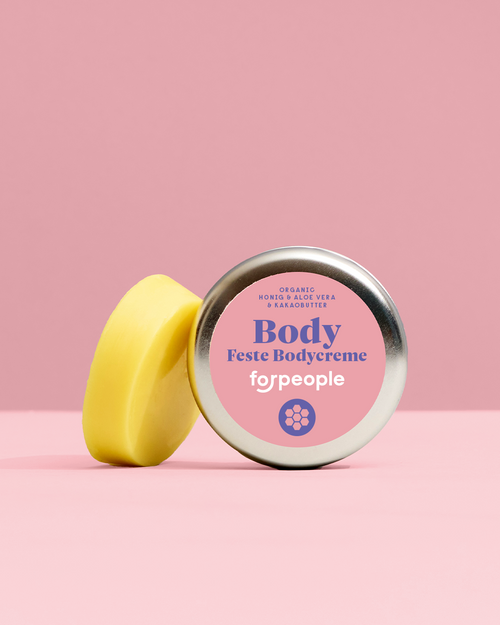
- Solid Body Butter – Beeswax & Aloe Vera, 40 g, €9.90, refillable with the refill for €7.90. According to the ingredient list: cocoa butter, olive oil, beeswax, sunflower oil, shea butter and aloe vera extract, without essential oils and without added fragrance; it smells faintly of beeswax. According to the product page for dry areas of skin, applied after showering to still damp skin.
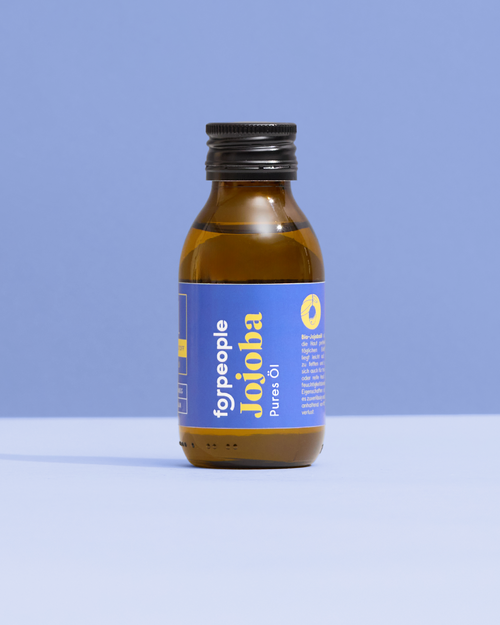
- Jojoba Oil – cold-pressed, 100 ml, €16.90, with no other ingredients, according to the product page for dry and stressed areas of skin. An oil is easier to spread on the back than a solid butter.
Try new skin care on a small area first, as described in Trying new skin care. In pregnancy and for children, discuss the care with the practice first.
More on this: Dry patches on the skin · Recognising fungal skin infections · Psoriasis in winter · Itchy skin in winter · How soon to moisturise after showering? · Itchy skin in pregnancy
Sources
- DermNet: Pityriasis rosea. Oakley A (2014), updated by Seebacher N, December 2021. Accessed 30 Oct 2026. dermnetnz.org/topics/pityriasis-rosea
- NHS: Pityriasis rosea. Last reviewed 7 Sep 2023. Accessed 30 Oct 2026. nhs.uk/conditions/pityriasis-rosea
- American Academy of Dermatology (AAD): Pityriasis rosea: FAQs. Last updated 24 Oct 2024. Accessed 30 Oct 2026. aad.org
- American Academy of Dermatology (AAD): Pityriasis rosea: Signs and symptoms. Last updated 24 Oct 2024. Accessed 30 Oct 2026. aad.org
- American Academy of Dermatology (AAD): Pityriasis rosea: Diagnosis and treatment. Last updated 24 Oct 2024. Accessed 30 Oct 2026. aad.org
- American Academy of Dermatology (AAD): Pityriasis rosea: How to treat it at home. Last updated 24 Oct 2024. Accessed 30 Oct 2026. aad.org
- Contreras-Ruiz J, Peternel S, Jiménez Gutiérrez C, Culav-Koscak I, Reveiz L, Silbermann-Reynoso ML (2019): Interventions for pityriasis rosea. Cochrane Database of Systematic Reviews 2019(10): CD005068. https://doi.org/10.1002/14651858.CD005068.pub3
- Drago F, Ciccarese G, Herzum A, Rebora A, Parodi A (2018): Pityriasis rosea during pregnancy: major and minor alarming signs. Dermatology 234(1–2): 31–36. https://doi.org/10.1159/000489879
- Khan I, Elsanousi AA, Shareef AM, Tebha SS, Arif A, Gul S (2023): Manifestation of pityriasis rosea and pityriasis rosea-like eruptions after Covid-19 vaccine: a systematic review. Immunity, Inflammation and Disease 11(4): e804. https://doi.org/10.1002/iid3.804