The problem: spots on the back and shoulders
You cannot see them under a jumper, but you can feel them: spots between the shoulder blades, on the shoulders, sometimes down to the lower back. They press under your backpack, itch under thermal underwear and leave dark marks as they fade. Because the back is hard to see and reach, they are often ignored for a long time or secretly squeezed.
Back acne is more common than many people think. In a British analysis of more than 2,000 people with acne under dermatological care, 63.6 per cent had spots on the trunk, almost all of them on the face as well; earlier papers put the figure at about half (Salari et al. 2026). The upper back and shoulders are affected most often, and dark marks often remain after the inflammation (Menteşoğlu et al. 2025). But spots on the back can also have other causes. The table is based on specialist sources; it does not replace a diagnosis, and only a medical examination brings certainty.
| What you see | What it often is | Typical triggers |
|---|---|---|
| blackheads, spots and pustules of different sizes, often on the face too, sometimes deep lumps | acne | hair follicles blocked by sebum and dead skin cells; hormones, some medicines, greasy skin and hair products (NHS: Acne) |
| many same-sized, itchy bumps and pustules on the upper back and chest, no blackheads | Malassezia folliculitis (“fungal acne”) | yeasts of the skin flora in the hair follicle; heat, sweating, occlusive creams and sun protection, antibiotics, cortisone (DermNet: Malassezia folliculitis) |
| individual red, tender spots around a hair, sometimes with a pus head | folliculitis from bacteria or irritation | usually staphylococci; also shaving, thick ointments, plasters (DermNet: Folliculitis) |
| rough bumps and spots exactly where straps, padding or clothing rub | acne from friction (acne mechanica) | backpack, straps, weight bench, tight synthetic sportswear (AAD: Sports equipment) |
| uniform spots on the chest and back a few weeks after starting cortisone tablets or when taking anabolic steroids | steroid acne | high cortisone levels; severe acne as a side effect of anabolic steroids (DermNet: Steroid acne) |
Spots on the face with dry winter skin are covered on Spots in winter: when skin is dry and blemished at the same time, spots on the bottom, boils and acne inversa on Spots and rough skin on the bottom: causes and what helps, and dry, itchy skin on the back without spots on Dry, itchy skin on the back: causes and how to care for it.
Why back spots appear in winter
Sweating under layers. Thermal underwear, fleece and jacket outside, heating inside, and the walk with a backpack in between: under several layers, the skin on your back stays warm and damp for a long time. Exercise and sweating promote acne, especially if sweat, oil and bacteria stay on the skin (AAD: Workouts). Malassezia folliculitis is encouraged by heat, humidity and heavy sweating (DermNet: Malassezia folliculitis). Why you can sweat a lot even in winter is explained on Sweating in winter: causes and what you can do.
Friction from backpacks and equipment. When equipment or clothing keeps heat and sweat on the skin and rubs at the same time, the skin becomes irritated, and if you are prone to acne, new spots appear. Specialists call this acne mechanica; known triggers include backpack straps, weightlifting belts, weight benches and tight synthetic sportswear (AAD: Sports equipment). In winter, that means ski backpacks, school bags and the backpack on the way to work.
Residue from shampoo, conditioner and care products. Oils from shampoos, conditioners and styling products can clog pores; specialists speak of acne cosmetica (AAD: Hair care products). In the shower, this residue runs down your back. Then there is rich body care for dry winter skin: greasy ointments and moisturisers can trigger folliculitis (DermNet: Folliculitis), and occlusive creams are considered a risk factor for Malassezia folliculitis (DermNet: Malassezia folliculitis).
Hormones, medicines, antibiotics. Acne can result from hormonal changes, for example in puberty, before a period, during the menopause and in pregnancy, from hormonal conditions affecting the ovaries and from some medicines (NHS: Acne). This can explain spots on the back in women and also at 40. Antibiotics, for example after an infection in winter, are considered a risk factor for Malassezia folliculitis (DermNet: Malassezia folliculitis). In men who do strength training, anabolic steroids can cause severe acne (DermNet: Steroid acne).
The solution step by step
| Step | What you do | Why |
|---|---|---|
| Straight away | Do not squeeze spots, scratch them open or open them with tools | Squeezing worsens acne (AAD: Back acne) and can leave scars (NHS: Acne) |
| After exercise and sweating | Shower and change your top as soon as you can; if that is not possible, pat off sweat with a clean cloth and put on dry clothes | This is what specialists advise for back acne (AAD: Back acne) (AAD: Workouts) |
| In the shower | Wash and rinse your hair thoroughly first, then your back; with lukewarm water and a mild, fragrance-free cleanser, using your hands rather than a sponge or brush | Oily hair products can trigger spots (AAD: Hair care products); scrubbing, scrubs, loofahs and back brushes can worsen acne (AAD: Back acne) |
| Every day | Loose-fitting clothes made of cotton or sweat-wicking fabric; wash sportswear after each wear | Tight clothing keeps heat and sweat on the skin (AAD: Sports equipment) (AAD: Back acne) |
| Backpack and equipment | Loosen straps, carry a bag in your hand more often, put soft, clean padding between equipment and skin | Anything that rubs on the back can make acne flare (AAD: Back acne) (AAD: Sports equipment) |
| Care | Use only light, oil-free care on your back; leave out body oils and butters there as long as you have spots | Specialists advise oil-free products for back acne (AAD: Back acne); greasy care can block hair follicles (DermNet: Folliculitis). Why lists of “comedogenic” oils are of little use is explained on Comedogenic oils: where the scale comes from and what it is worth |
| If you want to do more | Ask at the pharmacy about washes with benzoyl peroxide or products with salicylic acid and have the use explained to you; use light-coloured towels | NHS and AAD name these active ingredients for mild acne (NHS: Acne) (AAD: Back acne); benzoyl peroxide bleaches fabrics (AAD: Back acne) |
| Patience | Stick with it for six to eight weeks, then compare | First results often show after six to eight weeks; if nothing has changed, medical advice makes sense (AAD: Back acne) |
Itchy, uniform spots that do not respond to acne products can be Malassezia folliculitis; a doctor treats it with antifungal agents after taking a skin sample, not with antibiotics (DermNet: Malassezia folliculitis) (DermNet: Folliculitis). The same yeasts are also involved in seborrhoeic dermatitis (DermNet: Malassezia folliculitis), see Seborrhoeic dermatitis on the face: flaking on the nose, eyebrows and beard.
What helps – and what rather does not
| Remedy or habit | Assessment |
|---|---|
| Showering right after exercise, fresh clothes | sensible (AAD: Back acne) (AAD: Workouts) |
| Loofah, back brush, scrub | rather not as long as you have spots: specialists count them among the things that can worsen acne (AAD: Back acne) |
| Soaps with germ-killing additives, astringent toners and body lotions | rather not: can worsen acne (AAD: Back acne) |
| Sun or sunbed to “dry them out” | no: the sun can worsen acne and keep dark marks visible for longer (AAD: Back acne) |
| Toothpaste, lemon, vinegar | no: we know of no evidence, while irritated skin is likely |
| Tea tree oil or other undiluted essential oils | rather not: concentrated fragrance oils can irritate the skin and trigger allergies, see Essential oils and fragrance allergens |
| “Reading” spots: which area belongs to which organ | we know of no evidence for this; the causes lie in the skin, in hormones or in medicines |
| Leftover antibiotics from the medicine cabinet | no: only on medical advice; in Malassezia folliculitis, antibiotics can even promote the spots (DermNet: Malassezia folliculitis) |
Common mistakes
The most common mistake is scrubbing your back with a brush, loofah or scrub to get it “clean”; this irritates the skin and the spots stay. Second: leaving conditioner in your hair until the end and then not rinsing your back again. Third: keeping a sweaty sports top on for another hour or wearing thermal underwear for several days. Fourth: treating a dry winter back with body oil or thick butter even though there are spots. Fifth: squeezing whatever you can reach with a mirror and fingernails. And sixth: waiting for months even though lumps are forming or scars are left behind.
When to seek medical advice?
Mild spots on the back can often be brought under control with habits and products from the pharmacy. See your GP or a dermatologist if:
- deep, painful lumps or cysts form or scars remain (AAD: Back acne) (NHS: Acne),
- you have tried for six to eight weeks yourself and nothing has changed (AAD: Back acne),
- the skin is hot, swollen and red, a painful lump with pus forms or you get a fever; this suggests an infection (NHS: Acne),
- the spots itch a lot, all look the same and do not respond to acne products, or round, scaly patches appear instead of spots (see Recognising fungal skin infections: round, scaly patches on the body – fungus or eczema?),
- the spots appeared shortly after starting a new medicine, such as cortisone; do not stop it on your own (DermNet: Steroid acne),
- as a woman you develop acne for the first time as an adult, especially with irregular periods or increased body hair; hormones may be behind it (NHS: Acne),
- painful blisters and pustules form in a band on one side of the body only; this can be shingles (DermNet: Folliculitis),
- the spots are getting you down or affecting your mood; that is also a reason for an appointment (NHS: Acne).
Frequently asked questions
What causes spots on the back?
Often acne: sebum and dead skin cells block the hair follicles, and bacteria lead to inflammation. Friction, sweat, hair and skin product residue, hormones and some medicines encourage it. Sometimes folliculitis or Malassezia folliculitis is behind it.
Why do men often get spots on their back?
Sweating during exercise, tight training clothes, weight benches and backpacks rub on the back, and hair follicles can become inflamed on hairy skin. Taking anabolic steroids carries a risk of severe acne; that should be raised with a doctor. How to care for a hairy back is explained on Body care for hairy skin: oil, lotion or butter?
What causes spots on the back in women?
Besides friction and sweating, hormones play a part, for example around your period, in pregnancy and during the menopause. If irregular bleeding or increased body hair is added, have it checked by a doctor.
I am over 40 and suddenly have spots on my back. Is that normal?
Acne can also occur in adulthood, for example from hormonal changes or medicines. Sudden itchy, uniform spots can also be Malassezia folliculitis. Have new spots looked at if they do not improve within a few weeks.
Can I squeeze spots on my back?
Better not. Squeezing worsens acne and can leave scars. On your back you are also working blind and can easily catch the skin next to the spot.
How do I get rid of spots on my back?
With patience and routine: shower and change after sweating, wash your hair before your back, cleanse carefully, avoid friction, use only oil-free care and, if needed, products with benzoyl peroxide or salicylic acid from the pharmacy. If there is no success after six to eight weeks, a dermatologist can help.
Do spots on the back show that an organ is ill?
We know of no evidence for this. Spots on the back develop in the hair follicles of the skin; hormones and medicines can play a part.
At forpeople
We do not have a product for spots. Our solid soaps contain essential oils and are therefore not the first choice for a back with spots; leave body oils, body butter and balms off that area as long as you have spots. We do not recommend our Luffa Shower Sponge for a back with spots either: according to the product page it does not belong on irritated skin, and specialists count loofahs among the things that can worsen back acne. How to look after it and when to replace it for use elsewhere is explained on Loofah sponge: how often to replace it, how to clean and boil it.
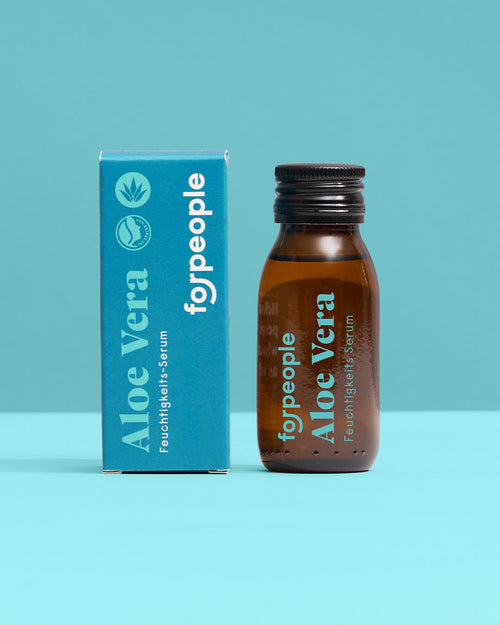
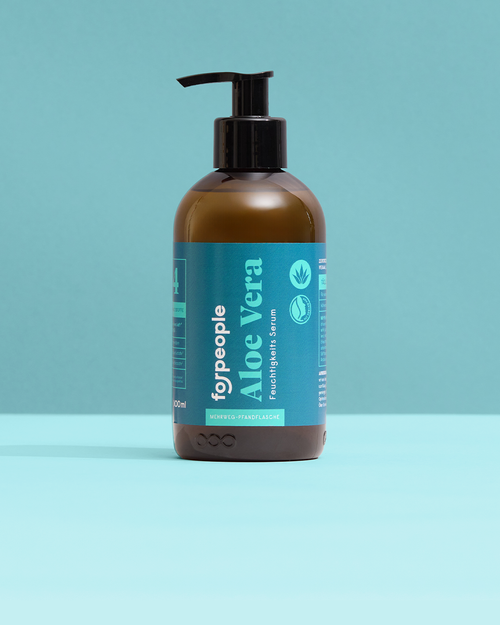
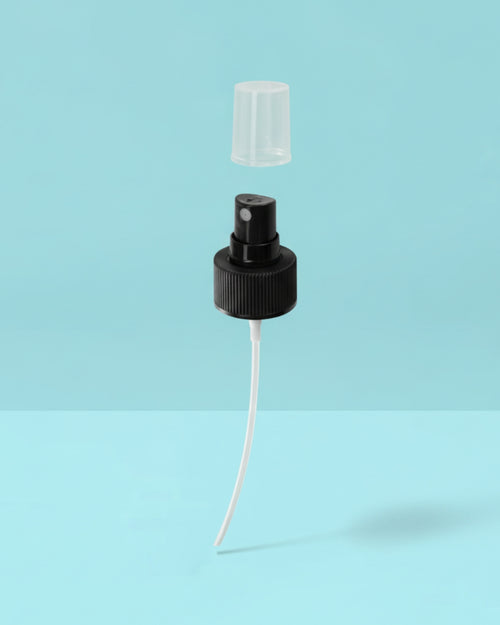
If the skin on your back feels tight after showering, an oil-free product whose page names the body is suitable: the Aloe Vera Serum 99.6%, 50 ml, €9.90, or the Pump Bottle with 300 ml for €27.90. According to its ingredient list it is aloe vera juice with citric acid, potassium sorbate and sodium benzoate, without oil, alcohol, perfume or essential oils; according to the product page it leaves no greasy film. With the Atomiser for Your Aloe Vera Serum for €3.90 you can reach your back more easily. According to the safety note it does not belong on inflamed spots.
Sources
- American Academy of Dermatology (AAD): Back acne: How to see clearer skin. Updated 12 September 2023, accessed 30 October 2026. https://www.aad.org/public/diseases/acne/diy/back-acne
- American Academy of Dermatology (AAD): Is sports equipment causing your acne? Accessed 30 October 2026. https://www.aad.org/public/diseases/acne/causes/sports-equipment
- American Academy of Dermatology (AAD): How to prevent acne caused by workouts. Accessed 30 October 2026. https://www.aad.org/public/diseases/acne/causes/workouts
- American Academy of Dermatology (AAD): Are your hair care products causing breakouts? Accessed 30 October 2026. https://www.aad.org/public/diseases/acne/causes/hair-products
- NHS: Acne. Last reviewed 22 September 2026, accessed 30 October 2026. https://www.nhs.uk/conditions/acne/
- DermNet: Malassezia folliculitis. Oakley A, updated by Stewart T, reviewed 2023, accessed 30 October 2026. https://dermnetnz.org/topics/malassezia-folliculitis
- DermNet: Folliculitis. Oakley A, Morrison C, April 2014, reviewed 2023, accessed 30 October 2026. https://dermnetnz.org/topics/folliculitis
- DermNet: Steroid acne. Oakley A, Ngan V, Morrison C, June 2014, reviewed 2023, accessed 30 October 2026. https://dermnetnz.org/topics/steroid-acne
- Salari Y, Latt M, Lau E, Layton AM (2026): The Prevalence and Burden of Truncal Acne. Dermatology and Therapy 16(6): 3245–3251. https://doi.org/10.1007/s13555-026-01751-9
- Menteşoğlu D, Kurmuş GI, Kartal SP (2025): Investigating the Properties of Truncal Acne: A Common But Often Overlooked Entity. Journal of Cutaneous Medicine and Surgery 29(5): 480–484. https://doi.org/10.1177/12034754251336237