The problem: a rash under the plaster
A plaster on a blister from a winter hike, tape on the heel in a ski boot, a dressing after a blood test: after a day or two it itches underneath, and when you peel it off a red rectangle shows on the skin, sometimes with small blisters. Many people then say: “I am allergic to plasters.”
That is true less often than you might think. One study examined 26 people who said they were allergic to plasters. In allergy testing, none of them reacted to the plasters or tapes themselves. In eight of eleven people who wore a plaster for seven days, however, irritation developed (Widman et al. 2008). Specialists group all skin damage caused by medical adhesives under the term MARSI (medical adhesive-related skin injury). It includes mechanical damage such as stripped-off outer skin and tension blisters, irritation, allergy, softened skin and inflamed hair follicles (LeBlanc et al. 2019).
The table helps you get your bearings. It does not replace a diagnosis; only a medical examination, with a patch test if an allergy is suspected, gives a clear answer.
| What you notice | When and where | What it may be |
|---|---|---|
| Shiny, raw or slightly weeping area, often painful rather than itchy | Right after removal, exactly where the adhesive was | Mechanical damage: the top layer of skin was torn off with the plaster (LeBlanc et al. 2019) |
| Blisters at the edge of the plaster | When a rigid plaster sticks to skin that moves or swells | Tension blisters from shear forces (LeBlanc et al. 2019) |
| Redness, burning, rough skin, sharply limited to the adhesive area | After wearing it for a long time, under a damp or sweaty plaster | Irritation from moisture, adhesive or friction (Widman et al. 2008) |
| Very itchy rash with small bumps or blisters that can spread beyond the edge | Usually one to three days after contact; returns with every contact | Allergic contact dermatitis, for example to colophony or acrylates (DermNet: Rosin allergy), (DermNet: Allergic contact dermatitis) |
| Small red spots around the hair follicles | After removal from hairy skin | Inflamed hair follicles (folliculitis) (LeBlanc et al. 2019) |
Why it happens – irritation, allergy or the ointment underneath
Skin comes away with the plaster. Plaster adhesive sticks to the outermost horny cells; if the plaster is ripped off quickly and steeply, those cells come with it. On the thin skin of older age a skin tear can even result; more on this in Parchment skin: protecting and caring for thin, easily torn skin in older age. A plaster that does not stretch can also cause tension blisters when the skin underneath swells or shifts with every movement (LeBlanc et al. 2019).
Moisture builds up under the plaster. Sweat cannot evaporate and the skin softens. The longer a plaster stays on, the more likely it is to irritate (Widman et al. 2008). In winter, blister plasters in warm, damp boots and ski boots often stay on the same spot for days.
A true allergy is directed against substances in the adhesive. A review names colophony and its derivatives, (meth)acrylates and isocyanates as the most important allergens in medical adhesives. Notably, fragrance substances such as limonene were found even in materials labelled as low-allergen, latex-free or colophony-free, and the components are often not listed on the pack at all (Goossens et al. 2025). According to DermNet, colophony, the solid part of pine resin, is found in sticking plasters, hydrocolloid dressings, tapes and some adhesives of glucose sensors. The reaction usually appears one to three days after contact, red and itchy, sometimes with blisters, and often stays limited to the contact area (DermNet: Rosin allergy). Cross-reactions with other resins, propolis and fragrances are common; details in Colophony allergy, propolis, beeswax: symptoms and advice. Many people know acrylates from the nail salon; because they are also found in adhesives (Goossens et al. 2025), an allergy to gel nails can have consequences for plasters, see Gel nail allergy: signs, acrylates and what to do now.
Why “suddenly”? A contact allergy only develops after repeated or prolonged contact. In Sweden, 26 conscripts had taped their feet for days during a field exercise to prevent blisters. Afterwards, 20 of them (77 %) were allergic to the tapes and 16 to colophony. The authors conclude that wearing tape on intact skin for a long time carries a high risk of contact allergy (Hamnerius et al. 2023). If you tape up regularly for running or hiking, you will find more advice in Foot care for runners: calluses, blisters, toenails.
Sometimes it is not the plaster at all. In the study of the 26 people, four did turn out to have an allergen, but not in the plaster: it was an antibiotic ointment (in two people), a cortisone cream and a liquid skin adhesive that had been used together with the plaster (Widman et al. 2008). So everything that was under the plaster belongs in the picture.
The solution step by step
| Step | What you do | Why |
|---|---|---|
| Straight away | Take the plaster off like this: loosen one edge, hold the skin with your other hand, pull the plaster back low and slowly in the direction of hair growth, moving the holding hand along with it | This is how an evidence summary on adhesive injuries describes it; rapid, vertical pulling creates more force (Hu et al. 2025) |
| Straight away | If it is stuck: soak the edge with a little cooking or skin care oil and wait a moment; loosen adhesive residue the same way and then wash it off with lukewarm water | Oil or special adhesive removers make removal easier (Hu et al. 2025); rubbing irritates the skin further |
| Straight away | Leave the area uncovered, do not scratch, no new creams or ointments on a hunch; if there is a wound underneath, use a non-adhesive pad held with a tubular or gauze bandage | Without further contact, a contact reaction usually settles within a few days (DermNet: Allergic contact dermatitis); after tension injuries, an evidence summary names gauze instead of adhesive (Hu et al. 2025) |
| Make a note | Write down or photograph the brand and type of plaster, plus every ointment, spray and skin adhesive that was underneath | The trigger may also be in the ointment (Widman et al. 2008); the list helps with allergy testing |
| Next time | Choose plasters with silicone adhesive; on thin skin also fixation fleece, tubular or net bandages; do not wear a plaster longer than necessary and apply it to dry skin | In a small study in young children, silicone removed less of the outer skin than paper tape (Grove et al. 2014); silicone is considered suitable for fragile skin (Hu et al. 2025) |
| Prevention | Do not tape up for days as a precaution, for example against blisters when hiking; tackle shoes, socks and pressure points instead | Wearing tape on intact skin for a long time can trigger an allergy (Hamnerius et al. 2023) |
| If it keeps happening | Patch test with a dermatologist; bring your own plaster and the list; have a positive result entered in an allergy passport | The patch test is the standard for diagnosing a contact allergy (Mahler et al. 2019) |
What helps – and what doesn’t
| Measure or assumption | Assessment |
|---|---|
| Plasters labelled “sensitive” or “colophony-free” | worth a try, but no certainty: allergens such as fragrances were found even in such materials (Goossens et al. 2025) |
| Silicone plasters | useful for mechanical damage and thin skin (Hu et al. 2025); on the other hand, the edges lift more easily (Grove et al. 2014) |
| Paper tape | removed more of the outer skin than silicone in the comparison study (Grove et al. 2014); its adhesive can also contain allergens |
| Loosening adhesive residue with oil | useful (Hu et al. 2025); then wash with water and a little soap so no oily film sits under the next plaster |
| Antibiotic ointment under the plaster “just in case” | better not without a reason: ingredients of the ointment can themselves be the trigger (Widman et al. 2008) |
| Zinc ointment on the red area | often asked about, but without evidence for plaster rashes; on irritated skin the first rule is: nothing new; ask at the pharmacy if in doubt |
| “Testing” the same type of plaster once more | better not: with an allergy, the reaction returns with every contact; a patch test, the standard for diagnosis, gives the answer (DermNet: Allergic contact dermatitis) |
Common mistakes
The most common mistake is ripping it off “in one go”: briefly less pain, but more skin on the plaster. Second: sticking it on damp, creamed or still wet, freshly disinfected skin and leaving it on for days. Third: covering the red area again straight away with the same type. Fourth: forgetting the ointment or liquid adhesive underneath. Fifth: plasters as a permanent solution against blisters. And finally: switching material on your own after surgery or with a glucose sensor; that is a question for your care team. If you have diabetes, you will find skin care advice in Dry skin with diabetes: causes and care for feet and legs.
When to seek medical advice?
Call 112 straight away (the emergency number in Germany and across the EU) if your lips, tongue or throat swell, you have difficulty breathing or circulation problems. That does not fit an ordinary plaster reaction and is an emergency.
See your GP or a dermatologist if
- small or large blisters form, or the skin weeps or crusts,
- the rash spreads beyond the adhesive area or appears on other parts of the body,
- the skin is not clearly better a few days after removal; a contact reaction usually settles within a few days once the trigger is gone (DermNet: Allergic contact dermatitis),
- there is a wound under the plaster that becomes redder, warmer, more painful or produces pus; this can be an infection,
- it happens after every plaster, or if you have to wear one, for example after surgery, for a glucose sensor or an insulin pump; then a patch test identifies the trigger and the team can choose a different material (Mahler et al. 2019),
- a child is affected and blisters or wounds appear; the first port of call is the paediatrician.
If the skin flakes after a dressing, see Dry, flaky skin after a cast, bandage or surgery: what helps; on skin reactions in general: Reacting to a cosmetic: what to do, where to report, returns.
Frequently asked questions
What does a plaster allergy look like?
A very itchy red rash, often with small bumps or blisters, usually one to three days after contact. It can spread beyond the edge of the adhesive area. Irritation, by contrast, usually stays sharply limited to the adhesive area, tends to burn and is often there right after removal.
What should I do about a plaster allergy?
Peel the plaster off slowly and low, loosen residue with oil, leave the area uncovered and do not scratch. No new ointments on a hunch. With blisters, weeping, spreading or if it keeps happening: dermatologist and patch test.
Which plasters can I use with a plaster allergy?
That depends on the trigger, which only the allergy test shows. Until then: non-adhesive pads with a tubular or gauze bandage, or silicone plasters. Labels are no assurance, because not all components are listed on the pack.
Why am I suddenly allergic to plasters?
A contact allergy only develops after repeated or prolonged contact, often after years without problems. Taping for days, for example against blisters, can contribute. More common than a new allergy, though, is irritation from moisture or wearing a plaster too long.
Can a plaster allergy be tested?
Yes, with a patch test at a dermatologist’s. Test substances are stuck to your back and read after a few days. Bring the suspected plaster and any ointments you used underneath.
My child has a rash under a plaster. What should I do?
Remove the plaster carefully, loosen residue with a little oil and leave the skin alone. If blisters form, the area weeps or the rash spreads, see the paediatrician.
Which ointment helps with a plaster allergy, does zinc ointment help?
We know of no evidence for zinc ointment on plaster rashes. On irritated skin, nothing new for now; whether a cortisone cream is needed is for the practice or pharmacy to decide.
My skin itches under the plaster. Is that normal?
Slight itching under a plaster worn for a long time often comes from moisture and warmth. If it becomes strong or burns, take the plaster off; cover a fresh wound underneath differently on the advice of the practice or pharmacy.
At forpeople
We do not make plasters, and we have no product for the rash itself; nothing new belongs on irritated skin until it has been checked. An honest note on two of our salves: according to the ingredient list, the SOS Pitch Salve contains larch resin, and the Beeswax Salve contains larch resin and propolis. If you have reacted to colophony, tree resin or propolis in an allergy test, discuss resin salves with your dermatologist first; more in Colophony allergy, propolis, beeswax: symptoms and advice.
Once the skin is closed and settled again and simply dry, for example after weeks under a dressing, two products without essential oils and without fragrance are suitable, each for the purpose its product page states. They do not belong on broken or irritated skin.
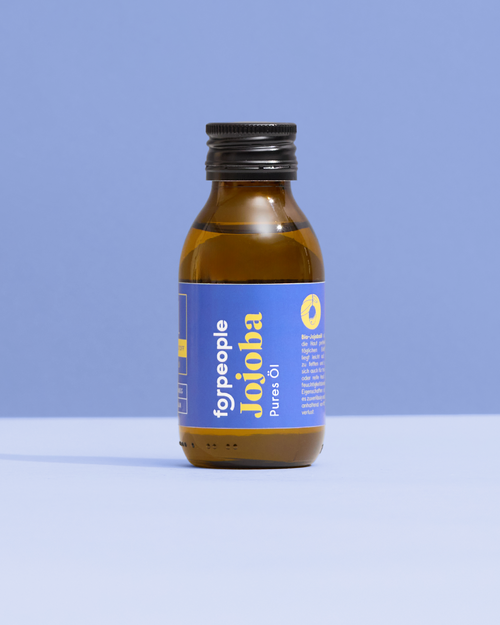
- Jojoba Oil - pure, 100 ml, €16.90: pure jojoba oil with no other ingredients, for dry and stressed areas of skin.
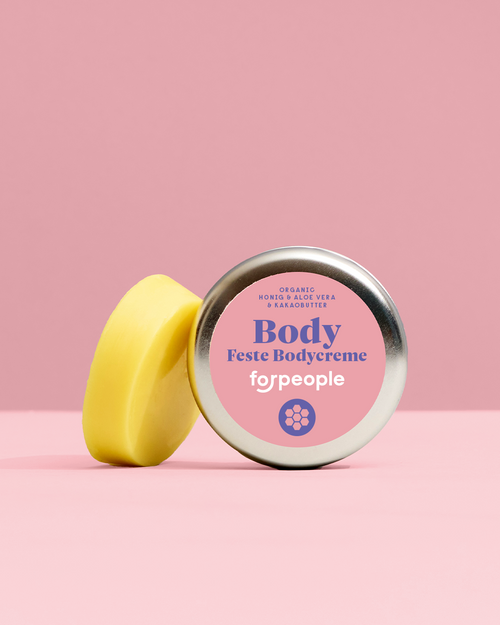
- Solid Body Butter - Beeswax & Aloe Vera, 40 g, €9.90: cocoa butter, olive oil, beeswax, sunflower oil, shea butter and aloe extract; for dry skin, ideally after showering.
Test new care first: Trying a new product: how do I test it on a small area? Other common contact reactions: Infected ear piercing: leave the stud in or take it out, nickel or infection?, Rash under your smartwatch: red, itchy skin on the wrist and Itchy scalp after colouring your hair: irritation or hair dye allergy?.
Sources
- DermNet: Rosin (colophony) allergy. Ngan V (2002), updated by Coulson I, last reviewed June 2023, accessed on 30.10.2026. https://dermnetnz.org/topics/rosin-allergy
- DermNet: Allergic contact dermatitis. Oakley A (1997), updated 2016 and 2025, last reviewed August 2025, accessed on 30.10.2026. https://dermnetnz.org/topics/allergic-contact-dermatitis
- Widman TJ, Oostman H, Storrs FJ (2008): Allergic contact dermatitis from medical adhesive bandages in patients who report having a reaction to medical bandages. Dermatitis 19(1): 32–37. PMID 18346394. https://pubmed.ncbi.nlm.nih.gov/18346394/
- Goossens A, Aerts O, Dendooven E (2025): Potential Allergens in Medical Adhesives in Tapes, Wound Dressings, and Ostomy Care: A Scoping Review. Contact Dermatitis 93(5): 358–369. https://doi.org/10.1111/cod.70016
- Hamnerius N, Dahlin J, Bruze M, Nilsson K, Sukakul T, Svedman C (2023): Colophonium-related Allergic Contact Dermatitis Caused by Medical Adhesive Tape Used to Prevent Skin Lesions in Soldiers. Acta Dermato-Venereologica 103: adv18428. https://doi.org/10.2340/actadv.v103.18428
- LeBlanc K, Whiteley I, McNichol L, Salvadalena G, Gray M (2019): Peristomal Medical Adhesive-Related Skin Injury: Results of an International Consensus Meeting. Journal of Wound, Ostomy and Continence Nursing 46(2): 125–136. https://doi.org/10.1097/WON.0000000000000513
- Hu M, Hu J, Sun P, Zheng H, Zhang M (2025): Summary of the Best Evidence for the Prevention and Management of Medical Adhesive-Related Skin Injuries in Patients with Tracheal Intubation. Journal of Multidisciplinary Healthcare 18: 5563–5580. https://doi.org/10.2147/JMDH.S529677
- Grove GL, Zerweck CR, Ekholm BP, Smith GE, Koski NI (2014): Randomized comparison of a silicone tape and a paper tape for gentleness in healthy children. Journal of Wound, Ostomy and Continence Nursing 41(1): 40–48. https://doi.org/10.1097/01.WON.0000436669.79024.b0
- Mahler V, Nast A, Bauer A et al. (2019): S3 guidelines: Epicutaneous patch testing with contact allergens and drugs – Short version, Part 1. Journal der Deutschen Dermatologischen Gesellschaft 17(10): 1076–1093. https://doi.org/10.1111/ddg.13956