The problem: the skin between the toes is coming off
In the evening your feet come out of your winter boots, and between the fourth and fifth toe the skin is white, soft and peels off in small flakes. Sometimes there is a fine crack in the fold that stings when you walk. For some people it itches, for others it does not, and sometimes the spot smells unpleasant. This is typical in the cold season: lined boots all day, thick socks that get damp, and at the weekend the indoor pool or the sauna.
How dry, cracked skin develops on the other parts of the toes is explained in Dry, cracked skin on the toes: big toe, tops of the toes and ankle. This page is about the spaces between the toes, and there the problem is usually not too little but too much moisture.
What can be behind it. The following table summarises what specialist sources write about the most common causes. It is a guide, not a diagnosis. The pictures overlap and often occur together; they can only be told apart with certainty during a medical examination, for athlete's foot usually with a skin sample (IQWiG 2025a).
| Picture | Typical features | What to do |
|---|---|---|
| Softened skin (maceration) | white, soft, peels off after the feet have been damp in the shoe for a long time; often little itching | keep it dry; if it does not improve, have it checked |
| Athlete's foot between the toes | reddened, scaling, split skin that itches and can hurt; sometimes whitish, thickened and swollen; often on one foot only; usually between the fourth and fifth toe | pharmacy or GP; a skin sample gives certainty |
| Erythrasma (bacterial) | sharply defined pink to brownish patches with fine scaling and superficial cracks, mild itching; between the third, fourth and fifth toe; more common with heavy sweating and diabetes | doctor |
| Soft corn | whitish, damp, painful thickened skin between toes that lie close together | reduce pressure, podiatrist |
| Infected inflammation in the toe web | weeping, raw areas, yellowish or greenish coating, sweetish-foul smell, swelling and pain; often develops on top of athlete's foot | see a doctor promptly, immediately if you have diabetes |
Sources for the table: IQWiG 2025a, DermNet: Tinea pedis, DermNet: Erythrasma, DermNet: Corn and callus, IQWiG 2025b, Zeyen et al. 2026. The forms of athlete's foot, and why one of them looks like dry skin, are explained in Dry feet or athlete's foot? Signs and when to see a doctor. On soft corns, see Corn, callus or plantar wart? How to tell them apart.
Why this happens in autumn and winter
Sweat that cannot evaporate. The soles of the feet have a particularly large number of sweat glands, and lined boots get warm; more on this in Sweating in winter: causes and what you can do. Between the toes, skin lies on skin. Moisture can hardly evaporate there, and the toes rub against each other as well; according to a dermatology source, inflammation in such skin folds is associated with closed or tight shoes (DermNet: Intertrigo).
Water makes the horny layer swell. In an electron microscopy study, the horny layer was about three times as thick as before after four hours of contact with water; pools of water formed between the horny cells, and the ordered fat layers that hold the skin together were disrupted (Warner et al. 2003). This explains why softened skin looks white and comes off in flakes. According to a specialist source, persistent moisture between toes that lie close together can also irritate the skin and trigger an inflammation that resembles athlete's foot (DermNet: Tinea pedis).
Damp skin as a point of entry. Athlete's foot is passed on through skin flakes, for example in communal showers, and the fungi need warmth and moisture (IQWiG 2025a). Risk factors include sweaty feet, sturdy footwear for many hours, and swimming pools and saunas (IQWiG 2025a). If the skin between the toes is softened or split, bacteria can settle there too; a German guideline describes how athlete's foot with softened skin can turn into a bacterial infection of the toe web (Zeyen et al. 2026).
And dryness? Genuinely dry cracks are less common between the toes than on the heel or the tops of the toes; this is an assessment from practice. Dry skin tends to scale finely and is not white and softened. Why feet dry out in winter is explained in Dry feet in winter: what causes it, what helps?
The solution step by step
| Step | What you do | Why |
|---|---|---|
| Right away | Take off your shoes and damp socks, wash your feet in lukewarm water and pat the spaces between your toes dry one by one; then dry them with a hairdryer on the cool setting | Thorough drying, including between the toes, is the most important measure |
| Right away | Do not pull off loose flakes of skin and do not scratch | Underneath lies thin skin that tears easily |
| Every day | Fresh socks made of cotton or other natural fibres; change wet socks straight away | This takes moisture away from the skin |
| Every day | Alternate your shoes and let them dry out completely in between; wear airy shoes that are not too tight | A pair worn every day never dries through |
| At home | Take your shoes off as often as possible and let your feet get some air | The spaces between the toes dry most quickly when they are open to the air |
| Care | Cream, oil or ointment only on the heels, soles and tops of the toes, not between the toes | Between the toes the skin should stay dry |
| Prevent | If your toes lie close together: toe socks or soft toe separators; pool shoes in indoor pools, saunas and changing rooms; do not share towels and socks | Separated toes stay drier; athlete's foot is passed on through skin flakes |
Sources for the table: IQWiG 2025a, DermNet: Tinea pedis, DermNet: Corn and callus, Zeyen et al. 2026, Schaper et al. 2024. Leaving loose flakes in place is common practice. How warm and how long a foot soak may be is explained in Foot soak before moisturising: how long, how warm, is it worth it?; for the spaces between the toes the rule is: soak briefly, dry thoroughly.
What helps – and what does not
| Measure or assumption | Assessment |
|---|---|
| Drying the spaces one by one and using a cool hairdryer | helps; explicitly recommended to prevent athlete's foot |
| Cream, oil or petroleum jelly between the toes | no; the skin there should stay dry |
| A long, hot foot bath so that the skin "comes off" | better not; water makes the horny layer swell even more |
| Tea tree oil or herbal foot baths against athlete's foot | not proven |
| Athlete's foot products from the pharmacy | an option for typical athlete's foot; if the cause is unclear, if the skin weeps or smells, or if you have diabetes, check with a doctor first |
| Washing socks at 60 degrees or more | recommended; how well this protects has not been studied well |
| Toe socks or toe separators | can separate the toes and reduce moisture |
Sources: IQWiG 2025a, DermNet: Tinea pedis, Warner et al. 2003, Schaper et al. 2024.
Common mistakes
- Drying only the sole and the top of the foot. The spaces between the toes stay wet, and that is exactly where the skin softens.
- Applying cream between the toes because the skin is peeling. It peels because it is too damp; cream keeps the moisture there.
- The same boots every day. The lining and insole do not dry out completely overnight.
- Taking white, itchy skin for sweat. Itching and redness point more towards athlete's foot.
- Tearing off flakes of skin. Open spots easily form underneath.
- Walking barefoot through indoor pools, saunas and changing rooms. Athlete's foot is passed on there through skin flakes.
- Waiting it out if you have diabetes. Small injuries between the toes are then easily overlooked and can get worse.
When to seek medical advice
Keeping the skin dry helps softened skin; it does not treat athlete's foot or bacterial infections. The first port of call is your GP (IQWiG 2025a). Have the spot looked at if
- it itches between the toes, the skin is red, scales or splits, blisters form or only one foot is affected; this points more towards athlete's foot (DermNet: Tinea pedis),
- the skin does not improve after one to two weeks of keeping it consistently dry; this time frame is based on practical experience,
- toenails become discoloured, thick or crumbly; athlete's foot can spread to the nails (IQWiG 2025a),
- sharply defined pink-brownish patches appear between the toes, in the armpits or in the groin (DermNet: Erythrasma); for skin folds elsewhere on the body, see Sore skin under the breasts and in skin folds (intertrigo): what helps,
- a soft, whitish spot between two toes hurts when pressed; this can be a soft corn (IQWiG 2025b).
Promptly, on the same or the next day, if the spot weeps, has a yellowish-greenish coating, smells sweetish and foul, swells or hurts badly (Zeyen et al. 2026), and immediately if redness spreads over the top of the foot, the leg swells or you develop a fever; an infection in the toe web can turn into erysipelas or a soft tissue infection (Zeyen et al. 2026).
If you have diabetes, nerve damage in your feet, circulation problems, lymphoedema or a weakened immune system, have every open or inflamed spot between the toes looked at early. The international guideline on the diabetic foot advises inspecting the feet daily, including between the toes, drying them carefully there and not applying any skincare between the toes (Schaper et al. 2024). More on this in Dry skin with diabetes: causes and care for feet and legs.
Frequently asked questions
The skin between my toes is coming off but does not itch. Is it athlete's foot?
Not necessarily. Softened skin after a day in closed shoes often itches little. But athlete's foot can also start without much itching. If the spot does not improve when you keep it consistently dry, have a skin sample taken.
The skin between my toes is peeling and itchy. What should I do?
Keep it dry, change your socks every day, do not apply cream and show the spot at a pharmacy or your GP. Itching with red, scaling skin is a typical sign of athlete's foot.
Why does the skin between my toes smell?
Damp skin and sweat give bacteria good conditions. A sweetish-foul smell together with weeping, painful spots can indicate a bacterial infection and should be seen by a doctor. If mainly the sole smells strongly and shows small pits, another bacterial skin infection may be behind it (DermNet: Pitted keratolysis).
The skin between my toes has split. What helps?
Keep it clean and dry, do not apply cream, wear loose socks and airy shoes. A crack that weeps, reddens, swells or does not close after a few days needs a doctor, immediately if you have diabetes.
Can I apply cream between my toes?
No. Skincare belongs on the heels, soles and tops of the toes. Between the toes the skin should stay dry.
Is white, softened skin between the toes dangerous?
Usually not, if it looks normal again after drying. But softened skin is more easily injured and is a point of entry for fungi and bacteria. That is why it is worth tackling the cause, usually moisture in the shoe.
Why do I get this mainly in winter?
Lined boots, thick socks and many hours in closed shoes keep the feet warm and damp. On top of that come indoor pools and saunas, where athlete's foot is passed on.
Does using a hairdryer between the toes help?
Yes, on the cool setting after towelling dry. This is recommended to prevent athlete's foot. If you have diabetes or reduced sensation, never use warm air, because heat may then go unnoticed.
At forpeople
We have no product for the skin between the toes, and none is needed there: what helps is dryness. Our foot cream is intended for the heels, balls of the feet and tops of the toes and does not belong between the toes or on irritated or injured skin.
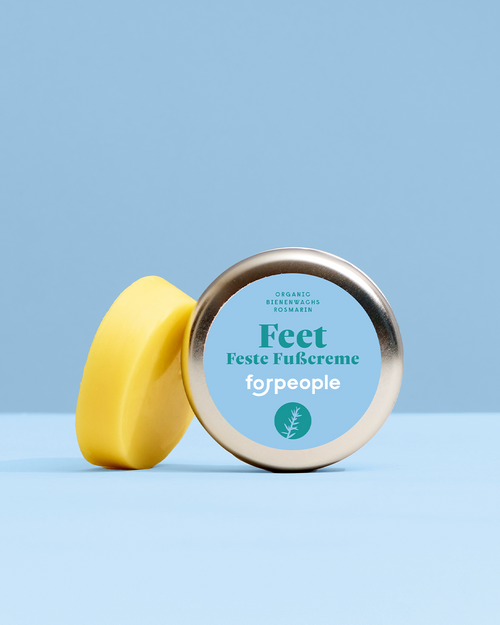
Solid Foot Cream – Rosemary & Sage, 40 g, €9.90: water-free, made from sunflower and olive oil, beeswax and shea butter, with essential oils of rosemary, eucalyptus and clary sage; according to its product page for dry, rough feet and heels, not for children under 7.
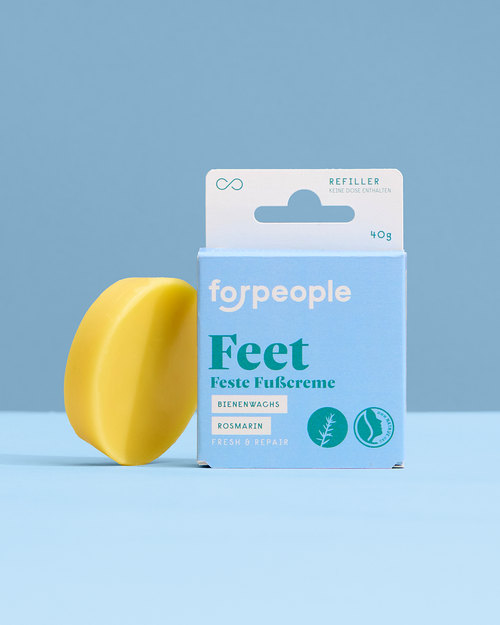
Solid Foot Cream Refill - Rosemary & Sage, 40 g, €7.90: the same formula for refilling the tin.
More on this: Dry skin between the fingers: causes and what helps · Cracked heels: when to see a podiatrist or doctor
Sources
- Institute for Quality and Efficiency in Health Care (IQWiG) (2025a): Fußpilz [Athlete's foot]. gesundheitsinformation.de, updated 9 July 2025, accessed 29 October 2026. https://www.gesundheitsinformation.de/fusspilz.html
- DermNet: Tinea pedis. Created 2003, updated by Stewart T, April 2018, accessed 29 October 2026. https://dermnetnz.org/topics/tinea-pedis
- DermNet: Erythrasma. Oakley A, Ngan V (June 2014), updated by Gomez J (July 2016), accessed 29 October 2026. https://dermnetnz.org/topics/erythrasma
- DermNet: Corn and callus. Oakley A (2005), accessed 29 October 2026. https://dermnetnz.org/topics/corn-callus
- Institute for Quality and Efficiency in Health Care (IQWiG) (2025b): Hühnerauge [Corns]. gesundheitsinformation.de, updated 19 March 2025, accessed 29 October 2026. https://www.gesundheitsinformation.de/huehnerauge.html
- Zeyen C, Abeck D, Becker K, Dissemond J, Kahle B, Lorenzen HP et al. (2026): S1 Guideline on Infected Interdigital Intertrigo (also called Gram-Negative Toe Web Infection). J Dtsch Dermatol Ges 24(6): 832–843. AWMF register no. 013-109. https://doi.org/10.1111/ddg.70040x
- DermNet: Intertrigo. Oakley A (1998), revised August 2015, updated by Dennis J, November 2018, accessed 29 October 2026. https://dermnetnz.org/topics/intertrigo
- Warner RR, Stone KJ, Boissy YL (2003): Hydration disrupts human stratum corneum ultrastructure. J Invest Dermatol 120(2): 275–284. https://doi.org/10.1046/j.1523-1747.2003.12046.x
- Schaper NC, van Netten JJ, Apelqvist J, Bus SA, Fitridge R, Game F et al. (2024): Practical guidelines on the prevention and management of diabetes-related foot disease (IWGDF 2023 update). Diabetes Metab Res Rev 40(3): e3657. https://doi.org/10.1002/dmrr.3657
- DermNet: Pitted keratolysis. Lam C, July 2022, accessed 29 October 2026. https://dermnetnz.org/topics/pitted-keratolysis