The problem: red veins on the nose and cheeks
They are particularly noticeable in winter: fine red lines on the sides of the nose, a red network on the cheeks that becomes even clearer after a walk in the cold and warming up indoors. Some people see a single red dot with fine branches, like a small spider. The veins do not hurt; they bother people because they can be seen.
Specialists call visible, fine red vessels telangiectasias. In everyday language they are called broken veins or broken capillaries (DermNet: Telangiectasia), but they are actually widened small blood vessels (DermNet: Spider telangiectasis). Real small bleeds from vessels look different: petechiae are pinpoint bleeds of up to about two millimetres (DermNet: Purpura). The table is based on specialist sources; it does not replace a diagnosis, and only a medical examination brings certainty.
| What you see | What it often is | What can be behind it |
|---|---|---|
| fine red lines on the sides of the nose and cheeks, otherwise calm skin | telangiectasias (“couperose”) | sun damage and aged skin, especially in smokers; inherited tendency, normal in some families (DermNet: Telangiectasia) |
| veins plus redness in the centre of the face that comes and goes or stays, burning, later bumps | rosacea | rosacea often begins with recurring redness, visible vessels and flushing (Clanner-Engelshofen et al. 2022); details on Rosacea in winter: recognising triggers and caring for your skin properly |
| red centre with radiating branches; disappears briefly when you press on the dot | spider naevus | common and harmless; many of them in pregnancy, on the pill, with liver disease or an overactive thyroid (DermNet: Spider telangiectasis) |
| veins after months of cortisone cream on the face, thin skin | effect of cortisone | long-term cortisone use on the skin or as tablets (DermNet: Telangiectasia) |
| red dots on the lips, tongue, fingers, plus frequent nosebleeds, also in the family | Osler's disease (hereditary blood vessel disorder) | rare; needs medical assessment (DermNet: Hereditary haemorrhagic telangiectasia) |
| tiny red dots that do not fade under pressure | petechiae (pinpoint bleeds) | blood leaks from the smallest vessels, for example with high pressure in the vessels, but also with platelet disorders (DermNet: Purpura); see below for when this is an emergency |
Why veins develop and stand out more in winter
Years of sun. Among the most common acquired causes are sun-damaged and aged skin, especially in people who smoke (DermNet: Telangiectasia). The nose and cheeks get the most light. In winter, UV in the snow and in the mountains is added; there, the German Federal Office for Radiation Protection (BfS) recommends very high protection with SPF 50+ (BfS), more on Sun protection in the mountains and on snow.
Cold, heat and the change between them. In the cold, the skin's vessels contract, and when you warm up they widen; this explains red cheeks after a winter walk, described on Red hands and cheeks in the cold: what is normal and what helps. In rosacea, heat and cold, temperature changes, sun, alcohol, spicy food, hot drinks, exercise and stress are among the known triggers (NHS: Rosacea) (Sánchez-Feliciano et al. 2026); over time the redness can stay, and permanent veins appear (NHS: Rosacea). Whether cold alone causes permanent veins in people without rosacea has not been studied well. Existing veins often become more visible in winter when the vessels widen as you warm up.
Medicines, hormones and illnesses. Besides long-term cortisone, blood-pressure medicines that widen the vessels, especially calcium channel blockers, can promote veins in sun-exposed areas (DermNet: Telangiectasia). Pregnancy, liver disease and some connective tissue diseases are also associated with telangiectasias (DermNet: Telangiectasia). So never stop a medicine because you notice veins; talk to your doctor about it.
Pressure and injuries. Telangiectasias can develop after skin injuries, scars, radiation or repeated heat (DermNet: Telangiectasia). Small bleeds occur when the pressure in the vessels rises sharply; thin, sun-damaged skin gives the vessels less support (DermNet: Purpura); how to protect such skin is explained on Paper-thin skin: protecting and caring for thin, easily torn skin in old age.
The solution step by step
| Step | What you do | Why |
|---|---|---|
| Straight away | Do not press, scratch or go at the veins with needles, home devices or acids | You cannot remove them yourself; even professional treatment can leave a small scar (DermNet: Spider telangiectasis) |
| Every day | Wash your face with lukewarm water, pat dry instead of rubbing, no scrubs or brushes on reddened areas | Heat and cold are considered triggers in rosacea (NHS: Rosacea), and rubbing irritates; more on cleansing on Rosacea in winter |
| Every morning | Sun protection on your face, also on bright winter days; SPF 50 and reapplying in snow and in the mountains | Sun damage is one of the main causes (DermNet: Telangiectasia); the BfS recommends SPF 50+ on snow and at altitude (BfS) |
| Outdoors in the cold | Scarf, cloth or neck gaiter over your nose and cheeks, a hat; then warm up slowly, not right in front of a radiator, stove or fireplace | Temperature changes are considered triggers in rosacea (Sánchez-Feliciano et al. 2026); the NHS also names cold and heat (NHS: Rosacea) |
| In everyday life | Watch for your own triggers: hot drinks, alcohol, spicy food, sauna, exercise in the cold | These triggers are known in rosacea (NHS: Rosacea); the guideline advises avoiding them (Clanner-Engelshofen et al. 2022) |
| Cortisone | Use cortisone creams on your face only for as long as your doctor says | Long-term use can cause veins (DermNet: Telangiectasia) |
| If they bother you | Get advice on treatment from a dermatologist: vascular laser, flash lamp (IPL) or electrocoagulation | These methods are used for red facial veins (DermNet: Telangiectasia) (Karsai et al. 2008) |
| Until then | Cover with make-up if you wish, and remove it thoroughly but without rubbing in the evening | Covering them does not change the vessels, but it does not harm them either |
About laser treatment: the practice chooses the device and settings according to the size and colour of the vessels. In a small, blinded study from Karlsruhe with 20 people and fine vessels on the nose, two laser wavelengths in sequence worked better than either alone; there was no clear difference between the two individual lasers (Karsai et al. 2008). How many sessions are needed, what it costs and whether health insurance covers anything is something to clarify with the practice beforehand. Your practice will tell you how to care for your skin after laser treatment; general information is on Dry skin after retinol, acid peels or laser: what helps now.
What helps – and what rather does not
| Remedy or habit | Assessment |
|---|---|
| Laser, IPL, electrocoagulation in a practice | effective ways to remove veins (DermNet: Telangiectasia) (Karsai et al. 2008); new ones can appear later if the causes remain |
| Daily sun protection | sensible: sun damage is one of the most common causes (DermNet: Telangiectasia) |
| Creams “against couperose” | rather not: we know of no evidence that veins disappear with them. For persistent redness in rosacea, the guideline names vessel-narrowing agents, which are prescribed by a doctor (Clanner-Engelshofen et al. 2022) |
| Home remedies such as apple cider vinegar, lemon, parsley, cold packs | no: we know of no evidence; acids and ice irritate the skin |
| Vein pens and high-frequency devices for home use | no: we have found no studies on benefit and safety; heat and electricity on facial skin belong in experienced hands |
| Cortisone cream for the redness | no: in the long term a cause of veins (DermNet: Telangiectasia) |
| Scrub, brush, facial steam | rather not: rubbing and heat make the face flush; heat is a known trigger in rosacea (NHS: Rosacea) |
| Rich cream as cold protection | protects against drying out, not against the vessel reaction; clothing matters more, see Red hands and cheeks in the cold |
Common mistakes
The most common mistake is trying it yourself: pricking veins with a needle, cauterising them with a device from the internet or “burning them off” with acid. You risk burns, inflammation and scars, and the veins often come back. Second: putting cortisone cream on red cheeks because it briefly dampens the redness. Third: wearing sun protection only in summer, although ski days, winter hikes and the daily commute together add up to a lot of light. Fourth: going straight to the radiator or into a hot shower with an ice-cold face after a walk. Fifth: taking every redness for couperose and missing rosacea, eczema or pinpoint bleeds. And sixth: going straight into the sun or to a ski resort after laser treatment without talking to the practice about protection.
When to seek medical advice?
Individual veins are usually harmless (DermNet: Telangiectasia). Have them looked at by your GP or a dermatologist if:
- the centre of your face is permanently red, burns, or bumps and pustules appear; this can be rosacea,
- many spider naevi appear within a short time, especially with yellowish skin or reddened palms; this can point to the liver (DermNet: Spider telangiectasis),
- you often have nosebleeds and see red dots on your lips, tongue or fingers, especially if it runs in the family (DermNet: Hereditary haemorrhagic telangiectasia),
- veins occur together with white fingers in the cold, hardened skin or joint problems; this should be assessed by a doctor, see White fingers in the cold: recognising Raynaud's syndrome and protecting your hands,
- a shiny bump with veins on its surface grows, bleeds or does not go away; some skin tumours show such vessels (DermNet: Telangiectasia),
- veins appear under a cortisone cream or after starting a new medicine; do not stop anything on your own,
- you would like to have the veins removed.
Call emergency services (112) immediately if tiny red or purple dots or blotches suddenly appear that do not fade when pressed with a glass, together with fever, severe headache, a stiff neck, confusion or extreme sleepiness (NHS: Meningitis). Many small bleeds without an obvious reason, bruises or bleeding gums should be seen by a doctor the same day; platelet disorders can be behind them (DermNet: Purpura). Sudden red areas in the white of the eye belong in an eye practice if there is pain, impaired vision or after an injury.
Frequently asked questions
Are broken veins on the face really broken?
Usually not. The fine red lines are permanently widened tiny blood vessels. The only ones that have literally burst are pinpoint bleeds, which appear as tiny dots that do not fade under pressure.
Can I remove broken veins on my face myself?
No. Needles, home devices and acids can leave scars, crusts and pale patches, and the veins often come back. They can only be removed in a practice, for example with a laser, flash lamp or electrocoagulation.
Are there home remedies for veins on the face?
We know of none with evidence behind them. What you can do is prevent: sun protection, protection from the cold, lukewarm water, no rubbing and cortisone only on medical instructions.
How much does laser treatment for veins cost?
That depends on the practice, device, area and number of sessions. Ask for a cost estimate in advance and find out whether your health insurance covers anything.
Why do I have so many veins on my nose?
The nose gets a lot of sun, and sun damage is one of the common causes. Inherited tendency, rosacea and cortisone creams also play a part. If permanent redness is added, have it looked at by a doctor.
Is couperose the same as rosacea?
Not quite. Couperose usually means visible veins. They occur in rosacea, but also without it, for example after many years of sun or in families. Whether rosacea is behind it is for a dermatologist to determine.
Do the veins come back after laser treatment?
New veins can appear as long as the causes remain. Consistent sun protection and avoiding your own triggers therefore remain sensible afterwards. Your practice can tell you what to expect in your case.
At forpeople
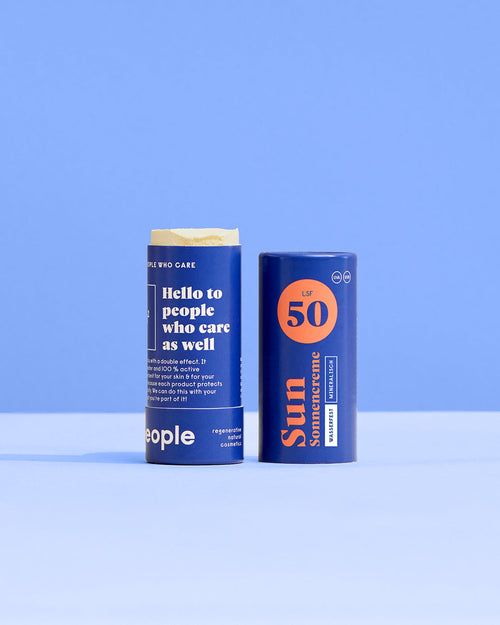
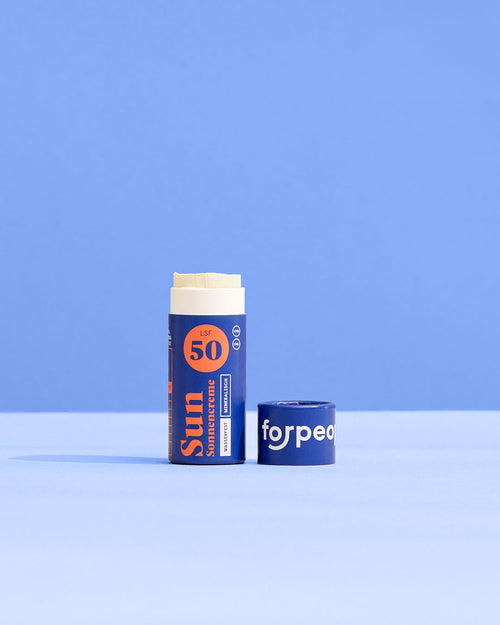
We do not have a product against veins, and we do not promise that any cream will make them disappear. For daily UV protection, a product whose page names the face is suitable: the Solid Sunscreen SPF50, 40 g, €17.90. According to the product page it protects against UVA and UVB radiation with the mineral filters zinc oxide and titanium dioxide (non-nano); according to its ingredient list it also contains shea butter, a plant-based fatty acid blend, beeswax and silica, no essential oils and no added fragrances. Avoid the eye area; according to the product page it does not belong on broken or irritated skin, so also not directly after laser treatment unless the practice allows it. For ski days and your jacket pocket there is the Solid Sunscreen SPF50 Travel Size with 20 g for €9.90.
Read more: Sunscreen in winter: when it makes sense in everyday life · Windburn on the face: red, burning skin after skiing and winter hiking · Seborrhoeic dermatitis on the face: flaking on the nose, eyebrows and beard
Sources
- DermNet: Telangiectasia. Oakley A, 2014, reviewed 2023, accessed 30 October 2026. https://dermnetnz.org/topics/telangiectasia
- DermNet: Spider telangiectasis. Oakley A, December 2017, accessed 30 October 2026. https://dermnetnz.org/topics/spider-telangiectasis
- DermNet: Hereditary haemorrhagic telangiectasia. Ngan V, 2006, reviewed 2023, accessed 30 October 2026. https://dermnetnz.org/topics/hereditary-haemorrhagic-telangiectasia
- Clanner-Engelshofen BM, Bernhard D, Dargatz S, Flaig MJ, Gieler U, Kinberger M et al. (2022): S2k guideline: Rosacea. Journal der Deutschen Dermatologischen Gesellschaft 20(8): 1147–1165. https://doi.org/10.1111/ddg.14849
- NHS: Rosacea. Last reviewed 17 March 2023, accessed 30 October 2026. https://www.nhs.uk/conditions/rosacea/
- Sánchez-Feliciano A, Ershadi S, Barbieri JS (2026): Environmental and Lifestyle Triggers of Rosacea. Cutis 117(2): 65–68. https://doi.org/10.12788/cutis.1333
- Karsai S, Roos S, Raulin C (2008): Treatment of facial telangiectasia using a dual-wavelength laser system (595 and 1,064 nm): a randomized controlled trial with blinded response evaluation. Dermatologic Surgery 34(5): 702–708. https://doi.org/10.1111/j.1524-4725.2008.34131.x
- DermNet: Purpura. Ngan V, 2005, updated by Oakley A, November 2015, accessed 30 October 2026. https://dermnetnz.org/topics/purpura
- Bundesamt für Strahlenschutz (BfS, German Federal Office for Radiation Protection): UV-Schutz-Tipps [UV protection tips]. As of 4 August 2026, accessed 30 October 2026. https://www.bfs.de/DE/themen/opt/uv/schutz/tipps/tipps_node.html
- NHS: Meningitis. Last reviewed 12 June 2026, accessed 30 October 2026. https://www.nhs.uk/conditions/meningitis/