The problem: it itches – scabies or "just" eczema?
In autumn and winter many people's skin itches anyway, so hardly anyone thinks of scabies straight away. You should take a closer look if the itch is new and gets worse week by week, if it wakes you at night, if small bumps and scratch marks appear between your fingers, or if your child and you are scratching at the same time. Sometimes a letter from the nursery arrives as well.
Scabies is an infestation of the skin with the scabies mite, an arachnid that lives only on humans. The females are 0.3 to 0.5 mm in size, just about visible to the naked eye as a dot. They dig burrows in the horny layer, the outermost layer of the skin, and lay their eggs there (RKI guide on scabies). The itch is a defence reaction against the mites and their excretions. That is why, with a first infestation, the itch only starts after 2 to 5 weeks; anyone who has had scabies before notices it after 1 to 4 days (RKI guide on scabies).
Typical signs are comma-shaped, often wavy burrows from a few millimetres up to 1 cm long. Preferred sites are the spaces between fingers and toes, elbows, armpits, the areola, navel, waistline, buttocks, groin, ankles and, in men, the shaft of the penis. In adults the head and neck are usually spared, in babies and toddlers they are not (RKI guide on scabies). On top of this comes an eczema with red, partly crusted bumps and blisters spread over larger areas.
The table shows how specialists distinguish scabies from other itchy skin changes. It is a guide, not a diagnosis: only a medical examination gives certainty.
| What you see and feel | What may be behind it |
|---|---|
| New, intense itch that increases at night; fine burrows between the fingers, on the wrists, elbows, waistline or genital area; similar symptoms in family or partner | Scabies (RKI guide on scabies), (Sunderkötter et al. 2021) |
| Dry skin with itchy, red patches, in older children and adults often in the elbow creases and behind the knees; comes and goes in flares, often together with hay fever, asthma or food allergies | Atopic eczema (DermNet: Atopic dermatitis) |
| Clusters of itchy red bumps with a dot in the centre, mainly on the legs, forearms and face; mostly in summer or autumn; fleas often come from a cat or dog | Insect bites, for example from fleas, mosquitoes or bed bugs (DermNet: Papular urticaria) |
| Very itchy bumps, often in lines, where clothing fits tightly: waistline, tight cuffs, ankles, backs of the knees; after time in the garden or long grass in late summer and autumn | Harvest mites ("chiggers") (Cyberderm: Trombidiosis) |
| Raised wheals that disappear within minutes to 24 hours and reappear elsewhere | Hives (urticaria) (DermNet: Urticaria) |
Contact eczema, psoriasis and mites from animals are also ruled out by the doctor (RKI guide on scabies). How to tell dry skin and atopic eczema apart is explained in Dry skin or atopic eczema? How to tell the difference; what lies behind a rash from detergent, in Rash from laundry detergent: allergy or irritation – how to tell and what helps.
Why scabies is noticed more often in autumn and winter
More closeness, longer survival. Data from countries with a cool climate show a tendency towards more scabies in the cold season. The Robert Koch Institute, Germany's federal institute for disease control, explains this with closer body contact in winter and with the mites surviving longer on textiles at low temperatures (RKI guide on scabies). In Germany, people also searched online for scabies more often in the winter months than in summer (Wu et al. 2022).
How scabies spreads. As a rule from skin to skin, over a large area and for 5 to 10 minutes: sharing a bed, cuddling, caring for toddlers or people in need of care, sex. Shaking hands, hugs and greeting kisses are considered risk-free with ordinary scabies, and transmission via bedding or clothing is rare (RKI guide on scabies). At normal room temperature and humidity, mites outside the skin are very probably not infectious for longer than 48 hours (RKI guide on scabies).
The warmth of the bed turns the itch up. It is typical of scabies, but not proof of it, that the itch increases at night and in the warmth of the bed (Sunderkötter et al. 2021). Why skin generally itches more in the evening is explained in Itchy skin at night in bed: why it gets worse in the evening and what helps.
Winter skin blurs the signs. If your skin is dry and itchy anyway in winter, it is easy to mistake the first signs of scabies for winter skin; what cold and heated air do to the skin is explained in Dry skin in winter: what helps with cold and indoor heating. In older people in need of care, a form with particularly many mites, crusted scabies, can even be mistaken for asteatotic eczema; with this form there is sometimes hardly any itch (RKI guide on scabies). More on this in Itching in older age: causes, what helps and when to have it checked and Asteatotic eczema (winter eczema): when dry skin turns into eczema.
The solution step by step
| Step | What you do | Why |
|---|---|---|
| As soon as you suspect it | Make an appointment with a dermatologist, for babies and toddlers with a paediatrician; until then avoid long, close skin contact and do not apply thick layers of cream | The diagnosis should be made or confirmed by a dermatologist; it is certain when mites, eggs or mite droppings are detected under the microscope, with the adhesive tape test or with dermatoscopy (RKI guide on scabies). Cosmetics can mask the signs ("cultivated scabies") (RKI guide on scabies) |
| After the diagnosis | Carry out the prescribed treatment exactly as instructed: a mite-killing cream (scabicide) on the whole body, or tablets; often a second application after a few days is part of it | Only these medicines kill mites, larvae and eggs; which one suits depends on age, pregnancy and existing conditions, among other things (RKI guide on scabies). Common reasons for failure are mistakes in applying it and untreated contacts (Sunderkötter et al. 2021) |
| On the same day | Have all close contacts treated as well, even without symptoms: partner, children, anyone who shares the bed or provides care | Close contacts should be treated at the same time if possible; they may only develop symptoms after 4 to 6 weeks (RKI guide on scabies) |
| During or right after treatment | Wash clothes, bedding, towels and items with longer skin contact (slippers, cuddly toys) at 50 °C or more for at least 10 minutes, or heat them in the tumble dryer; store anything that cannot take this in a sealed plastic bag at 21 °C or more for 72 hours; put fresh sheets on the beds | This is what the Robert Koch Institute recommends; items with only brief contact do not need treating (RKI guide on scabies) |
| Nursery, school, work | Inform the facility; a child only goes back after the first treatment with the cream has been completed, or 24 hours after taking the tablets | In Germany, scabies is on the list in section 34 of the Infection Protection Act (IfSG § 34); readmission follows the recommendations of the Robert Koch Institute (RKI: readmission) |
| Up to 36 hours afterwards | Keep avoiding close body contact | After the cream was applied, mites were still able to move for up to 36 hours (RKI guide on scabies) |
| In the weeks afterwards | Moisturise the skin with a mild, unperfumed product and use little soap; do not scratch, keep nails short | After treatment, specialist sources recommend bland creams or ointments so the skin does not dry out and become irritated (RKI guide on scabies), plus emollients and little soap (DermNet: Scabies) |
Important for your expectations: after successful treatment the itch can continue for weeks (DermNet: Scabies); specialists call this post-scabies eczema (RKI guide on scabies). Individual nodules can even remain for months (Sunderkötter et al. 2021). That alone does not mean the treatment has failed; whether mites are still present is checked by the doctor.
What helps – and what tends not to
| Measure or home remedy | Assessment |
|---|---|
| Home remedies such as oils, vinegar or herbal baths instead of treatment | no: for treatment, the Robert Koch Institute names only mite-killing medicines (RKI guide on scabies). Around 30% of online searches about treating scabies in Germany were about home remedies (Wu et al. 2022) |
| Hand sanitiser | does not work against scabies mites; washing your hands thoroughly after skin contact is the usual approach (RKI guide on scabies) |
| Disinfecting the whole home, having upholstery and carpets cleaned | not necessary: upholstered furniture that someone lay on with bare skin can be vacuumed or left unused for 48 hours; with ordinary scabies this is not strictly required (RKI guide on scabies) |
| Treating the pet as well | not for scabies: the human scabies mite only multiplies in human skin (RKI guide on scabies); if you itch after contact with an animal, an animal mite may be behind it, which the doctor rules out |
| Applying thick layers of cream or cortisone cream on suspicion before the appointment | better not: skin care products can blur the picture (RKI guide on scabies); cortisone only comes in after the diagnosis and on medical advice, for example for the eczema after treatment |
| Scratching | no: scratched skin can become infected with bacteria, for example as impetigo (DermNet: Scabies) |
Common mistakes
Treating only yourself: if your partner or children are not treated at the same time, the mites come back. Applying the cream only to itchy spots instead of the way the doctor explained; the whole body is treated, including the skin under the nails (RKI guide on scabies). Washing at 30 °C because things would otherwise shrink. Taking every itchy spot after treatment for a relapse and treating again on your own: this irritates the skin without clarifying whether mites are still there. Not informing the nursery because it feels awkward; yet the facility needs to know in order to keep an eye on other close contacts. And: dismissing the itch as winter skin for weeks although everyone in the household is scratching.
When should you seek medical advice?
Whenever you suspect scabies, because the diagnosis should be made or confirmed by an experienced doctor, who also chooses the treatment to suit age and existing conditions (RKI guide on scabies). See a doctor soon if
- a baby or toddler is affected; their skin changes are often more pronounced, with blisters and pustules also on the head, face, palms and soles, and some are restless and lose their appetite (RKI guide on scabies),
- you are pregnant or breastfeeding; the doctor then chooses the medicine especially carefully,
- thick, crusty scales appear on the hands, feet or nails of an older person or someone in need of care, even if it hardly itches; crusted scabies is highly contagious (RKI guide on scabies),
- scratched areas become infected with yellowish crusts or pus (DermNet: Scabies); more in Impetigo in children: recognising honey-coloured crusts and what to do,
- new burrows appear after treatment, the itch gets stronger instead of weaker, or the skin reacts with marked redness, burning or weeping.
On the same day, see your doctor or, outside opening hours, the German out-of-hours medical service on 116 117 if fever comes on top of inflamed skin or redness spreads quickly.
Frequently asked questions
How do I recognise scabies in the early stage?
It usually starts with a new itch that gets worse at night, together with fine burrows and small bumps between the fingers, on the wrists and along the waistline. With a first infestation it takes 2 to 5 weeks until the first symptoms appear.
How is scabies transmitted?
Through close skin contact over a large area for a few minutes, for example sharing a bed or providing care. Shaking hands and brief hugs are considered risk-free, and bedding and clothing rarely play a role.
Scabies or atopic eczema – how can I tell?
Atopic eczema comes and goes in flares, often in the elbow creases and behind the knees. Scabies starts suddenly, itches more at night, shows burrows and often affects several people in the household. A dermatologist can tell them apart reliably.
Scabies or bed bugs, fleas, mosquito bites?
Insect bites usually sit in clusters on uncovered skin, with a dot in the centre and no burrows. Scabies shows burrows in skin folds and on the trunk and often affects other people in the home too.
Can my child go to nursery or school with scabies?
No, not while they are ill or suspected of having it. After the first treatment with a cream has been completed they may go back; after tablets, 24 hours after taking them. You must inform the facility. German law does not require a written certificate; some facilities ask for proof of the prescribed treatment.
Do doctors have to report scabies?
In Germany there is no disease-specific reporting obligation for doctors; Saxony has additional rules. Community facilities such as nurseries, schools and care homes must notify the local public authority for disease control (Gesundheitsamt), however.
Do home remedies help against scabies?
No, home remedies are not a recognised treatment; the mites are treated with medicines prescribed by a doctor. Unperfumed skin care only comes afterwards.
How long does it itch after treatment?
Often for a few more weeks, individual nodules even for months; this is usually a reaction of the skin and not a relapse. If new burrows appear or it gets worse, have it checked.
At forpeople
We have nothing against scabies. During treatment, no additional skin care products belong on the skin unless the doctor says otherwise, and our products do not belong on scratched, irritated or weeping skin anyway.
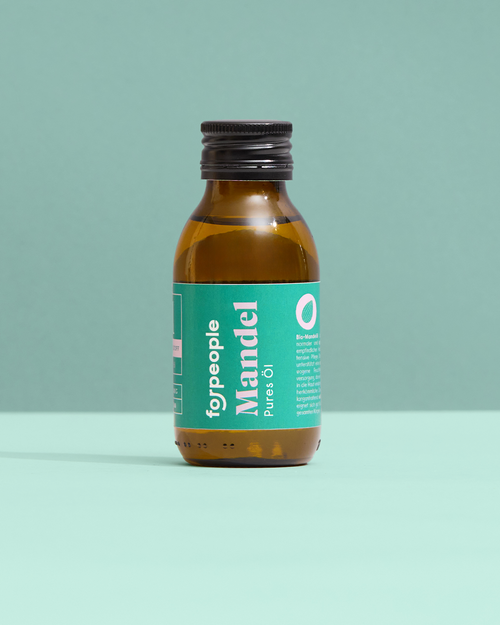
Once treatment is complete, the skin has closed and is only dry, a care product without added fragrance is an option for adults: the Solid Body Butter - Beeswax & Aloe Vera (40 g, €9.90), which according to its ingredient list contains no essential oils, or the Almond Oil - pure (100 ml, €14.90), a single oil without added fragrance; do not use it if you are allergic to almonds or nuts. Both are care for dry skin, not a treatment. For babies and children, ask your paediatrician about a suitable unperfumed product. How to moisturise after showering is explained in Itchy skin in winter: showering, care and when to see a doctor.
More on this: Dry skin between the fingers: causes and what helps · Hives (urticaria): wheals all over the body – triggers and what helps · Recognising a fungal skin infection: round, scaly patches on the body – fungus or eczema?
Sources
- Robert Koch Institute (RKI): RKI-Ratgeber Skabies (Krätze) [RKI guide on scabies]. Status 27 May 2025, accessed 30 October 2026. https://www.rki.de/DE/Aktuelles/Publikationen/RKI-Ratgeber/Ratgeber/Ratgeber_Skabies.html
- Robert Koch Institute (RKI): Empfehlungen für die Wiederzulassung zu Gemeinschaftseinrichtungen gemäß § 34 Infektionsschutzgesetz [Recommendations for readmission to community facilities under section 34 of the Infection Protection Act]. Status 23 October 2026 (scabies section: 9 March 2023), accessed 30 October 2026. https://www.rki.de/DE/Aktuelles/Publikationen/RKI-Ratgeber/Wiederzulassung/Mbl_Wiederzulassung_schule.html
- Infektionsschutzgesetz (IfSG) [German Infection Protection Act], § 34. Accessed 30 October 2026. https://www.gesetze-im-internet.de/ifsg/__34.html
- Sunderkötter C, Wohlrab J, Hamm H (2021): Scabies: epidemiology, diagnosis, and treatment. Deutsches Ärzteblatt International 118(41): 695–704. https://doi.org/10.3238/arztebl.m2021.0296
- DermNet: Scabies. Maguire JR (March 2022), updated by Coulson I (April 2025), accessed 30 October 2026. https://dermnetnz.org/topics/scabies
- Wu J, Tizek L, Rueth M, Wecker H, Kain A, Biedermann T, Zink A (2022): The national burden of scabies in Germany: a population-based approach using Internet search engine data. Infection 50(4): 915–923. https://doi.org/10.1007/s15010-022-01763-5
- DermNet: Papular urticaria. Oakley A (1997), updated by Oakley A and Koch K (March 2018), revised August 2021, accessed 30 October 2026. https://dermnetnz.org/topics/papular-urticaria
- Cyberderm (DOIT Association): Trombidiosis. Reviewed 2026 by Burgdorf W and McGrath J, accessed 30 October 2026. https://www.cyberderm.net/learn/skin-diseases/trombidiosis
- DermNet: Atopic dermatitis. Stanway A (2004), updated by Jarrett P (February 2021, minor update May 2023), accessed 30 October 2026. https://dermnetnz.org/topics/atopic-dermatitis
- DermNet: Urticaria – an overview. Oakley A (updated January 2015, revised April 2021), accessed 30 October 2026. https://dermnetnz.org/topics/urticaria-an-overview