
Propolis — the bees' protective shield for your skin

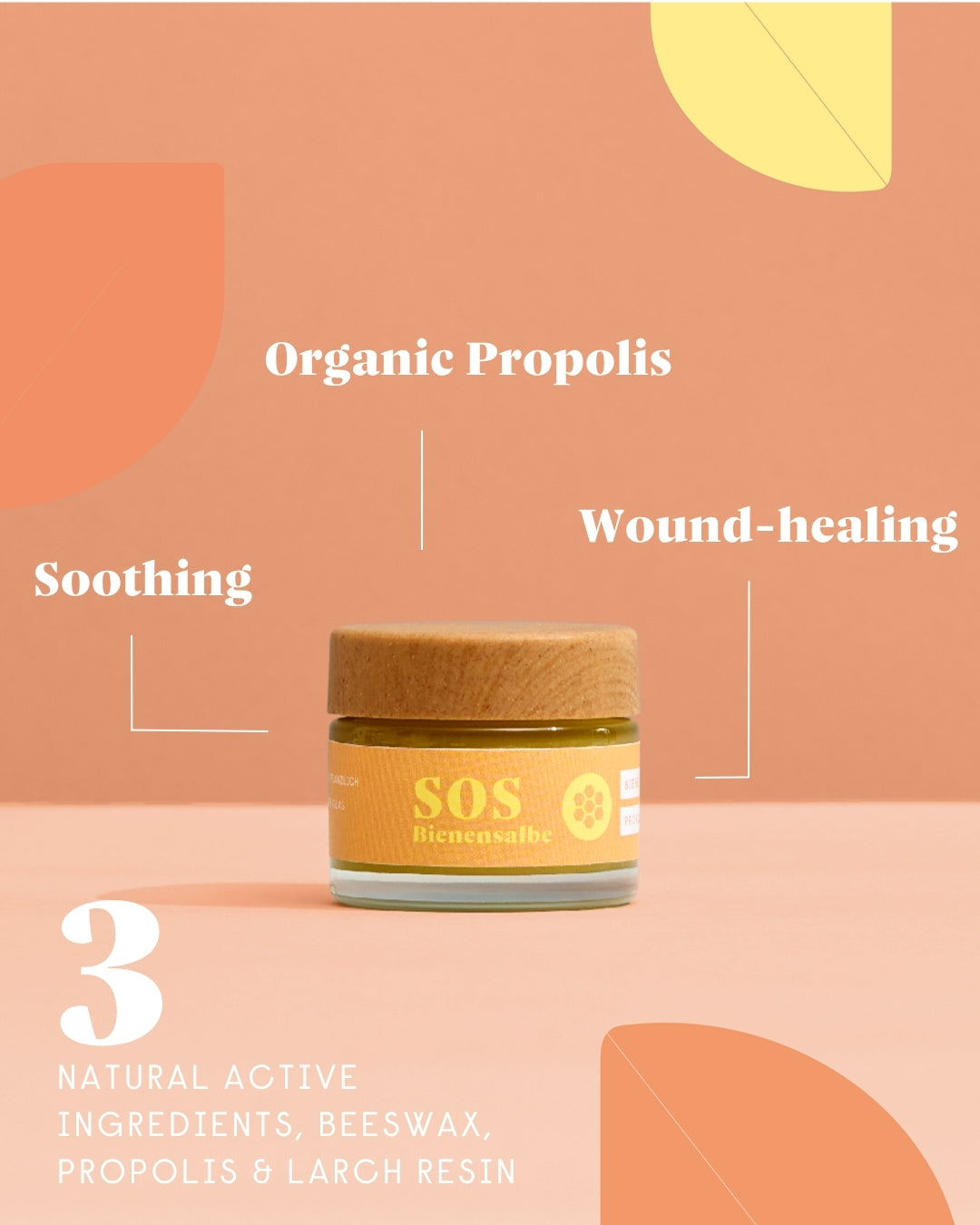
Antibacterial

Works against bacteria, viruses and fungi — the bees' natural antibiotic.

Skin regeneration

Supports the healing of small irritations, redness and stressed spots.

Soothing

Calms inflamed skin and strengthens its natural protective function.

Profile

INCI Propolis Cera / Propolis Extract
Origin Bee hive propolis
Main actives Flavonoids, phenolic acids, terpenes
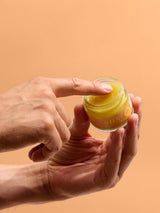
Texture Sticky, processed into a balm
Colour Golden-brown to dark brown
Scent Resinous and spicy, slightly sweet
Main effect Antibacterial, anti-inflammatory
Suited for Irritated, stressed skin
Skin type check

Which skin is propolis right for?

Propolis is a specialist for irritated, stressed and blemished skin.

I
Irritated skin Top
The classic use — calms redness and inflamed spots.
B
Blemished skin Top
The antibacterial effect can help with spots and blemishes.
D
Dry skin Top
Especially nourishing in water-free balms on cracked, dry spots.
S
Sensitive skin Mit Bedacht
Watch for allergies — propolis can trigger reactions if you're allergic to bees.
N
Normal skin Mit Bedacht
For small spots here and there, less as daily care.
O
Oily skin Mit Bedacht
Use sparingly — the antibacterial effect can reduce blemishes.
Science & care

How does propolis work on the skin?

Three mechanisms that make propolis a natural all-rounder.

01

Antibacterial

Flavonoids and phenolic acids work against bacteria, viruses and fungi — the bees' natural antibiotic.

02

Anti-inflammatory

Curbs inflammation markers and calms irritated skin — also studied for acne and eczema.

03

Cell regeneration

Supports the healing of small skin injuries and helps the skin barrier recover.

Use cases

What can you use propolis for?

Cracked lips

For cracked corners of the mouth and dry lips

Cracked heels

Combined with beeswax in care balms

Hands & elbows

For rough, stressed patches of skin

Small irritations

Targeted use on redness and friction spots

Wound care

Traditionally used on small grazes

Nappy care

For nappy rash (after checking with your paediatrician)

Acne spots

Targeted use on inflamed spots

Eczema care

A complement for chronically dry skin

Science

What do studies say?

J. Ethnopharmacol. 2017

„Propolis inhibits the growth of various bacterial strains, including S. aureus."

Microbiological study.
Burns 2015

„Propolis balm speeds up wound healing in superficial burns."

Clinical study, n=64.
Dermatology 2018

„Topical propolis significantly reduces acne-related inflammation markers."

Acne study over 6 weeks.
Terms

Glossary

Propolis
A resinous substance from the bee hive — the bees' natural protective and disinfecting mix.
Flavonoids
Plant-based actives in propolis with an antioxidant effect.
Phenolic acids
Antibacterial compounds that give propolis its protective effect.
Bee propolis
Another word for propolis — describes its sticky, sealing function.
Bee allergy
If you have a known allergy to bee products, test propolis before use.
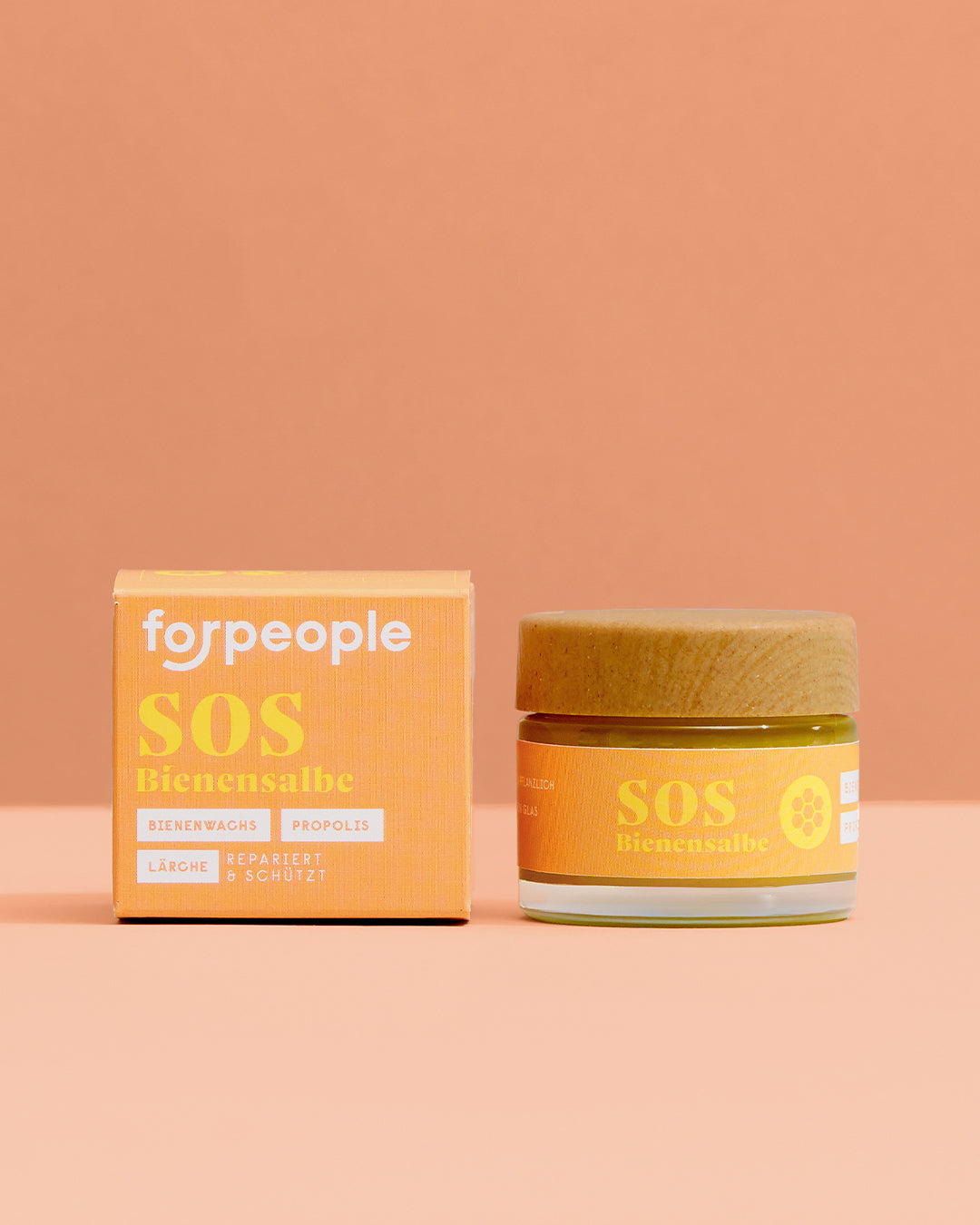
SOS-Salbe
A water-free specialist balm for targeted care of irritated spots.

Magazine

To the blog
BienenwachsBienenwachs in der Kosmetik: Was es kann – und warum wir es lieben
Rissige Fersen, müde Füße, trockene Haut: Warum 90 % aller Fußcremes hauptsächlich Wasser sind
SonnencremeSonnenallergie bei Kindern? Oft ist die Sonnencreme das Problem – nicht die Sonne

Sun allergy in children? Often the sunscreen is the problem – not the sun

Red patches, itching or little bumps after a day in the sun are quickly written off as a sun allergy. But in conversations with more than 30 customers we kept hearing something different: the skin ...